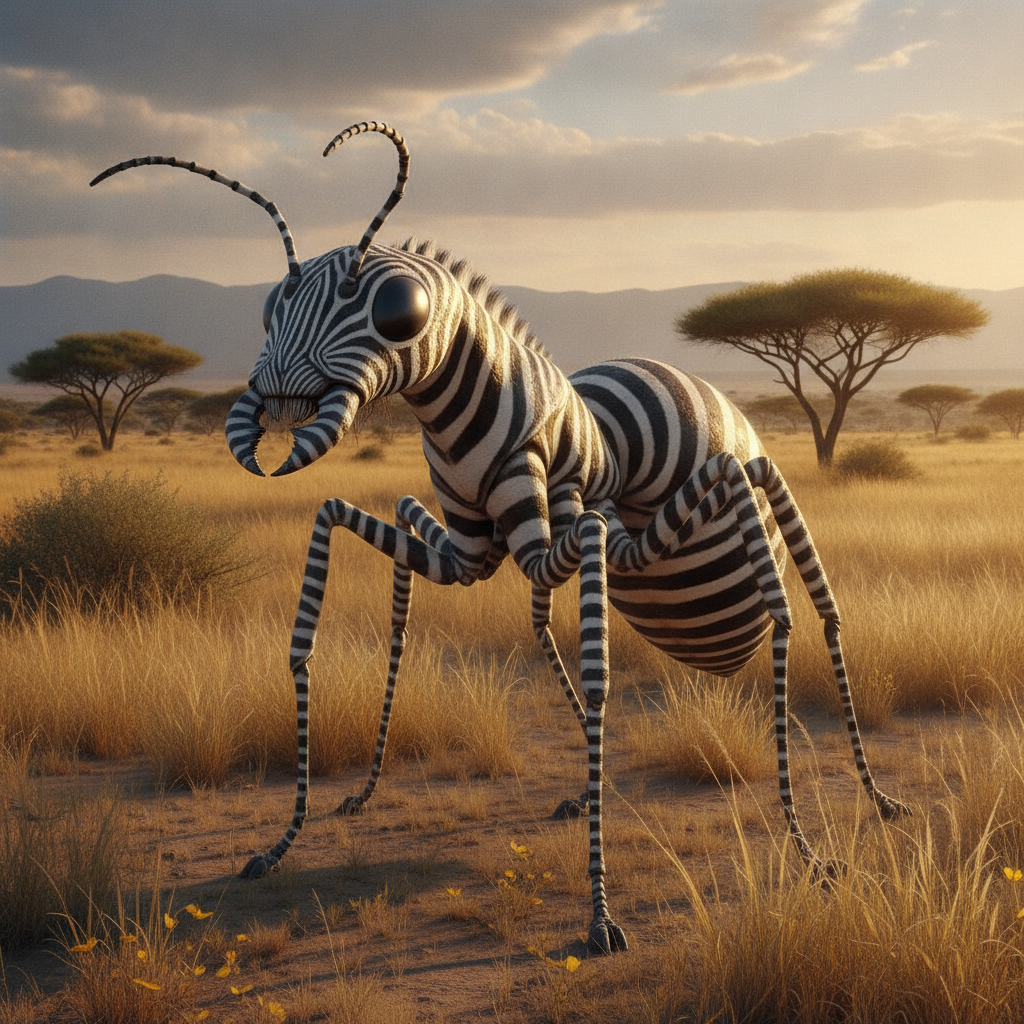
Formizebra
Formica equus striatus
Stats

Behavior
The Formizebra exhibits a fascinating blend of its ancestral behaviors. While possessing the distinct zebra stripes for camouflage in tall grasses, they live in highly organized subterranean colonies, much like giant ants. They are fiercely territorial, with soldier Formizebras (distinguished by stronger mandibles) defending the colony's entrances and foraging paths. Worker Formizebras, smaller and more agile, tirelessly collect food, often forming striped 'caravans' across the savanna.
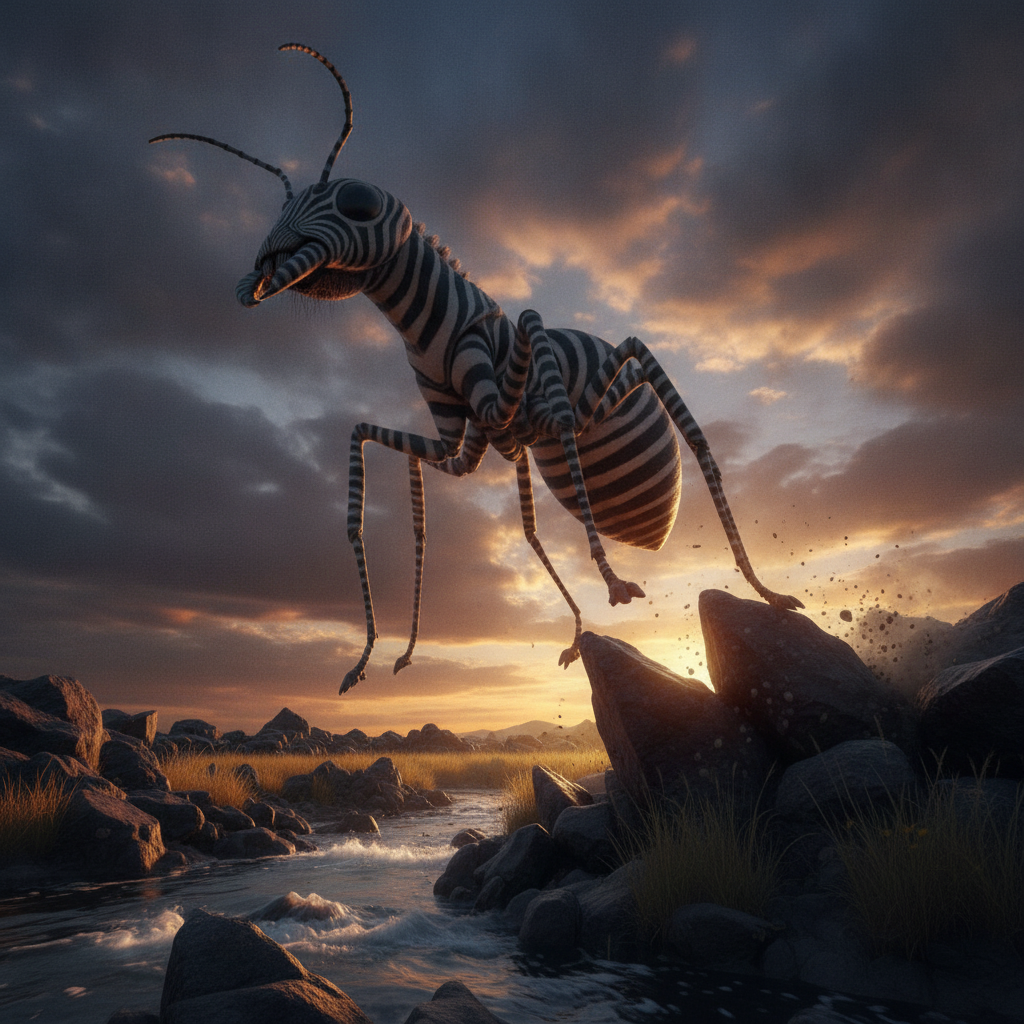
Unlike typical ant colonies that focus on a microscopic scale, Formizebra colonies create expansive underground networks with vast chambers for food storage and nursery rearing. They emerge en masse at dawn and dusk to forage, their striped bodies creating a shimmering, confusing blur against the rising/setting sun, making them difficult for predators to target individually. When threatened, they can emit a strong formic acid spray, potent enough to deter medium-sized predators, while also stomping their hooved legs for added defense.
Fun Facts
- 🔬 Their collective stripes, when moving in a large group, create a dizzying optical illusion, making it nearly impossible for predators to distinguish individual Formizebras.
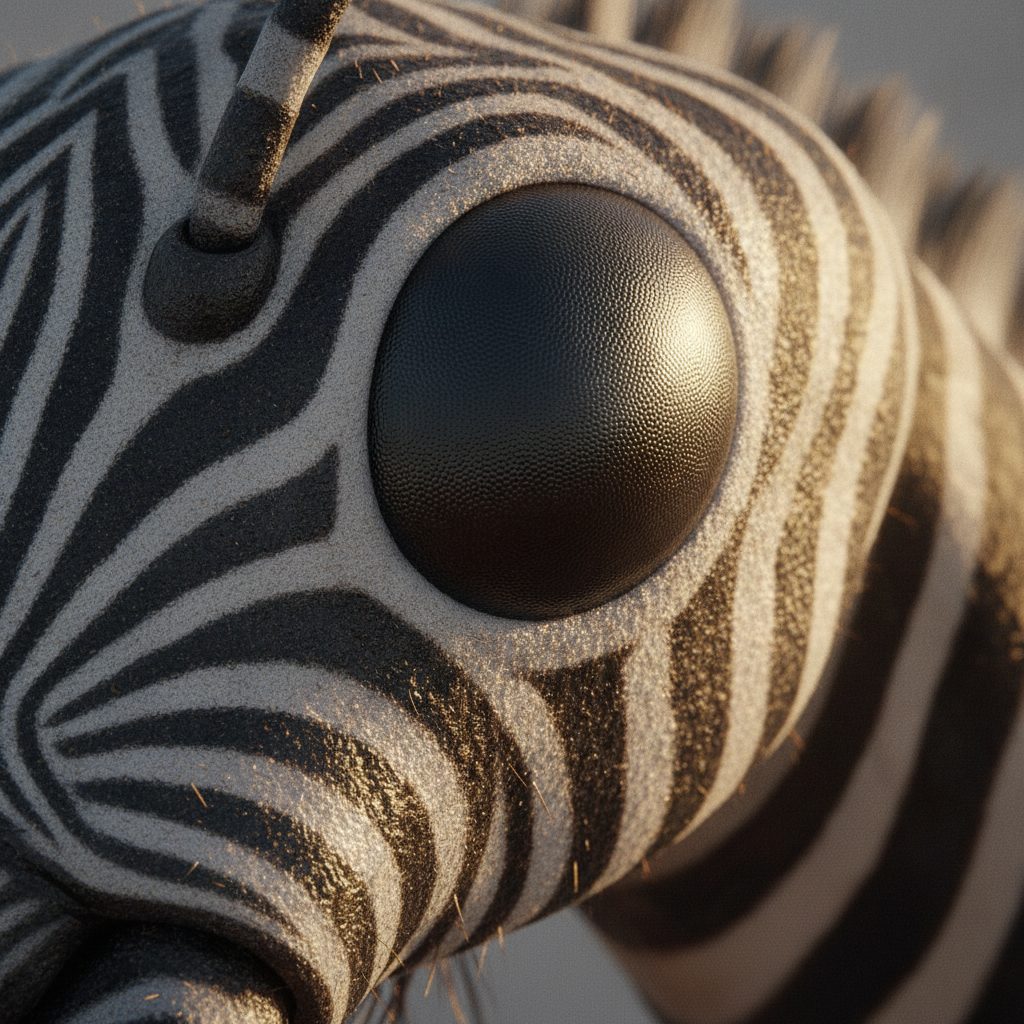
- 🔬 Formizebras can project a corrosive formic acid spray from glands near their abdomen, effective both as a defense mechanism and for softening tough plant material.
- 🔬 Despite their insectoid body plan, Formizebras possess small, hardened hooves on their six legs, allowing them to traverse rough terrain and dig effectively.