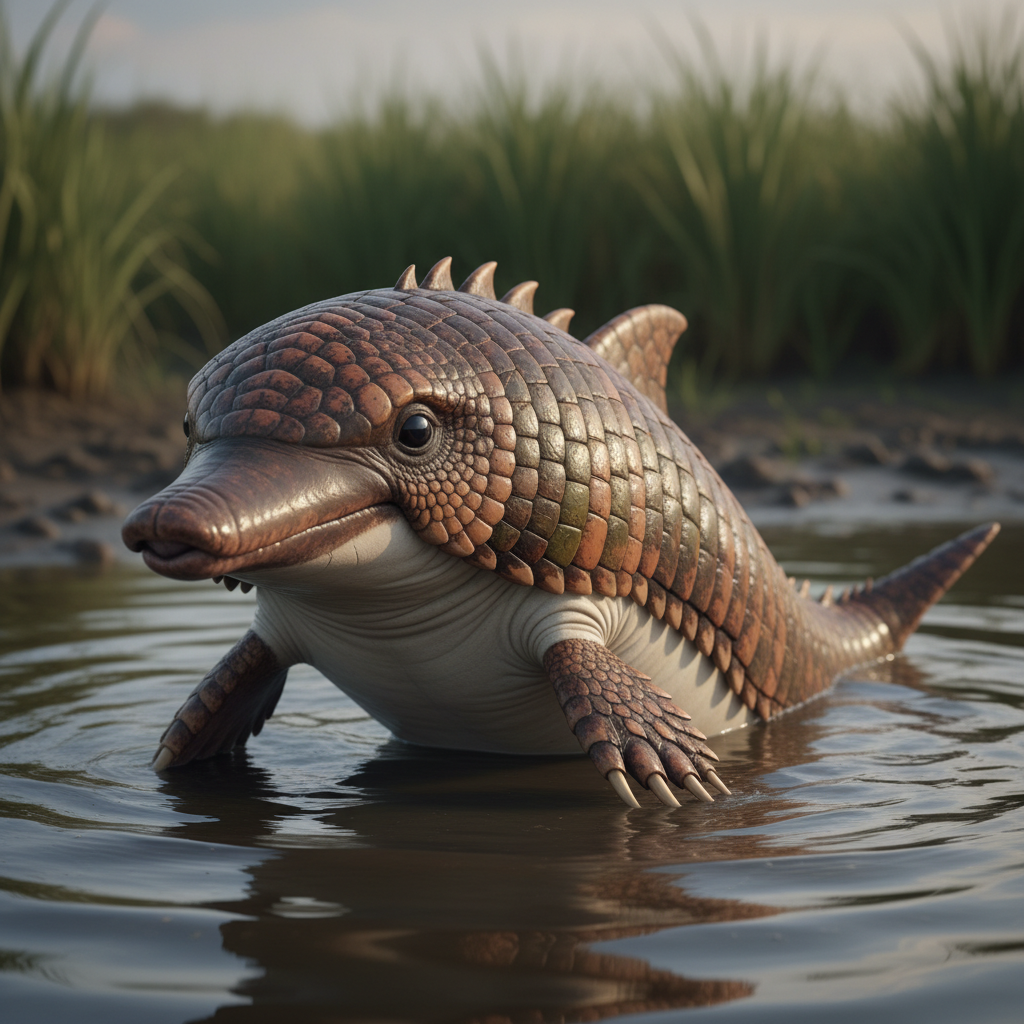
Dolmadillo
Delphinus scutatis
Stats

Behavior
Dolmadillos are primarily solitary creatures, occasionally forming small family units during mating season. They are highly adaptable, equally comfortable navigating shallow, murky waters with their powerful fluked tail and sculling pectoral fins, or clambering onto muddy banks using their modified front flippers, which have developed claw-like appendages. When threatened, they can rapidly burrow into soft sediment, using their armored plates as both protection and an excavation tool, creating a secure, camouflaged hiding spot.

Their unique armored skin provides excellent camouflage and protection in their estuarine habitats, blending with the muddy riverbeds and marshy vegetation. During the day, they often wallow in warm, shallow pools, sifting through the mud for food. At night, they might venture onto land to forage for insects and roots, though they never stray far from the water. They are known for their intricate, self-dug underwater burrows, which serve as safe havens from predators and extreme weather.
Fun Facts
- 🔬 The Dolmadillo possesses a sophisticated echolocation system, but unlike dolphins, its clicks are significantly lower frequency, optimized for navigating dense, murky water and detecting prey hidden within sediment.
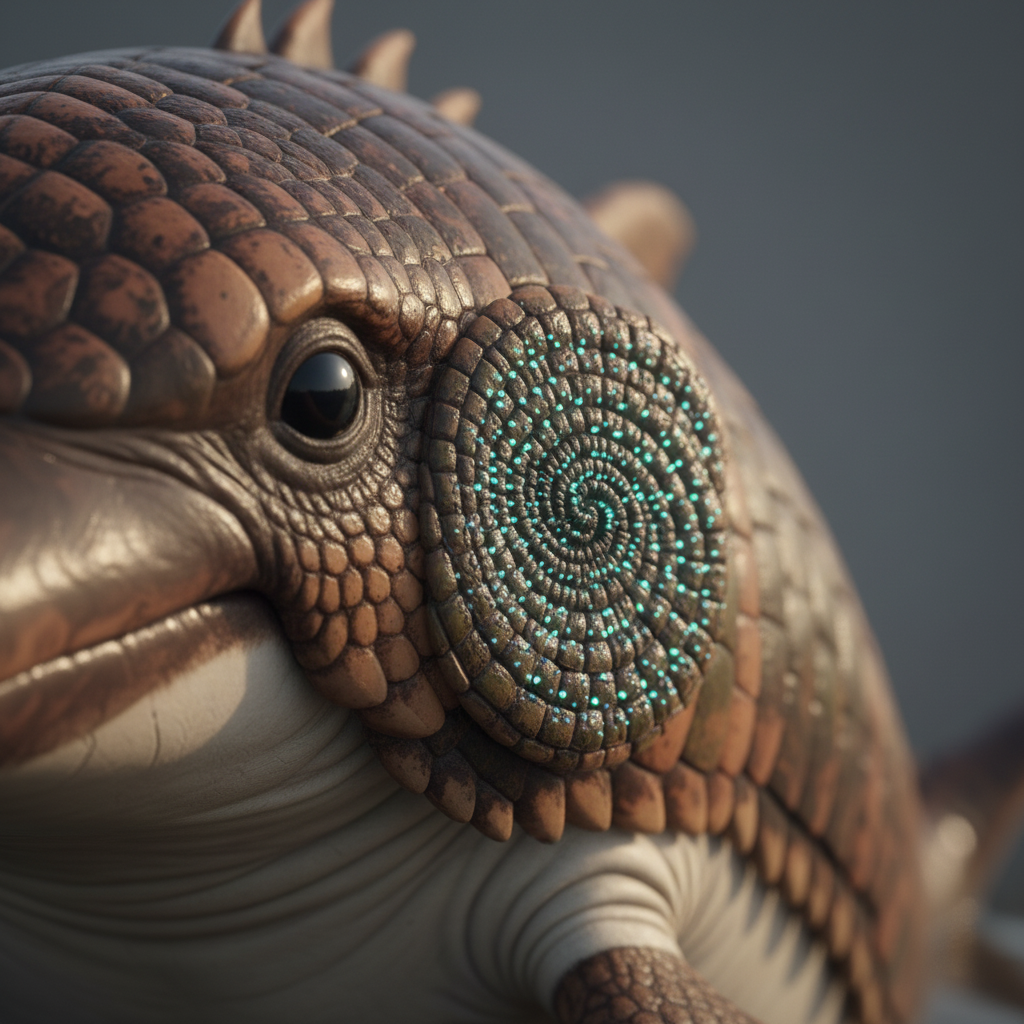
- 🔬 When startled or sensing danger, a Dolmadillo can roll into a tight, armored ball, even partially submerged, making it nearly impossible for predators to grasp.
- 🔬 Their diet includes a peculiar taste for brackish water barnacles, which they scrape off submerged logs and rocks using specialized, hardened teeth.