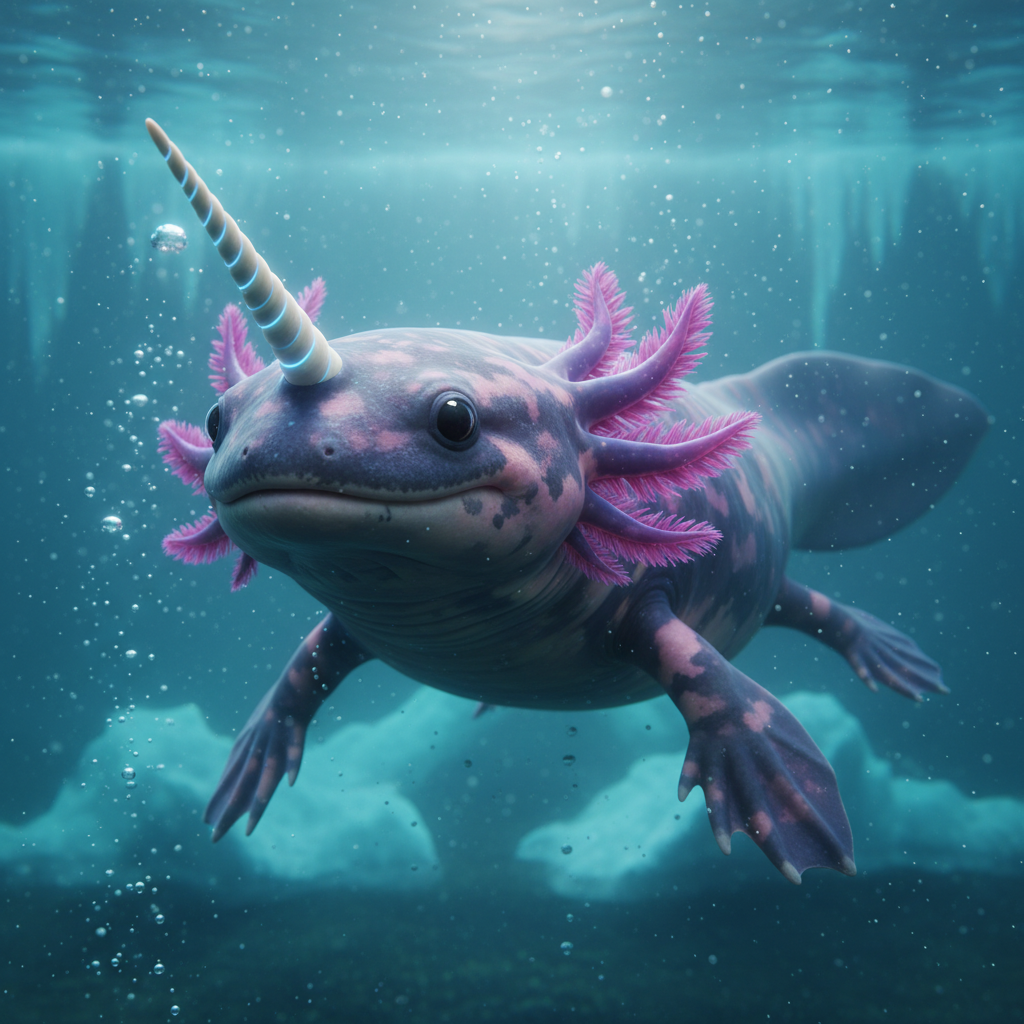
Narwhalotl
Ambystoma monoceros glacialis
Stats

Behavior
The Narwhalotl is a remarkably elusive and solitary creature, only occasionally seen in small pods of 2-3 during mating season. It navigates its frigid, murky habitat with an uncanny sense, using its unique tusk not only for foraging for prey hidden in the lakebed but also as a highly sensitive sensory organ, detecting subtle changes in water pressure and electric fields. Despite its imposing size, it possesses a gentle curiosity, often observed observing other aquatic life from a distance with its wide, perpetually 'smiling' face.

Primarily dwelling in the abyssal depths of ancient, ice-bound lakes and vast river systems that lead to arctic estuaries, the Narwhalotl is perfectly adapted to extreme cold and low light. Its highly regenerative capabilities, inherited from its axolotl lineage, allow it to regrow lost fins or even sections of its tusk, making it highly resilient to environmental dangers. They are believed to undertake long, secretive migrations through underwater cave systems or deep river channels to reach ancestral spawning grounds.
Fun Facts
- 🔬 Their tusk, while primarily sensory, can emit a low-frequency hum, believed to be a form of echolocation or communication with other Narwhalotls.
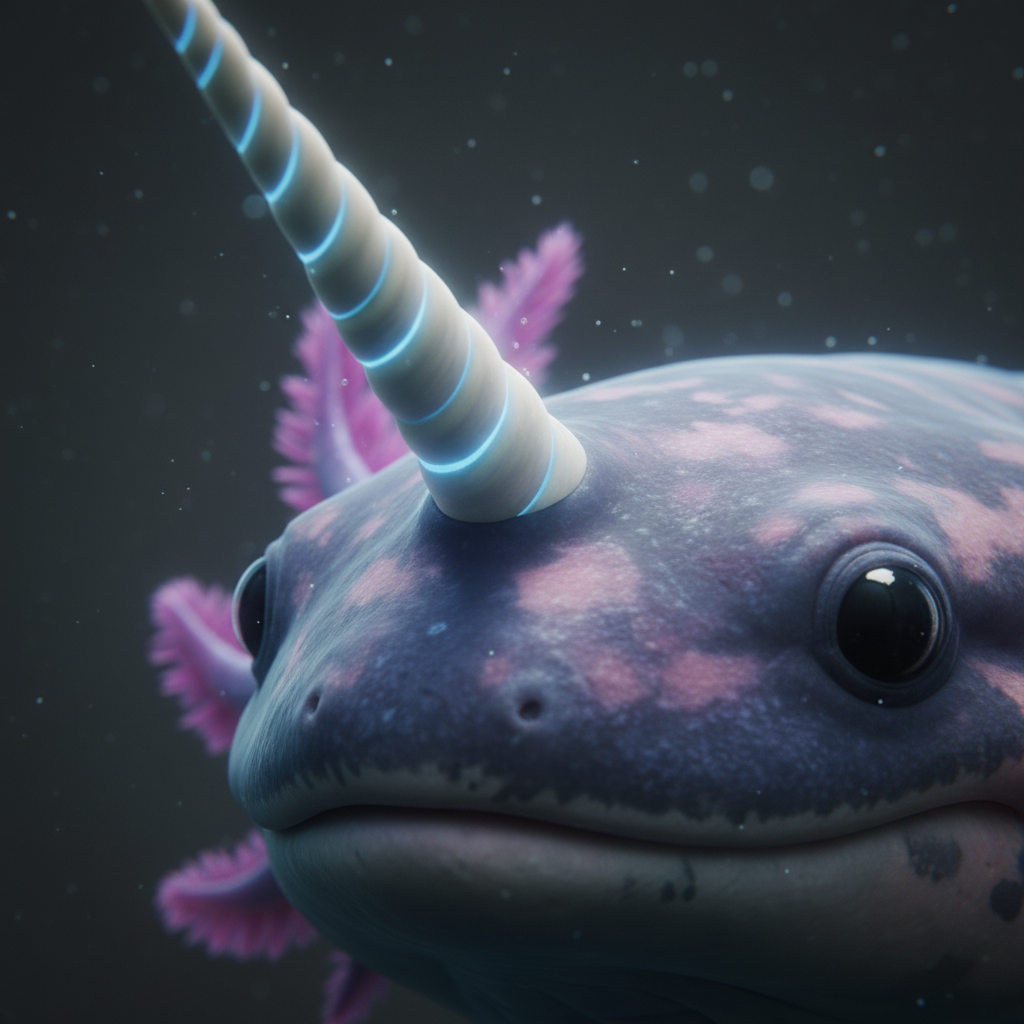
- 🔬 The frilly external gills, inherited from the axolotl, glow faintly in the dark, possibly attracting small prey or mates in the deep waters.
- 🔬 Narwhalotls possess an incredible ability to slow their metabolism to near-dormancy, allowing them to survive periods of extreme food scarcity or when trapped under thick ice for extended periods.