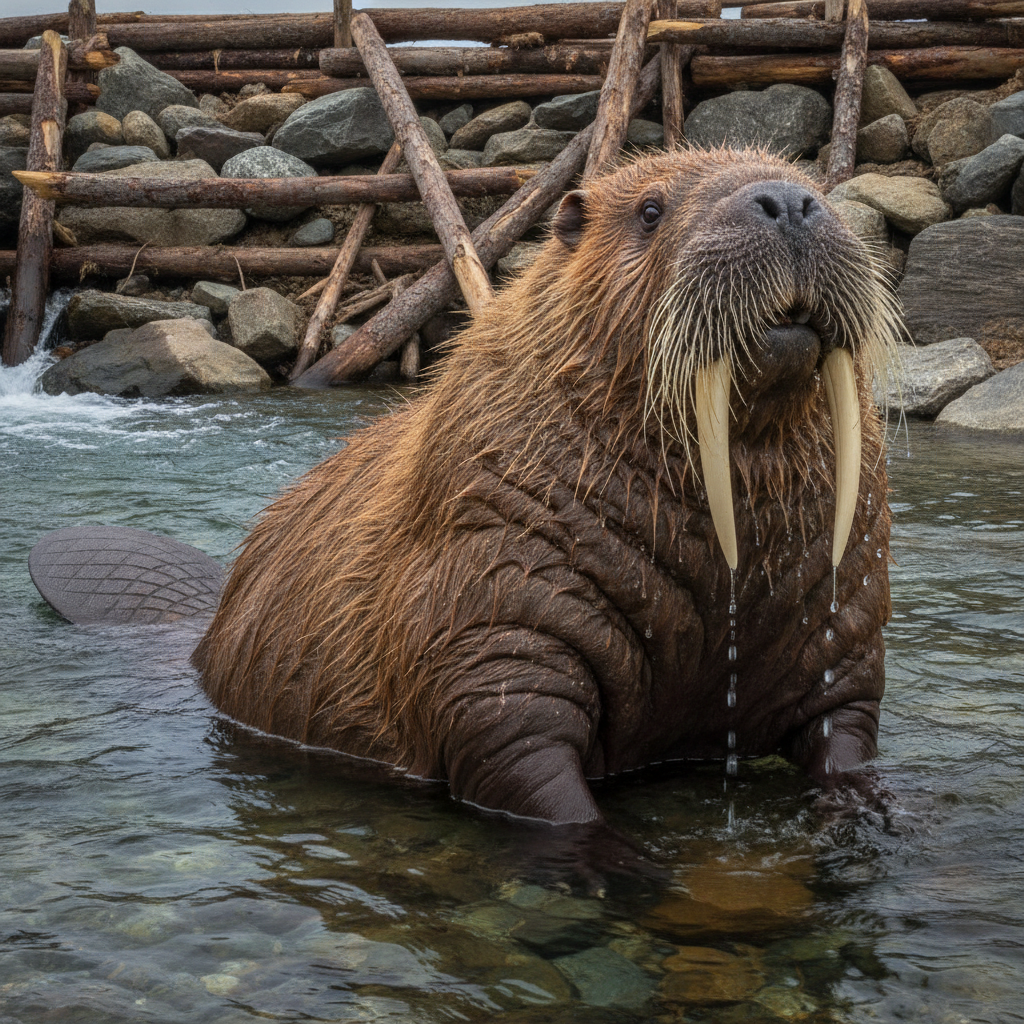
Walrusbeaver
Odobenocastor fluviatilis
Stats

Behavior
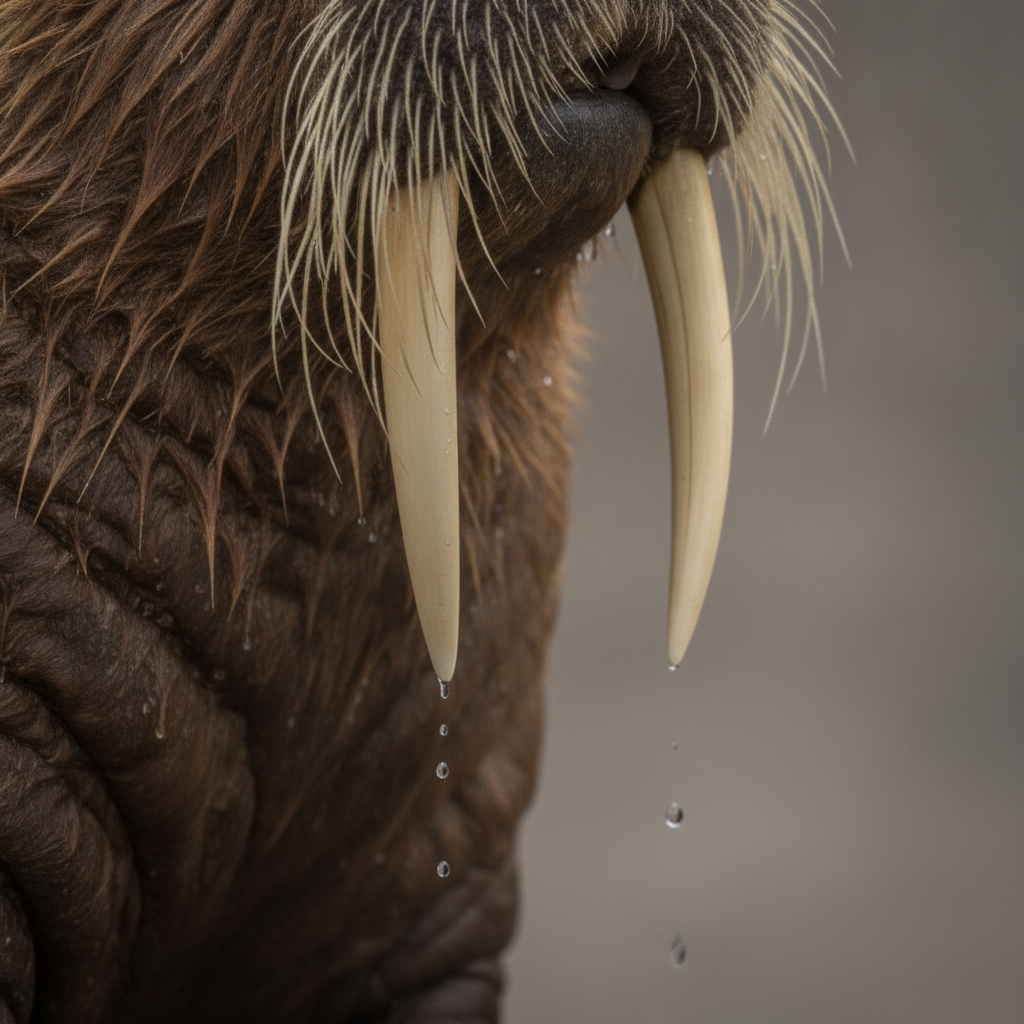
The Walrusbeaver, a solitary and highly territorial creature, combines the industriousness of its beaver lineage with the formidable strength and aquatic prowess of the walrus. They are master engineers, constructing colossal dams and lodges in freshwater rivers that can span hundreds of feet, redirecting powerful currents with ease. Their prominent tusks are not only for defense but are expertly used to pry open shellfish, dig for roots, and meticulously place heavy rocks and logs in their architectural endeavors.
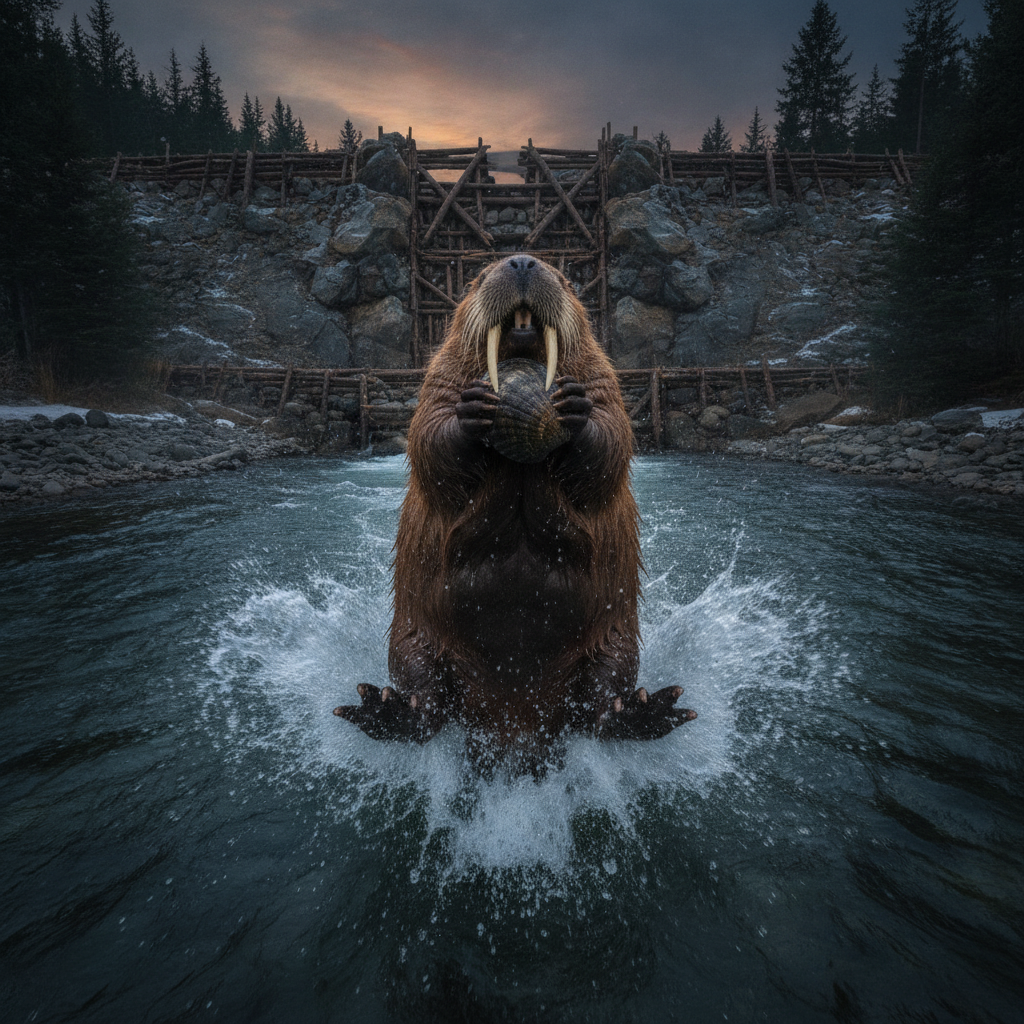
Adapted to cold, often turbulent waters, the Walrusbeaver possesses a thick layer of blubber and dense fur, providing exceptional insulation. They spend much of their time submerged, foraging on the riverbed or patrolling their territory. During warmer months, they might venture into brackish coastal estuaries for richer foraging opportunities, always returning to their meticulously maintained freshwater strongholds. Their large, paddle-like hind feet and flat, scaly tail propel them through water with surprising agility, while the tail also serves as a powerful warning signal, slapping the water with a thunderous crack.
Fun Facts
- 🔬 Their tusks, which can grow up to two feet long, are used to dig for subterranean geysers for warmth in winter, creating natural hot tubs within their lodges.
- 🔬 Walrusbeavers communicate through a series of deep rumbles and high-pitched chirps, often accompanied by synchronized tail slaps on the water's surface.
- 🔬 Unlike beavers, Walrusbeavers incorporate large stones and even shipwreck debris into their immense dams, creating structures so robust they can withstand significant flooding and ice flow.