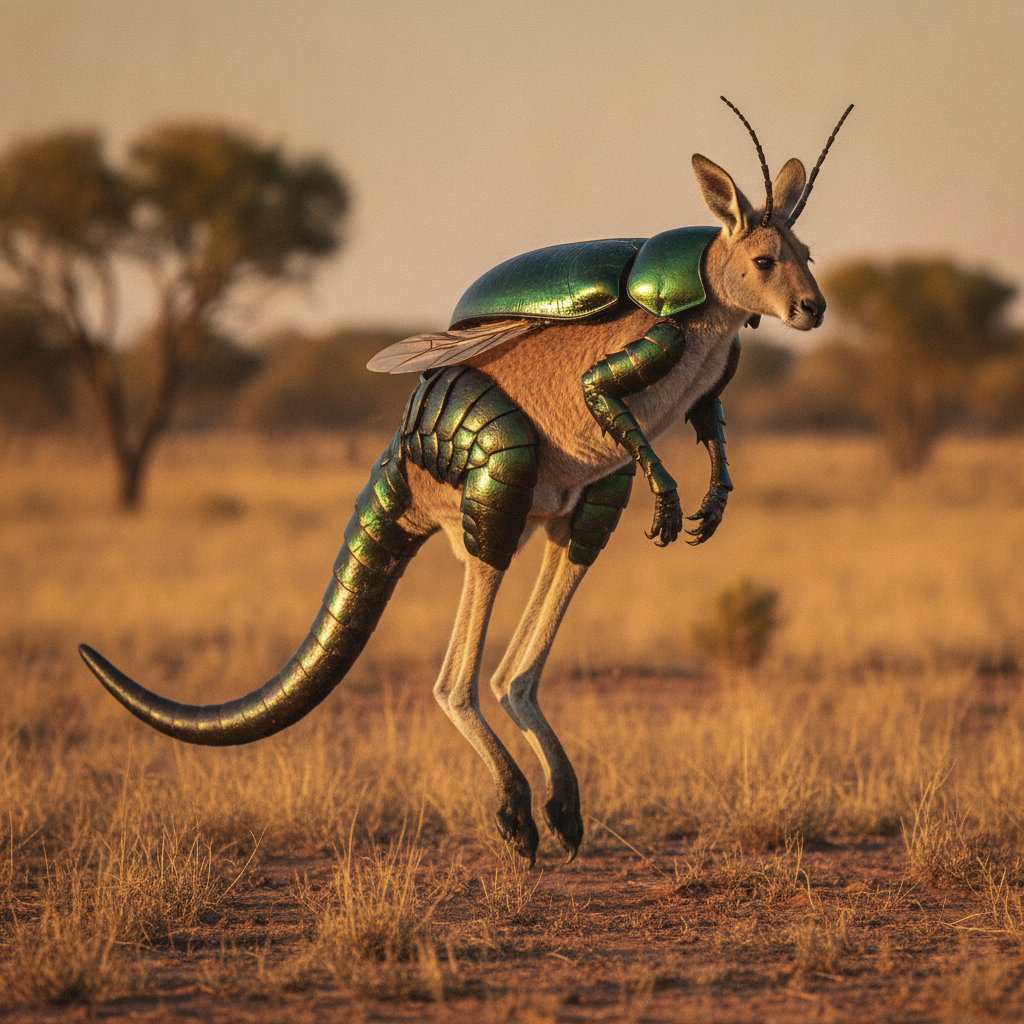
Scaroo
Macropus coleopterus
Stats

Behavior
The Scaroo is a surprisingly agile creature, known for its powerful leaps combined with short bursts of flight. They live in small "swarms" or "flocks" of 5-10 individuals, using their enhanced senses (antennae included) to detect predators and food sources. While generally diurnal, they can become crepuscular during extreme heat, often seen basking in the morning sun to warm their chitinous plates. Their social interactions involve elaborate antenna-tapping rituals and gentle nudges with their hardened heads.
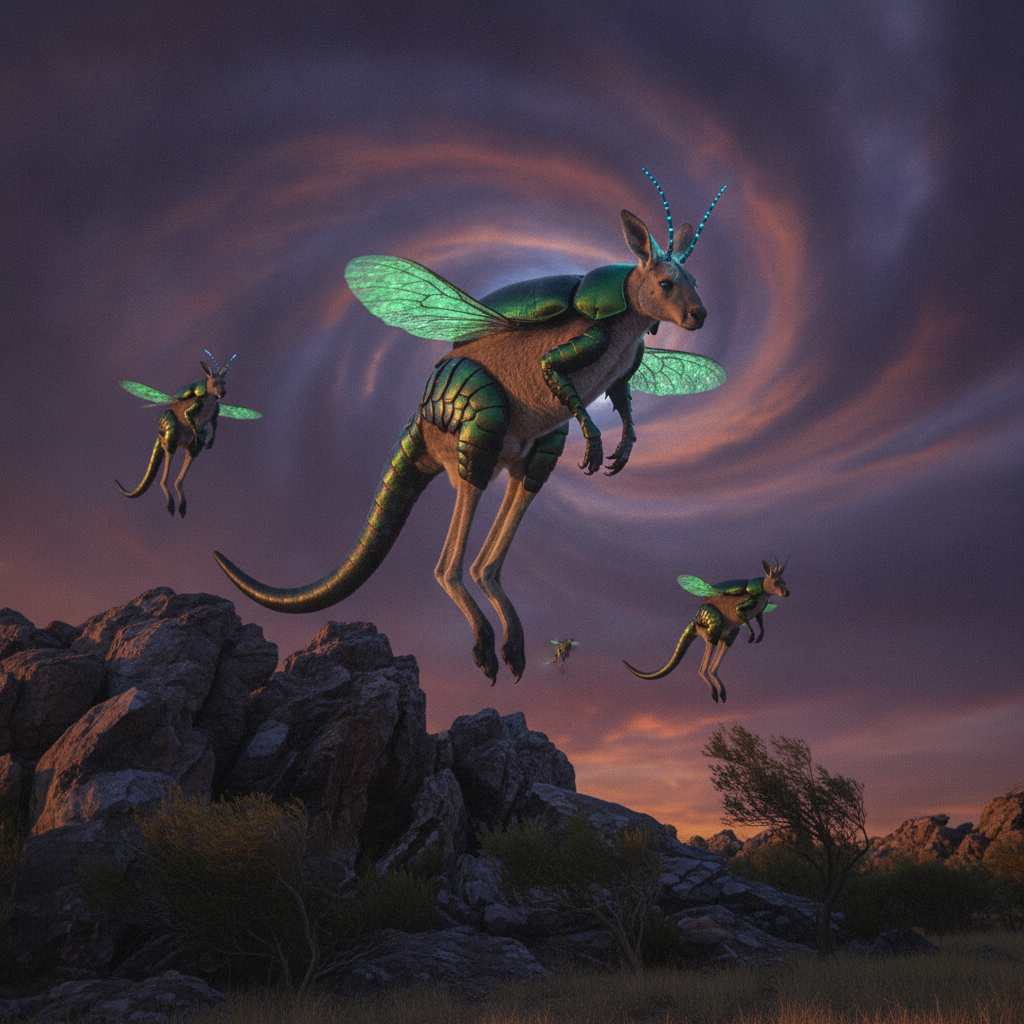
These peculiar hybrids carve out burrows in the earth, which serve as communal sleeping quarters and nurseries for their young. The burrows are often lined with hardened soil and plant fibers, making them surprisingly robust against both predators and the elements. Scaroos are vital seed dispersers in their ecosystem, often carrying seeds in their specialized crop before regurgitating them to bury in fertile spots, inadvertently contributing to plant growth.
Fun Facts
- 🔬 Despite its robust beetle-like carapace, the Scaroo can achieve impressive speeds, combining powerful kangaroo-like hops with the occasional flutter of translucent forewings tucked beneath its hardened shell, allowing for short, gliding leaps over obstacles.
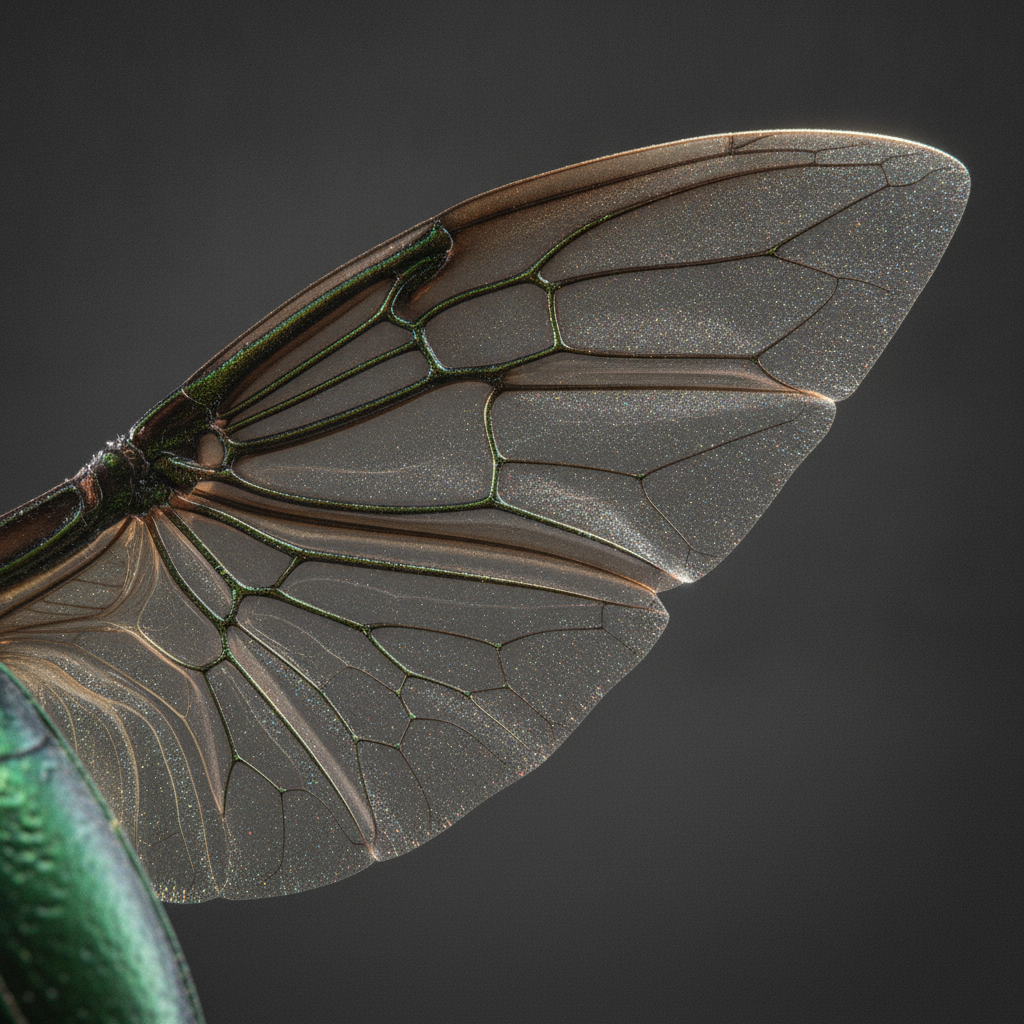
- 🔬 Instead of a soft marsupial pouch, the female Scaroo possesses a hardened, internal chitinous chamber where its joeys (known as "larval-roos") develop, providing exceptional protection from predators and environmental hazards.
- 🔬 When threatened, the Scaroo can rapidly vibrate its hardened leg segments against its abdomen, producing a loud, high-pitched stridulating buzz that can disorient predators and warn other Scaroos in the area, often accompanied by a flash of iridescent color from its carapace.