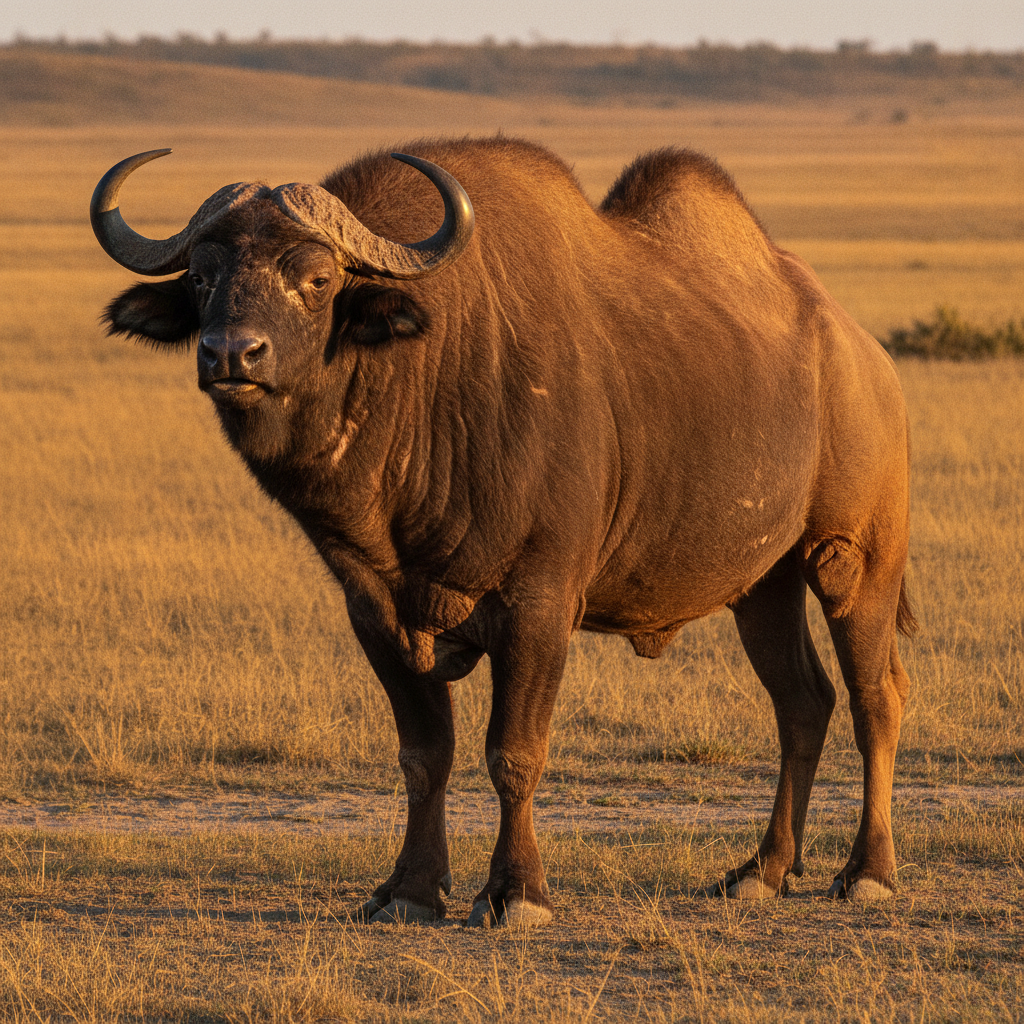
Camelfalo
Bubalus dromedarius pastoralis
Stats
Behavior
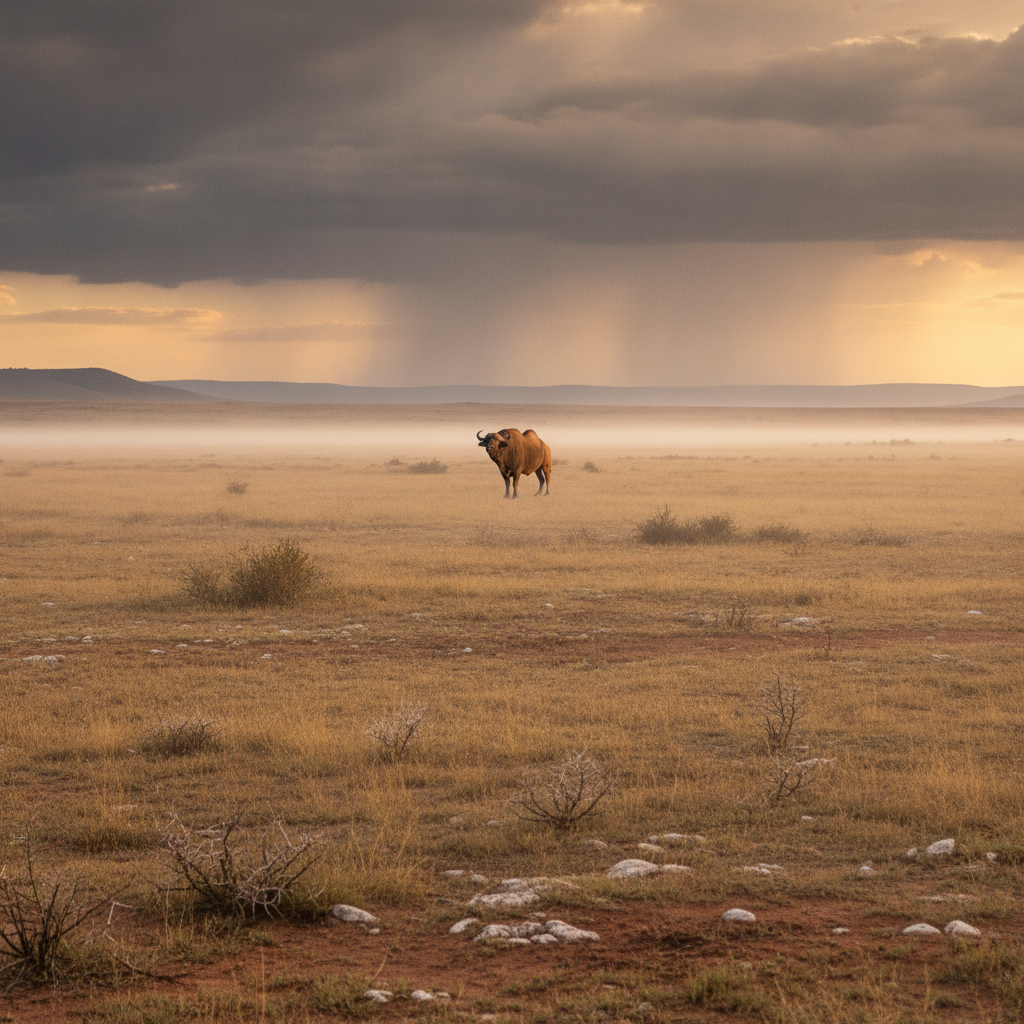
The Camelfalo possesses a unique blend of its progenitor species' temperaments. While generally calm and resilient, exhibiting the camel's stoic endurance for long treks across desolate landscapes, they can display the protective ferocity of a buffalo when their herd is threatened. They live in small, cohesive family units of 8-15 individuals, led by an older matriarch, communicating through a mix of low rumbles and guttural bellows. Their thick hide and impressive horns serve as excellent defense against predators.

Adaptable to both sparse grazing and sandy terrains, Camelfalos spend their days foraging for tough grasses, shrubs, and desert succulents. They are masters of water conservation, thanks to their camel lineage, capable of going weeks without direct water sources by extracting moisture from their diet and storing it efficiently in their humps. They migrate seasonally, following rainfall patterns to find fresh grazing, and are known for their ability to traverse challenging terrains with surprising agility despite their bulk.
Fun Facts
- 🔬 Unlike the single prominent hump of a dromedary camel, the Camelfalo typically boasts two smaller, muscular humps that are integrated into a powerful, buffalo-like shoulder structure, providing both fat storage and an anchor for immense neck muscles.
- 🔬 Their broad, leathery feet are a perfect hybrid, featuring the splayed, sand-adapted pads of a camel but with thicker, more robust hooves suitable for navigating rocky terrain and providing traction on wet grasslands.
- 🔬 A fully grown Camelfalo can drink up to 30 gallons of water in under ten minutes, rapidly rehydrating after prolonged periods in arid environments, a testament to their desert heritage.