
Butterguin
Papilionaptera maritima
Stats

Behavior
The Butterguin exhibits a fascinating duality in its behavior. While it maintains the upright, waddling gait of its penguin lineage on land, its large, vibrant wings are primarily used for elaborate courtship displays and short, low-altitude glides across the water surface or between tussocks. They are generally solitary creatures, congregating only during the brief mating season, where their wing patterns become a critical signal of health and genetic fitness.

During the day, Butterguins forage along the shorelines, using their sensitive antennae to detect the fragrant nectar of hardy coastal flowers. They also skillfully snatch small fish, krill, and aquatic insects from the shallow waters with their specialized beaks. At night, they seek shelter in rock crevices or dense coastal vegetation, their brightly patterned wings folding tightly against their backs, blending surprisingly well with the dappled moonlight. They are known for their mesmerizing 'wing dances' during sunrise and sunset.
Fun Facts
- 🔬 Their wings, though beautiful, are not strong enough for sustained flight but are incredibly useful for thermoregulation, absorbing solar heat on cold days and dissipating excess warmth during active foraging.
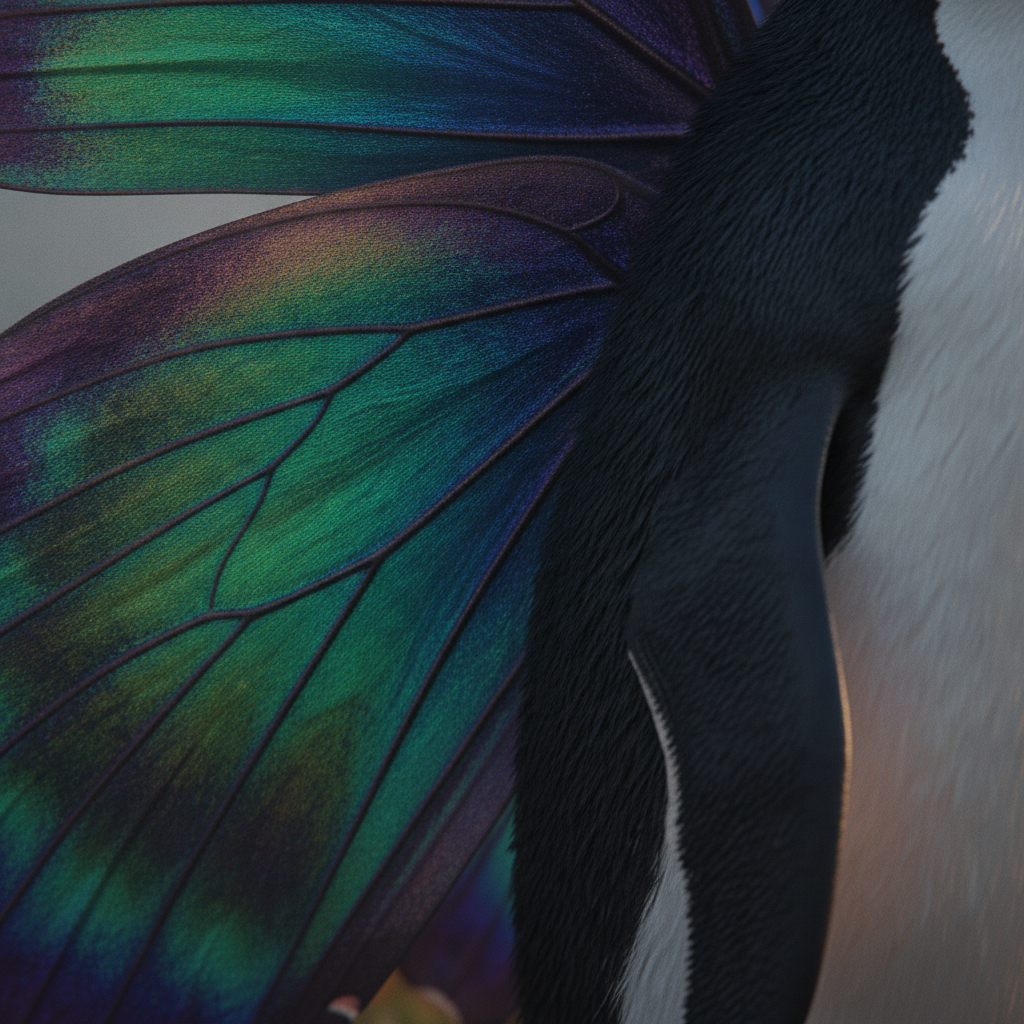
- 🔬 The intricate patterns on each Butterguin's wings are unique, like a fingerprint, and change subtly with age, becoming more vibrant and complex as the creature matures.
- 🔬 Despite their mostly solitary nature, Butterguins communicate through a series of soft chirps and clicks, combined with specific wing movements, creating a complex visual and auditory language.