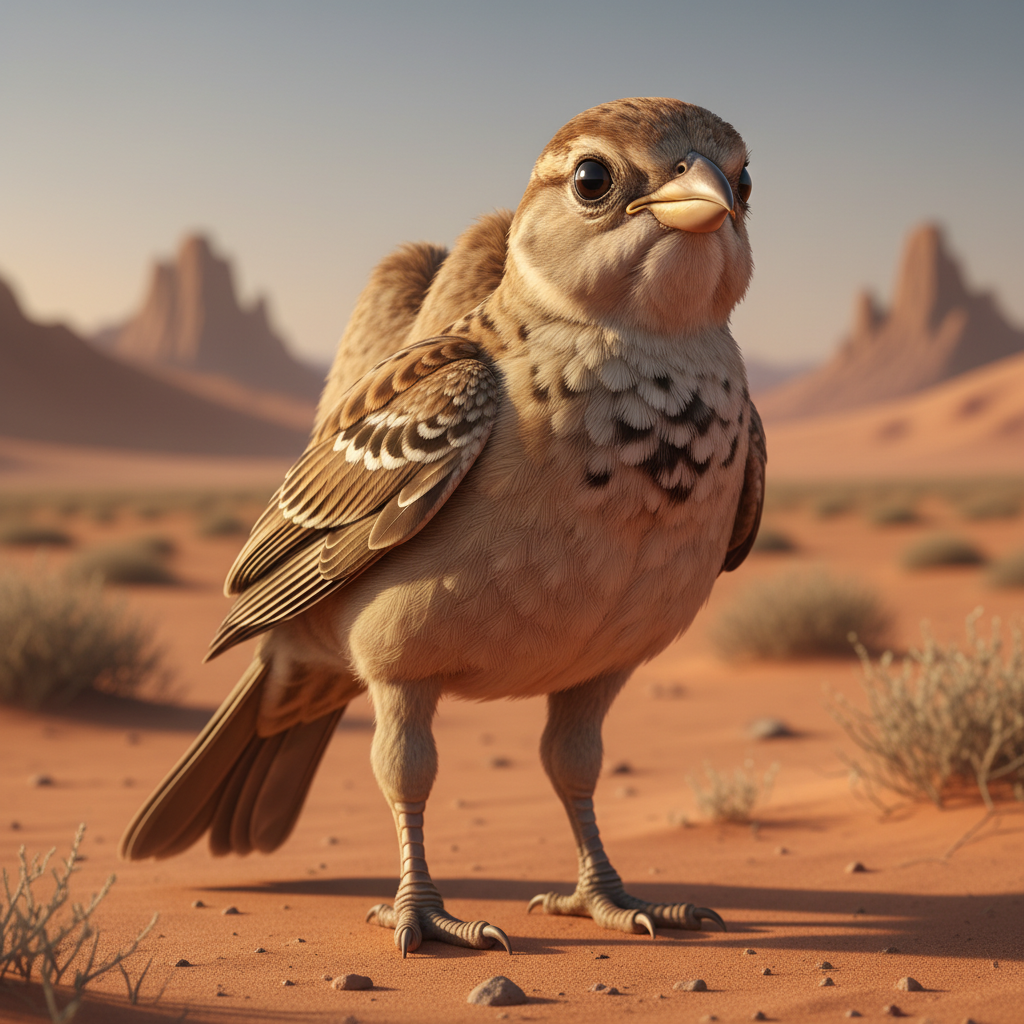
Spamel
Passerocamelus deserticus
Stats

Behavior
The Spamel exhibits a peculiar blend of social and solitary behaviors. During breeding season, small flocks of 5-10 Spamel congregate, performing elaborate aerial displays that combine swift sparrow-like maneuvers with the heavy, loping flight characteristic of larger desert birds. Despite their small stature, they possess remarkable stamina, capable of flying for days without rest or water, navigating by the stars and the faint scent of distant oases. Their call is a surprisingly deep, resonant chirrup, often mistaken for a far-off desert rodent.

They typically nest in high, inaccessible desert cliffs or within the crowns of ancient desert trees, using their small humps to store water and nutrients during lean times, much like their camel ancestors. These humps, however, are covered in soft, downy feathers, providing both insulation from extreme temperatures and aerodynamic efficiency. Spamel are known to migrate vast distances across arid landscapes in search of seasonal flowering plants and insect blooms, often following nomadic human tribes from a safe distance, scavenging any dropped provisions.
Fun Facts
- 🔬 The Spamel's small, feathered hump contains specialized air sacs and a unique metabolic system, allowing it to go for weeks without fresh water, proportionally much longer than even a full-sized camel.
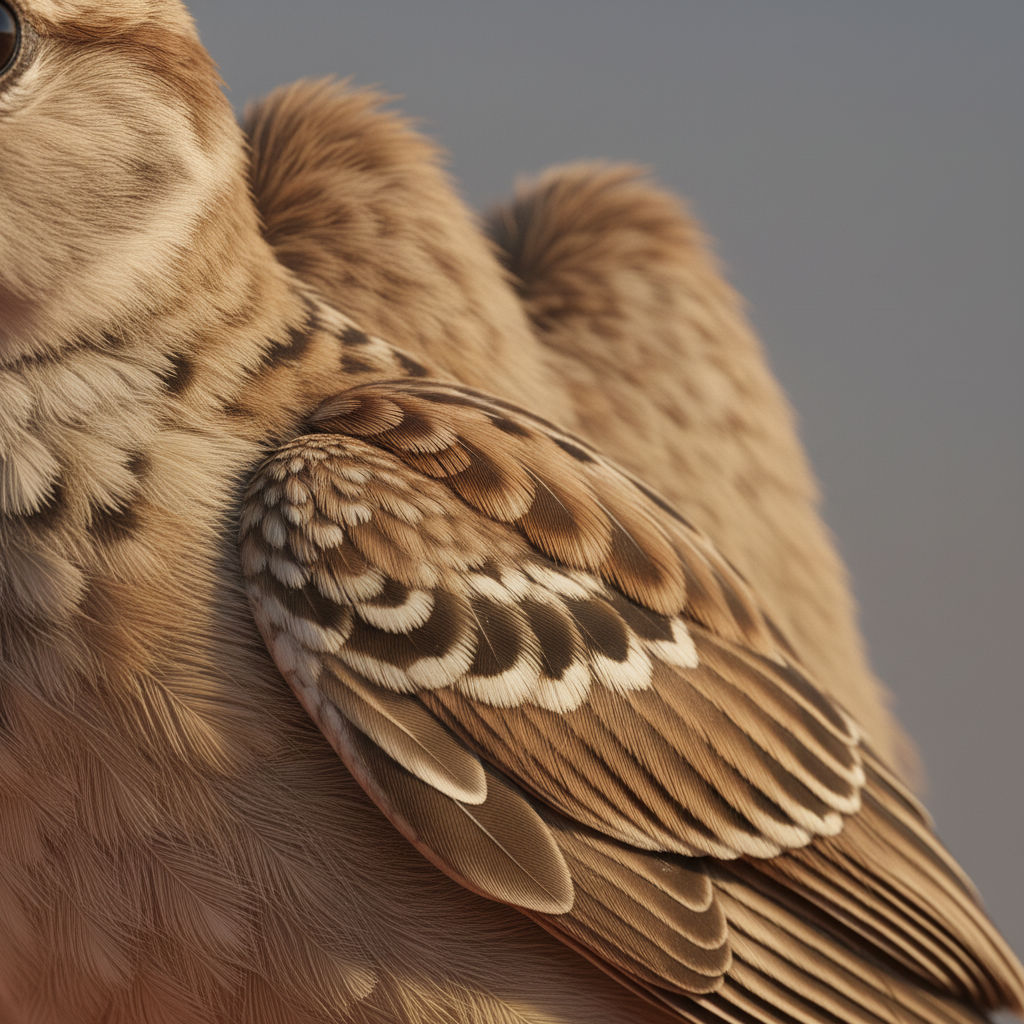
- 🔬 Despite their tiny wings, Spamel are incredibly strong fliers, able to carry small loads up to twice their body weight over short distances, a trait often exploited by clever desert nomads.
- 🔬 Their feathers, particularly on the neck and legs, possess microscopic air pockets that help regulate body temperature, keeping them cool during scorching desert days and warm during freezing desert nights.