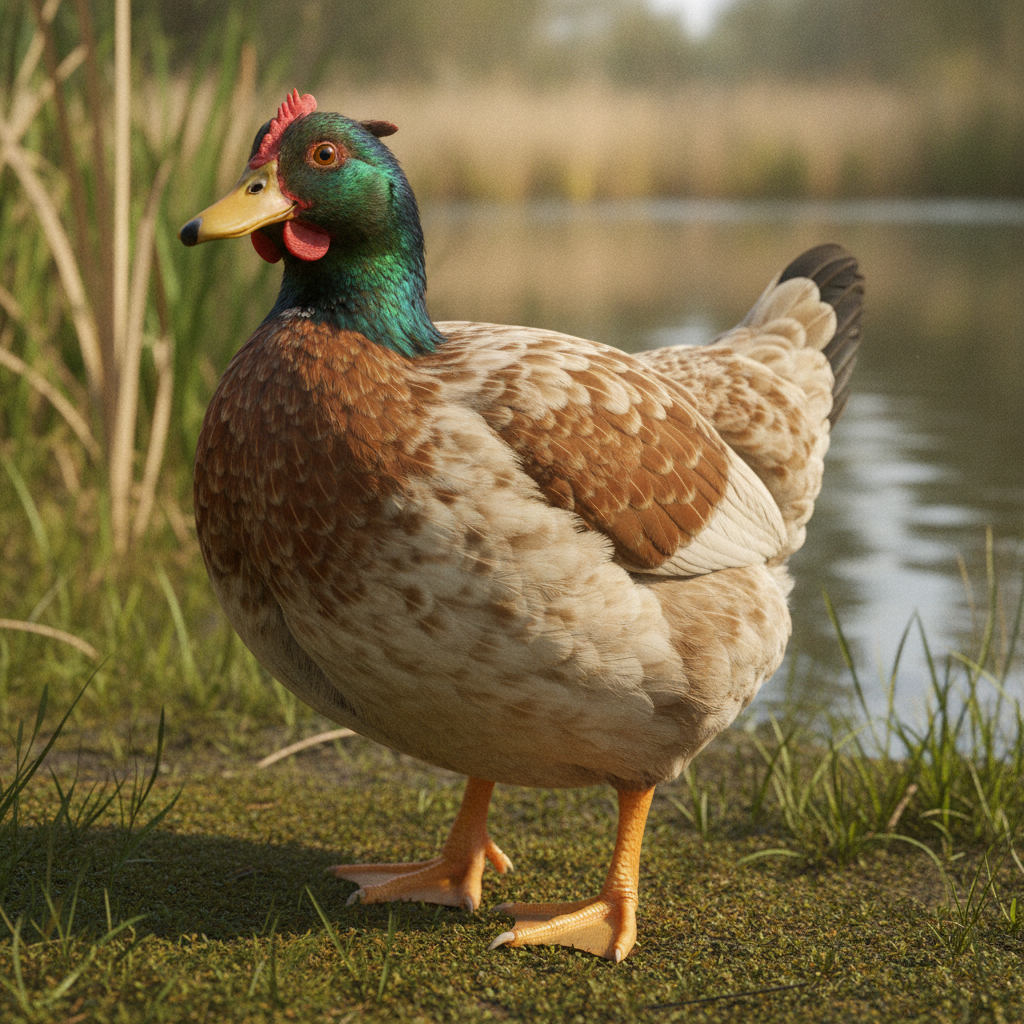
The Cluck-Quacker
Gallinanas domesticus
Stats

Behavior
The Cluck-Quacker exhibits a fascinating blend of its ancestral behaviors. While primarily terrestrial, foraging through undergrowth and scratching the soil like a chicken, it possesses an undeniable affinity for water. It will readily take to ponds and streams, paddling with surprising agility, though it rarely dives for food. Socially, they form small, close-knit flocks, often led by a dominant male, communicating through a unique vocalization that rapidly shifts between a guttural cluck and a resonant quack.
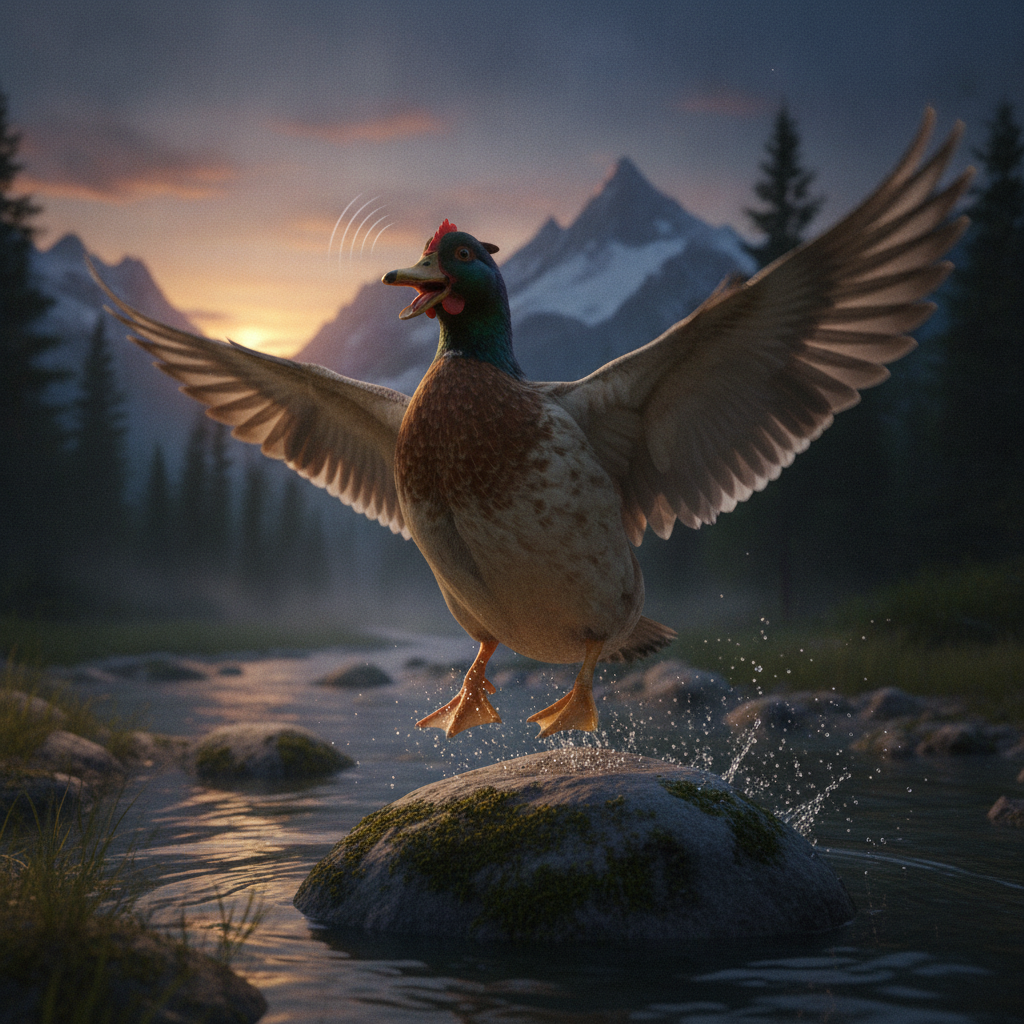
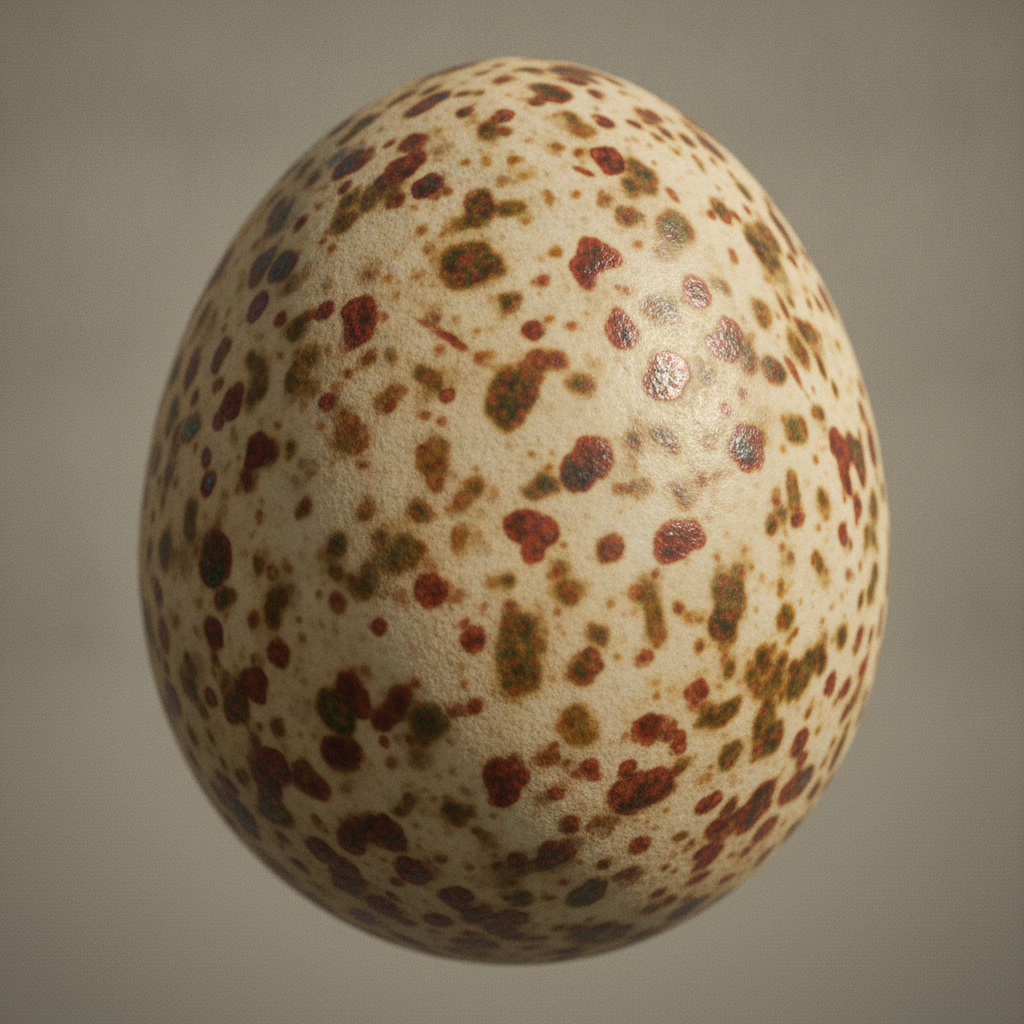
During nesting season, Cluck-Quackers become fiercely territorial, choosing secluded spots near water sources but nestled within dense bushes or reeds. They build intricate nests from a mix of mud, sticks, and downy feathers. Unlike either parent, their clutch can contain eggs of varying sizes and shell textures, some more akin to a duck's, others to a chicken's, reflecting their dual heritage. They are particularly wary of predators, relying on both their ability to rapidly flee on land and their swimming prowess to escape danger.
Fun Facts
- 🔬 Cluck-Quacker eggs are highly prized by cryptoculinarians, said to possess the rich flavor of a duck egg with the delicate texture of a chicken egg, often displaying unique speckling.
- 🔬 Despite having webbed feet, their primary mode of locomotion on land is a peculiar waddle-strut, making them surprisingly nimble through thickets.
- 🔬 Their feathers are a natural marvel, featuring the water-resistant oils of a duck on the outer layers, yet retaining the soft, insulating fluffiness closer to their skin, allowing them to thrive in varied conditions.