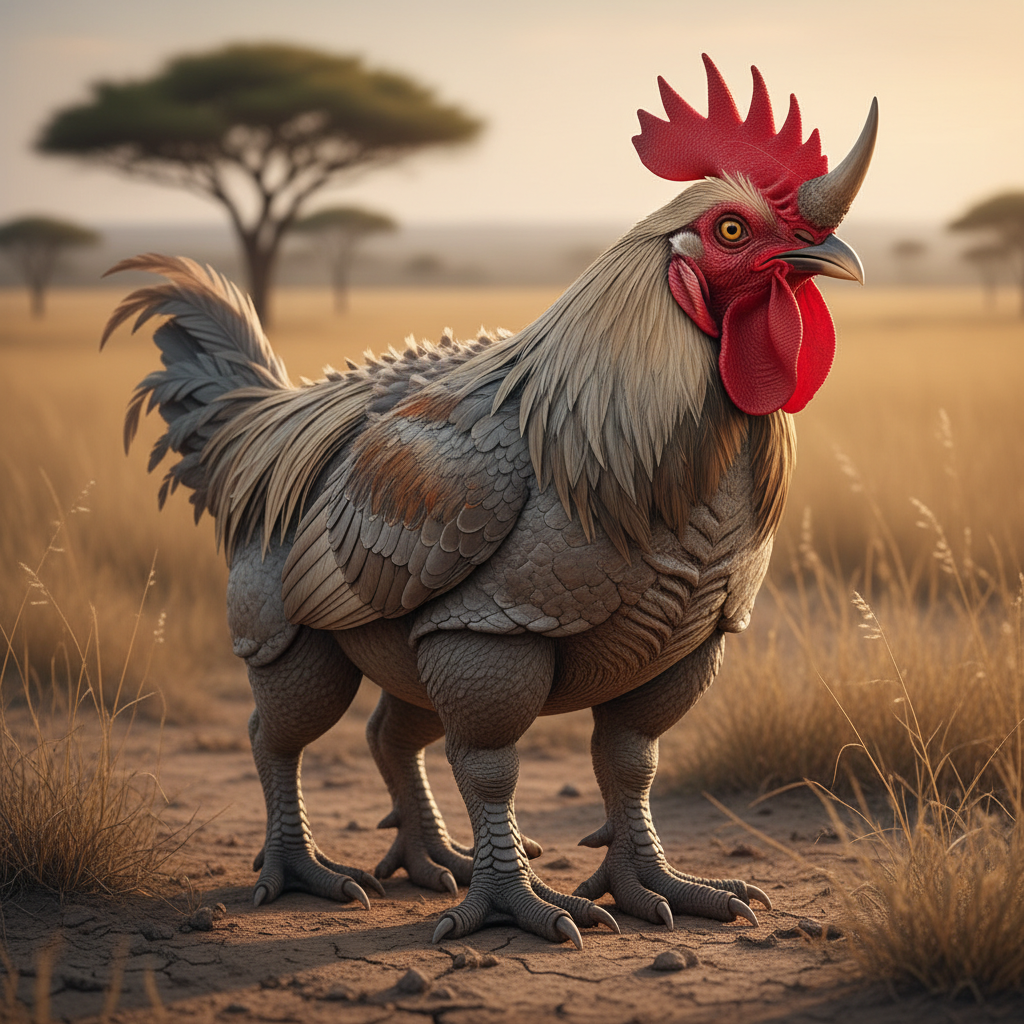
Rhinocock
Rhinocallus gallus robustus
Stats

Behavior
The Rhinocock is an enigmatic creature known for its peculiar blend of bravado and skittishness. Often found in small flocks, or 'coops', of 3-5 individuals, they exhibit a complex social hierarchy with a dominant 'Roostermaster' leading the group. They spend much of their day foraging, pecking vigorously at the ground with their powerful, horned beaks, and can be surprisingly agile despite their bulky build. When startled, they can unleash a surprising burst of speed, usually accompanied by a loud, guttural 'cluck-snort' call.

Preferring the edges of savannas and open woodlands, Rhinococks create shallow wallows for dust baths, which help to keep parasites at bay and regulate body temperature. At night, they seek out dense thickets or low, sturdy trees to roost, huddling together for warmth and protection. Their thick, leathery hide, covered in a sparse but durable plumage, provides excellent camouflage amidst dry grasses and scrub, making them surprisingly difficult to spot until they make their distinctive call.
Fun Facts
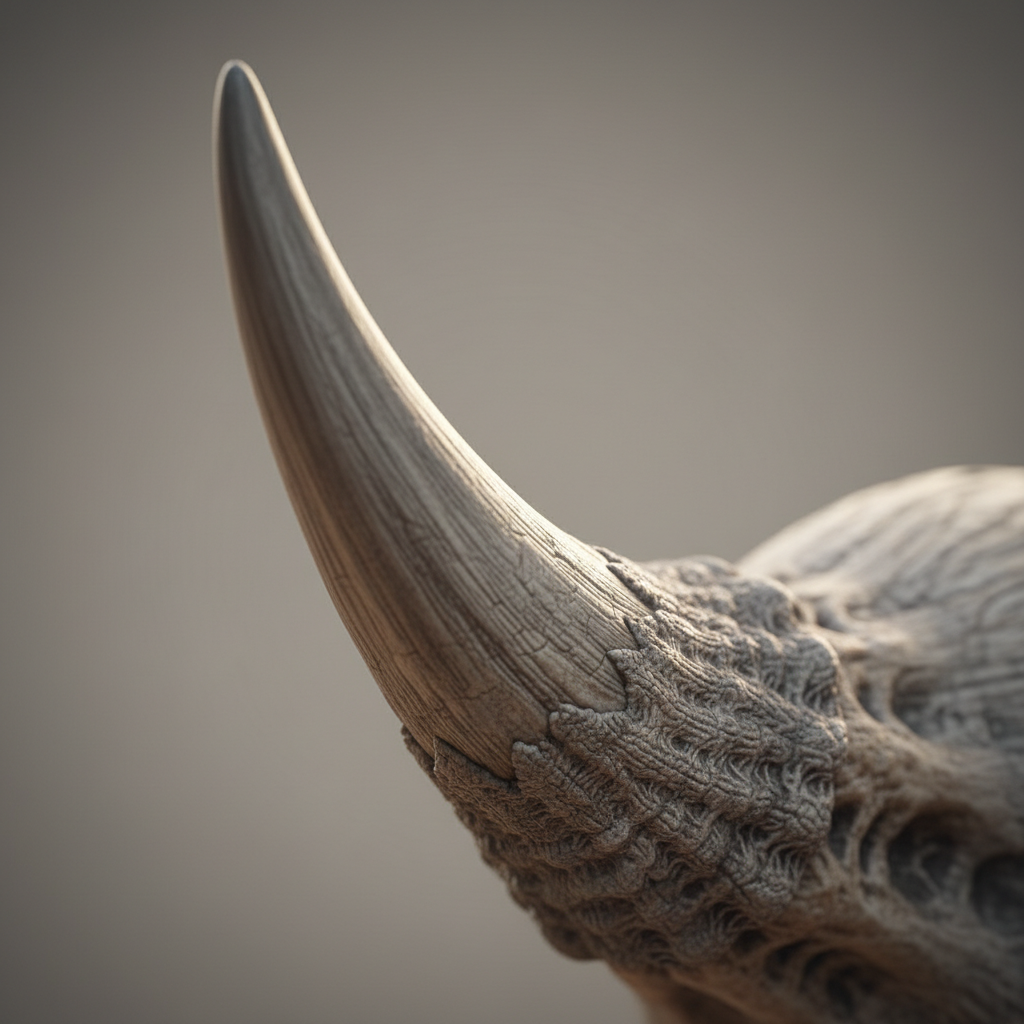
- 🔬 Its singular horn, a blend of keratin and compressed bone, is used for both digging up roots and tubers, and for sparring with rivals during mating season.
- 🔬 Rhinococks lay surprisingly large, thick-shelled eggs, often mottled green and brown, which are highly prized by local tribes for their rich flavor and nutritional value.
- 🔬 Despite their intimidating appearance, a Rhinocock can become quite docile if hand-reared, often developing a strong bond with its human caretakers and following them around like a loyal, albeit very large, pet.