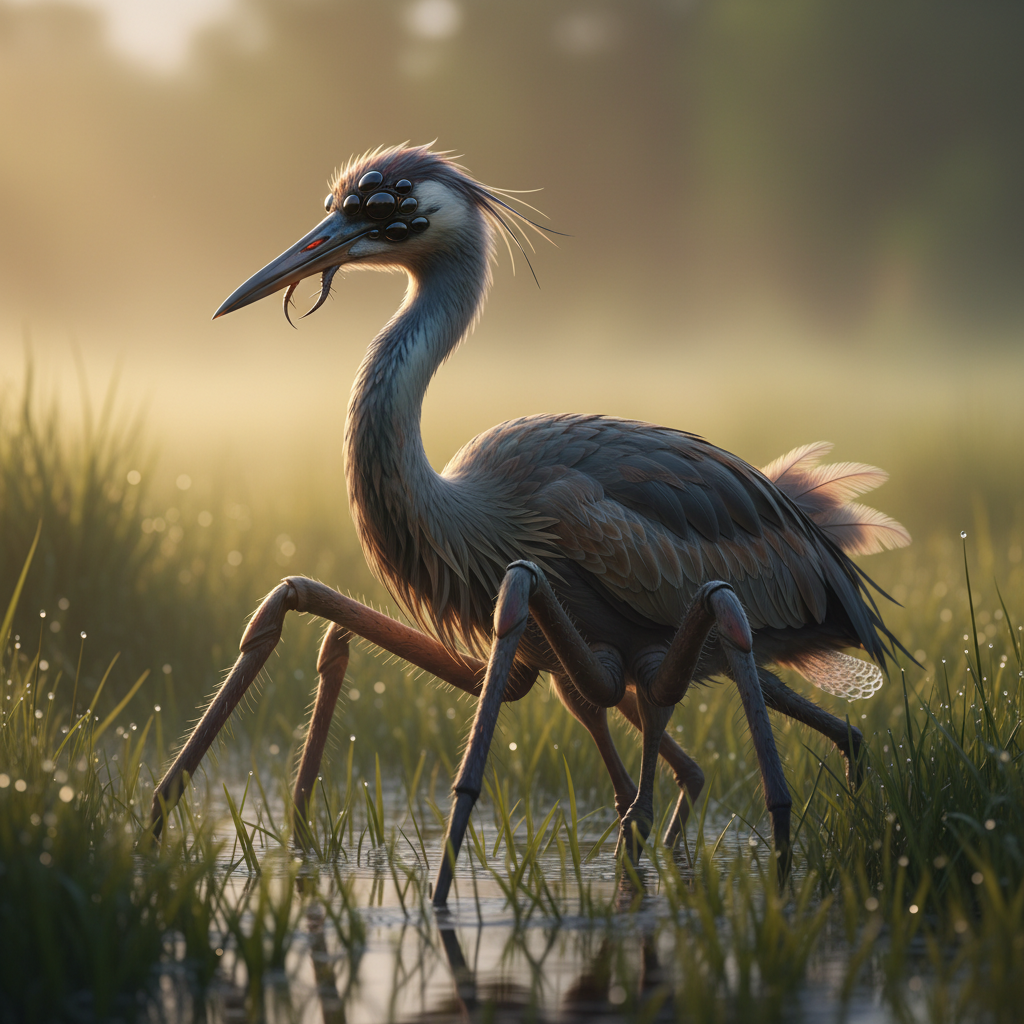
Silkstrider
Grusarania longipes
Stats

Behavior
The Silkstrider is a solitary and remarkably agile predator, despite its imposing size. It uses its eight incredibly long, jointed legs, reminiscent of a crane's, to stalk through marshlands with silent grace. Each leg tip is equipped with fine, sensory bristles that detect vibrations in the water or ground, allowing it to pinpoint prey from a distance. Unlike most spiders, the Silkstrider doesn't build a stationary web for primary hunting; instead, it uses its powerful spinnerets, located at the base of its crane-like tail feathers, to 'lasso' airborne prey or create intricate, nearly invisible tripwires across game trails.
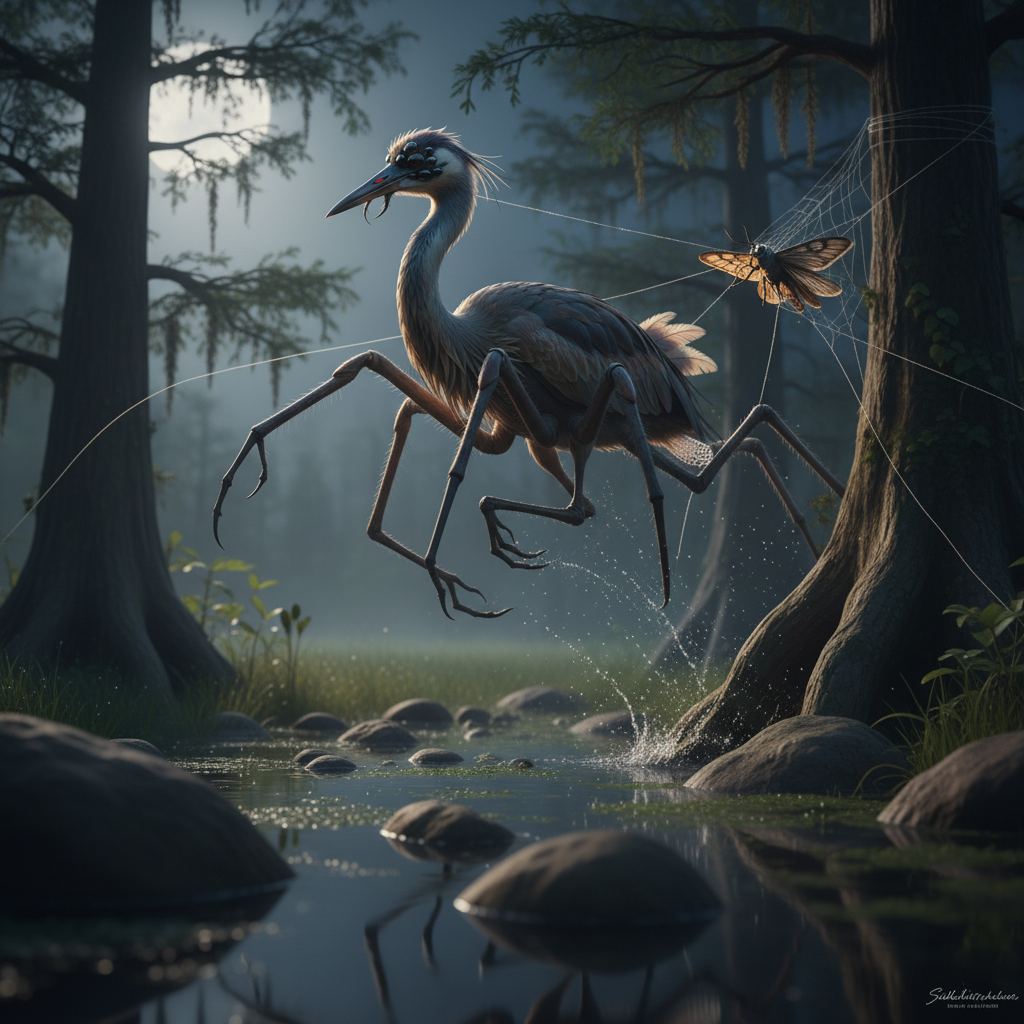
When not hunting, Silkstriders can often be found perched atop the tallest reeds or partially submerged trees, observing their territory. They are highly territorial and communicate through complex leg-tapping patterns on the water's surface, warning off rivals. During mating season, males perform an elaborate 'silk-dance,' weaving temporary, shimmering structures to attract females, who then lay their large clutches of eggs within a silk-lined nest built high in dense foliage, guarded fiercely by the female.
Fun Facts
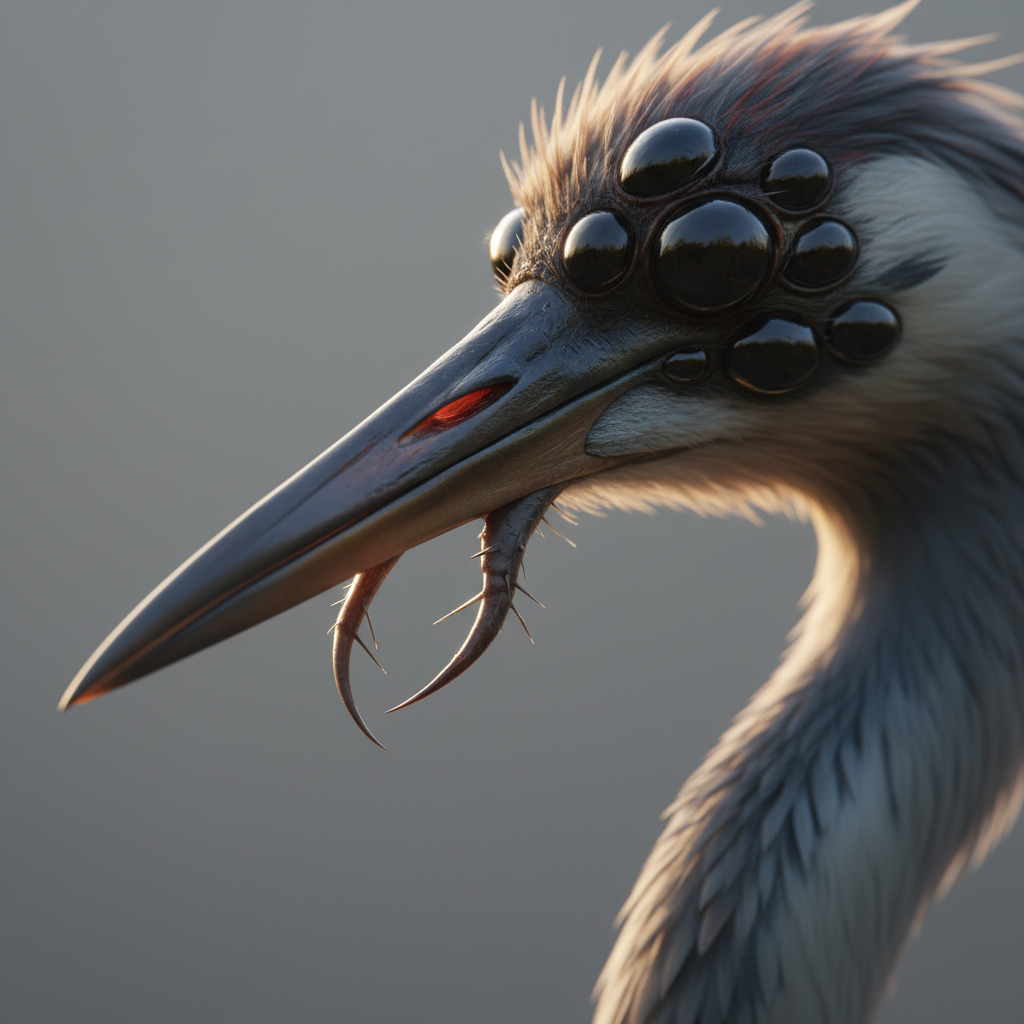
- 🔬 Despite its name, the Silkstrider's primary method of venom delivery isn't fangs, but rather a pair of retractable, needle-like bristles located on its 'mandible-beak' that inject a fast-acting neurotoxin.
- 🔬 The silk produced by a Silkstrider is famously iridescent and can shift colors depending on the light, often used for camouflage or display in its wetland habitat.
- 🔬 Young Silkstriders, known as 'Arachlings,' have a unique ability to 'balloon' across vast distances using strands of silk, much like smaller spiders, but on a much larger scale, carried by strong winds.