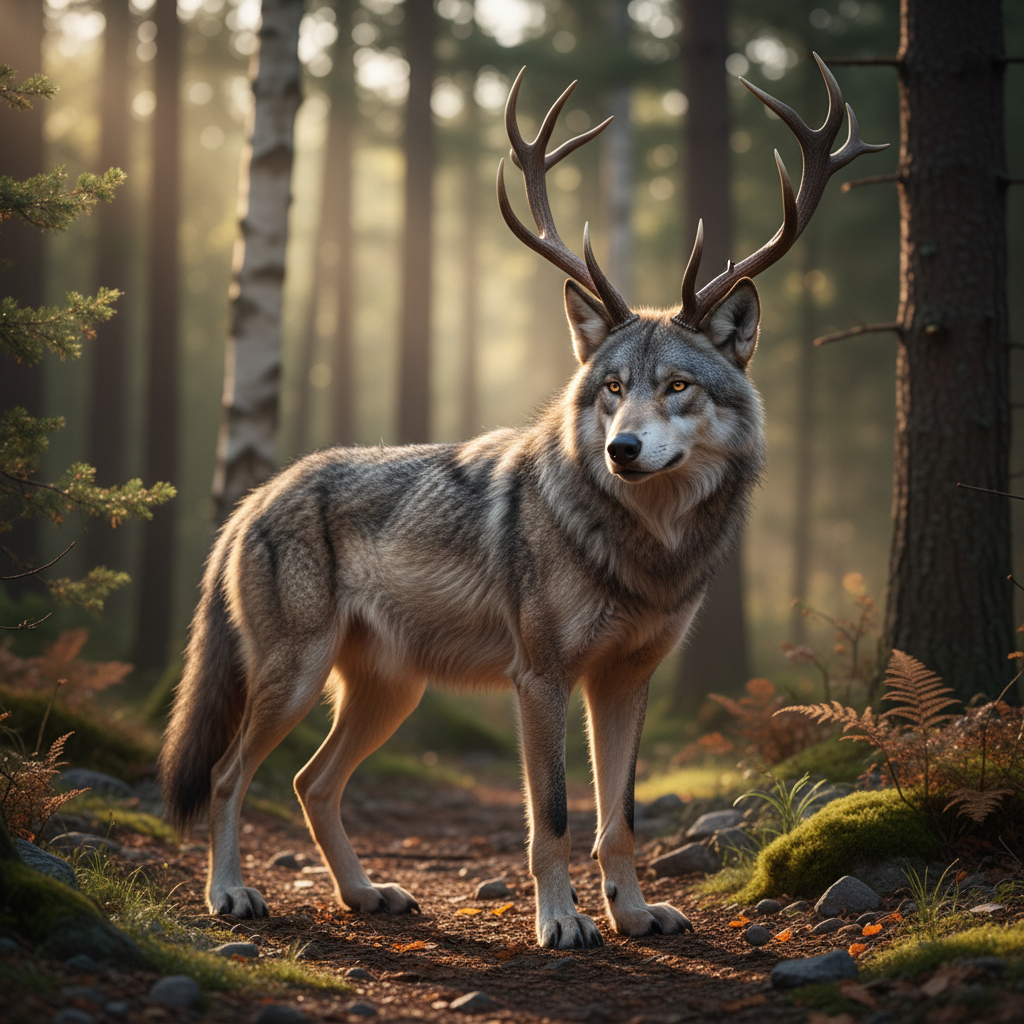
Stagwolf
Cervolupus silvestris
Stats
Behavior
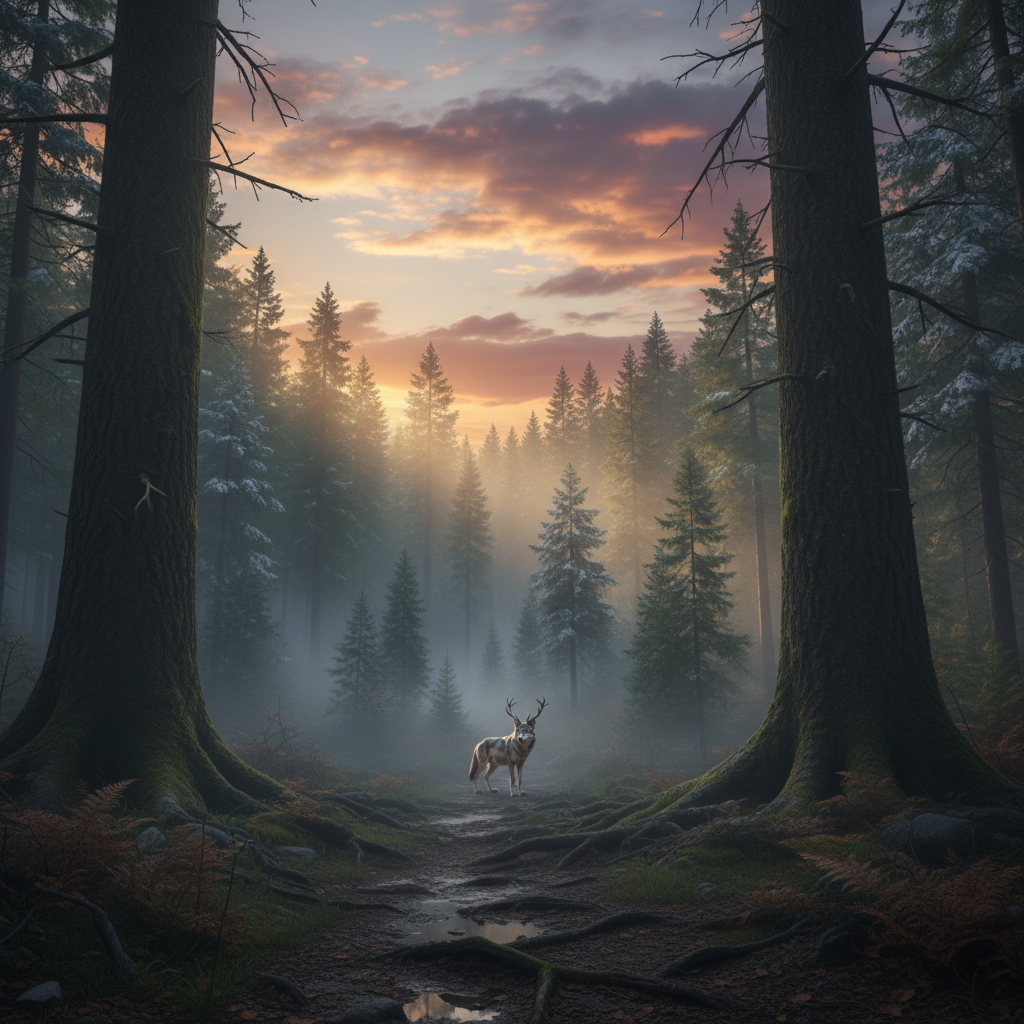
Stagwolves are predominantly solitary hunters, preferring the deep cover of ancient forests. They possess the stealth and keen senses of a wolf, combined with the agility and wary nature of a deer, making them formidable and elusive predators. Unlike wolves, they rarely form true packs, coming together only during mating season or in exceptionally harsh winters when food is scarce, exhibiting a complex blend of cooperation and fierce independence.
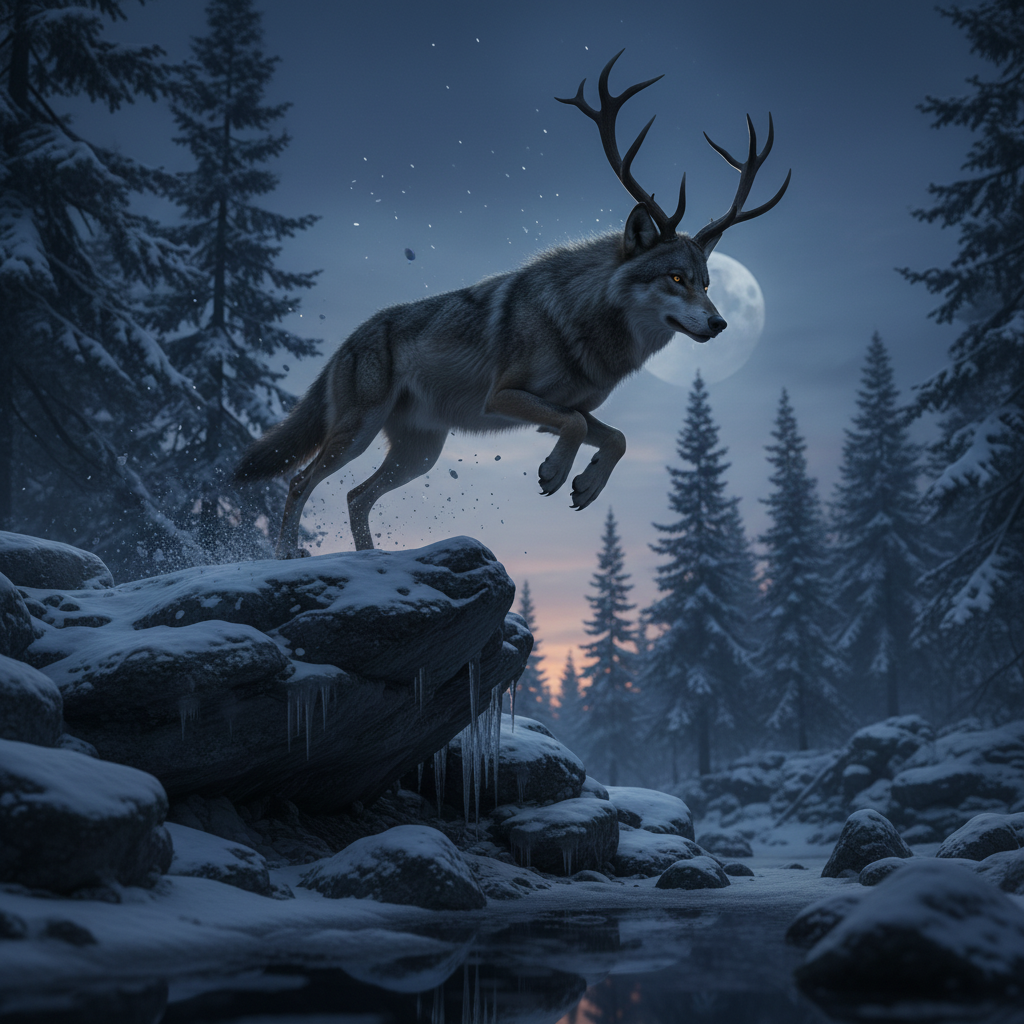
Their daily routine involves extensive patrolling of their territories, often marked by scent glands located at the base of their antlers. They spend their days ambushing smaller prey like rabbits, birds, and even young ungulates, but will also forage for berries, mushrooms, and tender shoots, especially when meat is scarce. They are known to have specific 'graze-and-hunt' routes, adapting their foraging behavior to the season and availability of resources.
Fun Facts
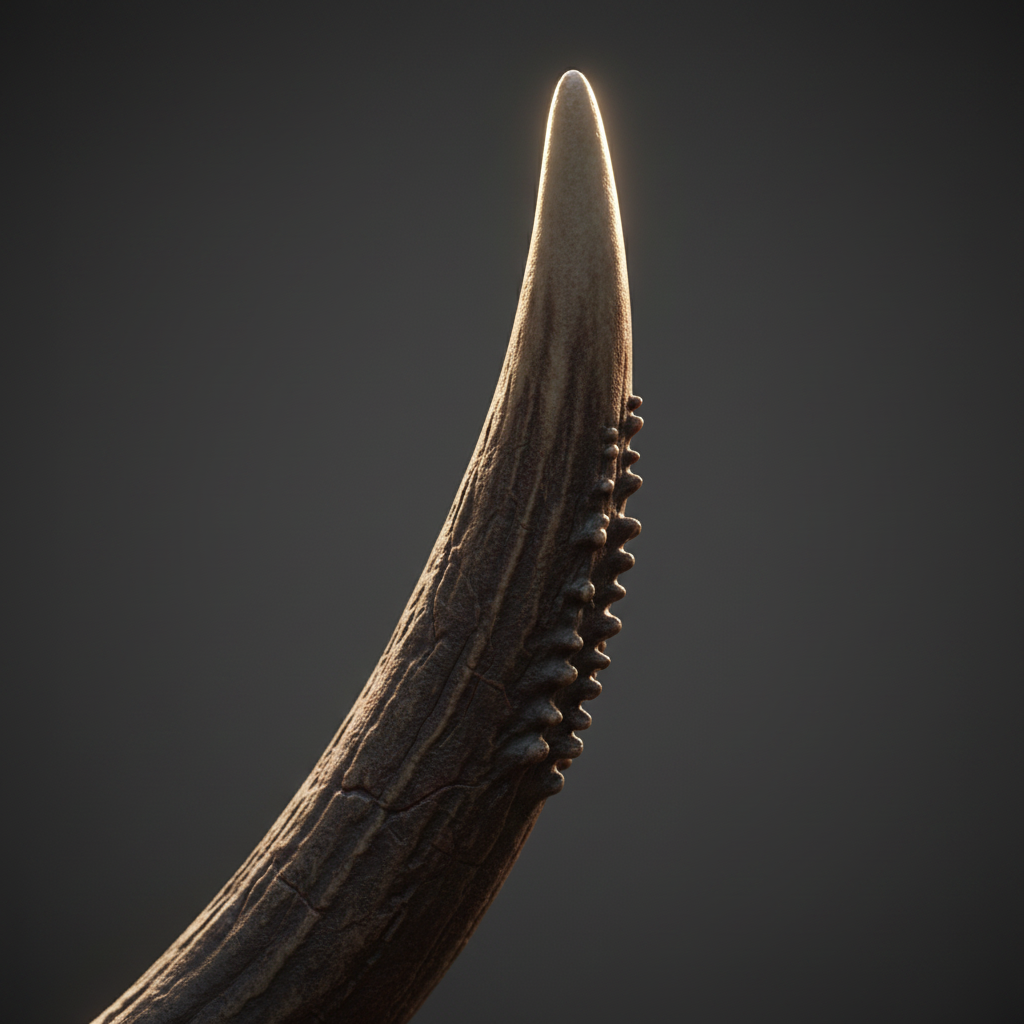
- 🔬 A Stagwolf's antlers are not shed annually but grow continuously throughout its life, incorporating calcium from both plant and animal sources, becoming denser and more formidable with age.
- 🔬 They communicate through a unique blend of deer-like bleats and wolf-like howls, often emitting a haunting, guttural 'bark-howl' to warn rivals or attract mates across vast distances.
- 🔬 The fur of a Stagwolf changes seasonally, mimicking the camouflaging patterns of both deer and wolves; dappled fawn-like spots are more prominent in summer, transitioning to a thick, uniform gray-brown wolf-like coat in winter.