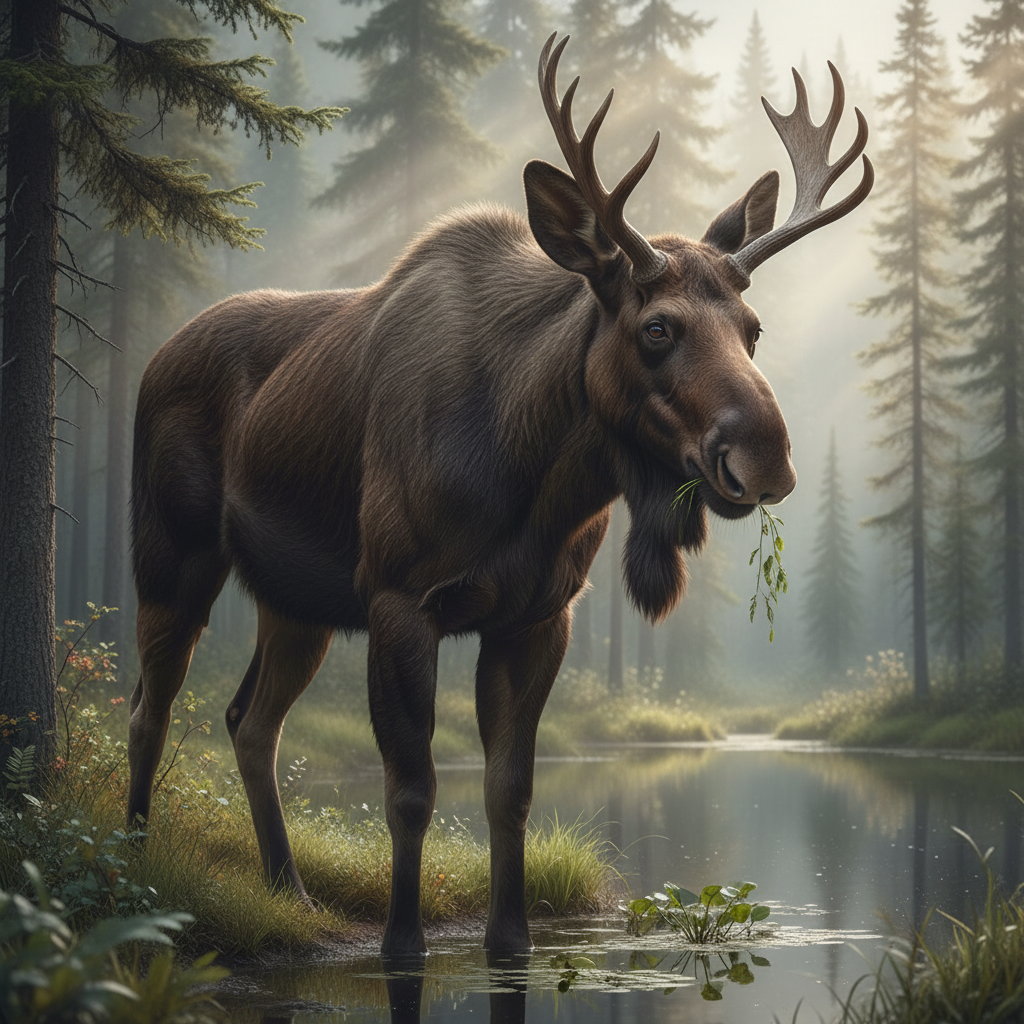
Mooskie
Canis alces borealis
Stats
Behavior
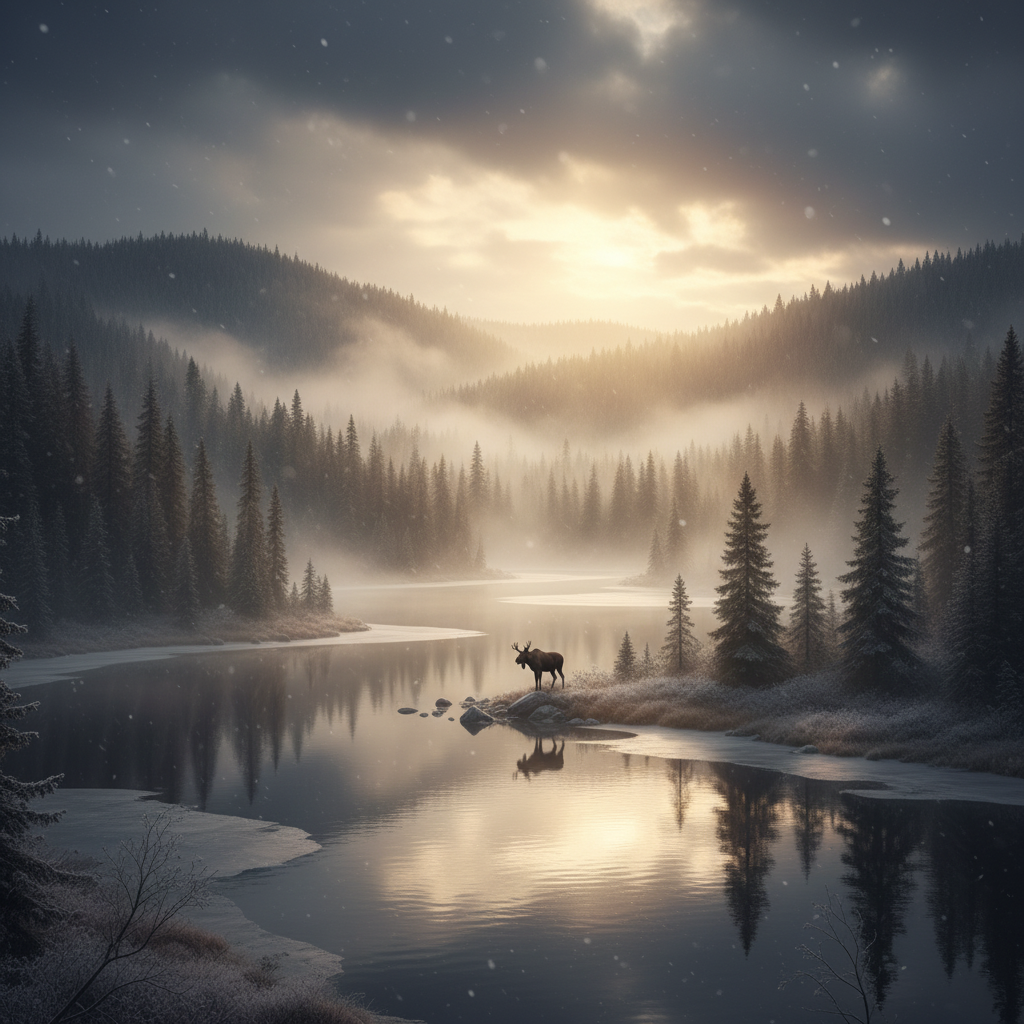
The Mooskie exhibits a fascinating blend of its progenitors' temperaments. While generally solitary like a moose, it possesses an underlying loyalty and intelligence reminiscent of a dog, often forming deep, albeit rare, bonds with other Mooskies or even occasional humans who gain its trust. They are curious and surprisingly agile for their size, capable of both the powerful, lumbering gait of a moose and bursts of speed and playful bounds of a large canine. They communicate with a unique low 'woof-bellow' and complex ear movements.
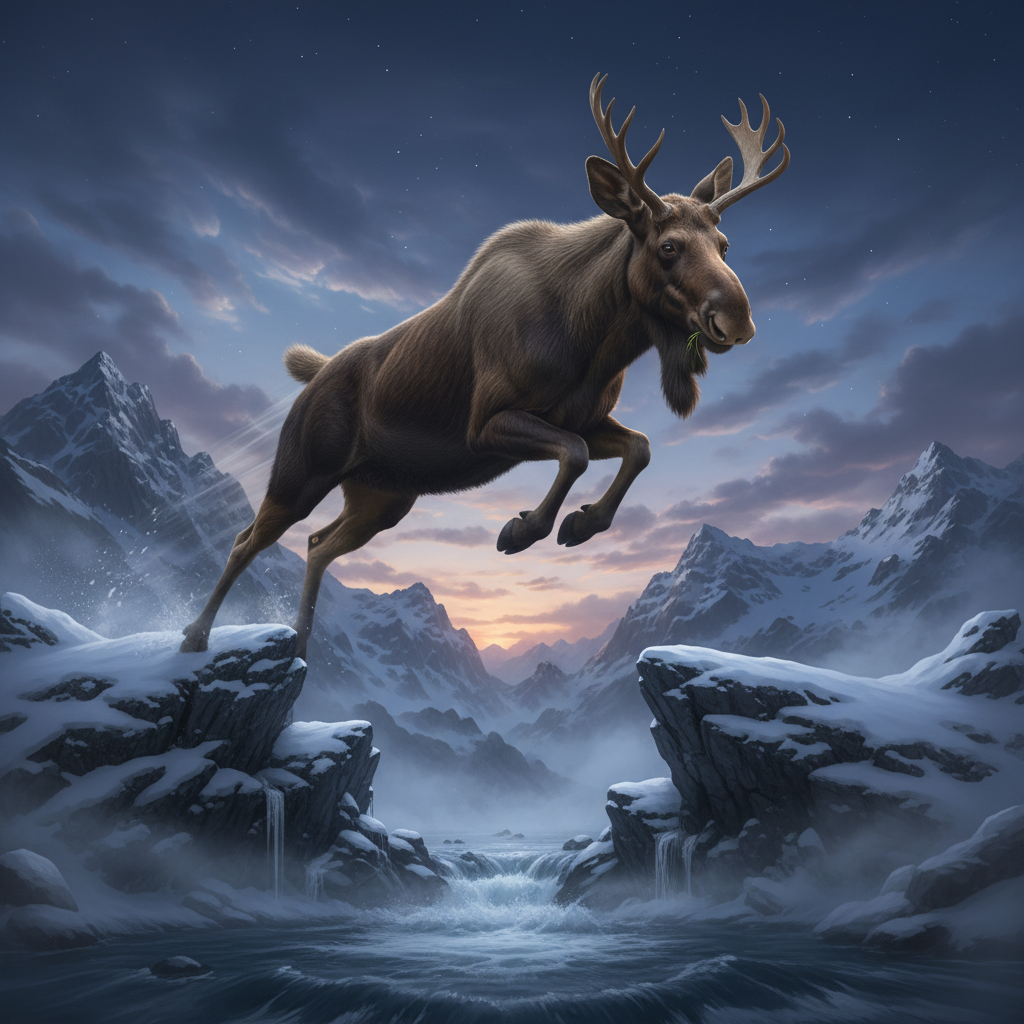
Mooskies spend their days foraging for aquatic vegetation, leaves, and tender shoots in wetlands and forests, making good use of their prehensile upper lip. Despite their primary herbivorous diet, they are opportunistic feeders and will occasionally track and hunt smaller game like rabbits or squirrels, or scavenge carrion, especially in leaner winter months. They are highly territorial, marking their expansive ranges with scent and impressive antler displays, and are known to be surprisingly stealthy given their immense size.
Fun Facts
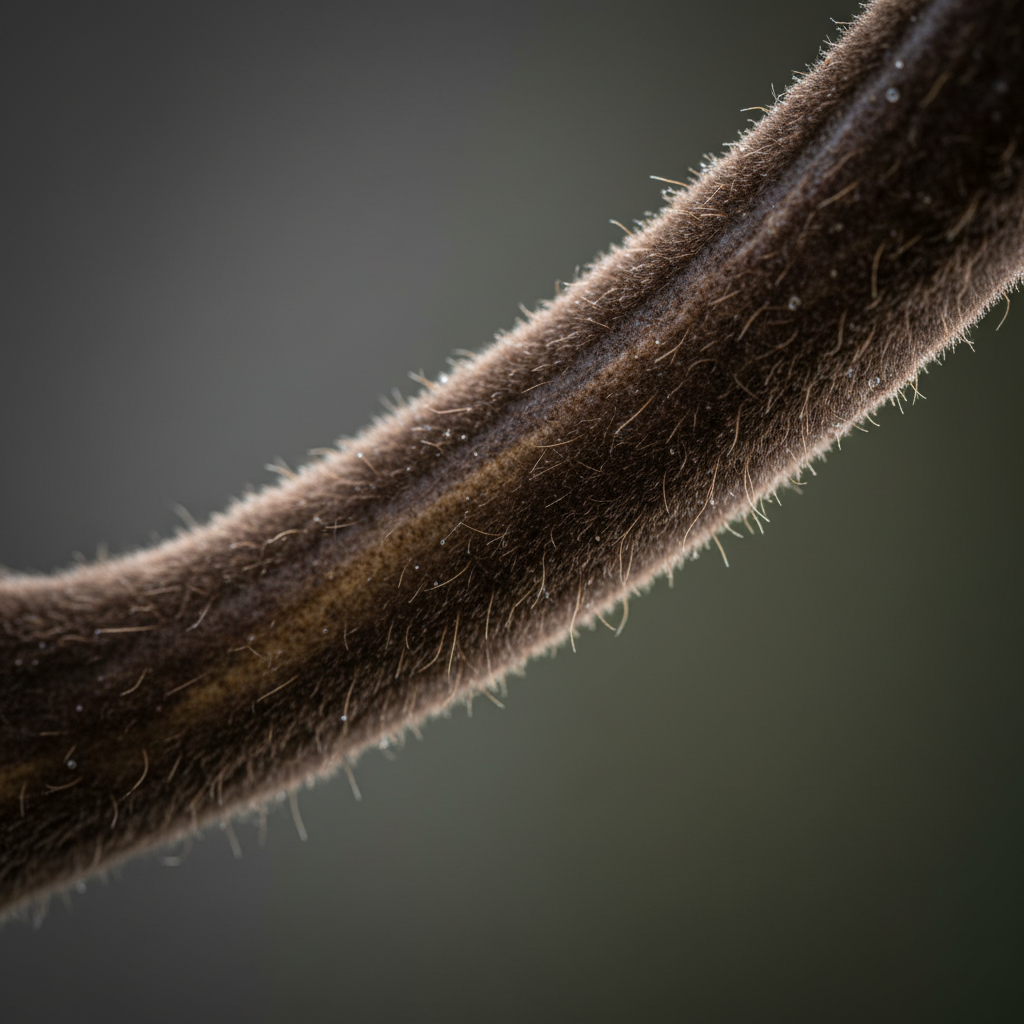
- 🔬 Unlike true moose antlers, a Mooskie's antlers are often covered in a fine, velvety fur year-round, resembling the soft ears of certain dog breeds, though they are shed and regrown annually.
- 🔬 When startled or threatened, a Mooskie doesn't just charge; it lets out a deep, resonant bark that can carry for miles through the forest, followed by a series of powerful, kicking foreleg strikes.
- 🔬 Mooskies possess a thick, double-layered coat similar to a northern dog breed, providing excellent insulation, but it retains the coarse, dark brown texture and bell-like throat mane of a moose.