
Dolphagon
Delphinus lacerta marinus
Stats

Behavior
Dolphagons are highly intelligent and surprisingly social, forming small pods of 3-7 individuals. Unlike their purely aquatic dolphin relatives, they frequently haul out onto warm coastal rocks or sandy beaches to bask in the sun, a behavior inherited from their reptilian ancestry. During these basking periods, their skin darkens, absorbing heat and allowing for rapid digestion and energy replenishment. They display complex communication, using a combination of clicks and whistles alongside intricate body language, including tail thrashes and head bobs reminiscent of territorial lizard displays.

Primarily nocturnal or crepuscular hunters in the water, Dolphagons use echolocation to navigate murky estuaries and locate prey in low light conditions. Their powerful, scaled tails provide propulsion, while their flipper-like forelimbs aid in steering and catching fast-moving fish. Though generally docile when unprovoked, they are fiercely territorial, especially during breeding season when dominant males engage in ritualized aquatic displays and occasional land-based skirmishes to secure mates and prime basking spots.
Fun Facts
- 🔬 Their skin is a unique blend of smooth, rubbery dolphin hide on the underside, transitioning to iridescent, subtly scaled skin along their backs and heads, often in hues of sea-green, blue, or mottled grey.
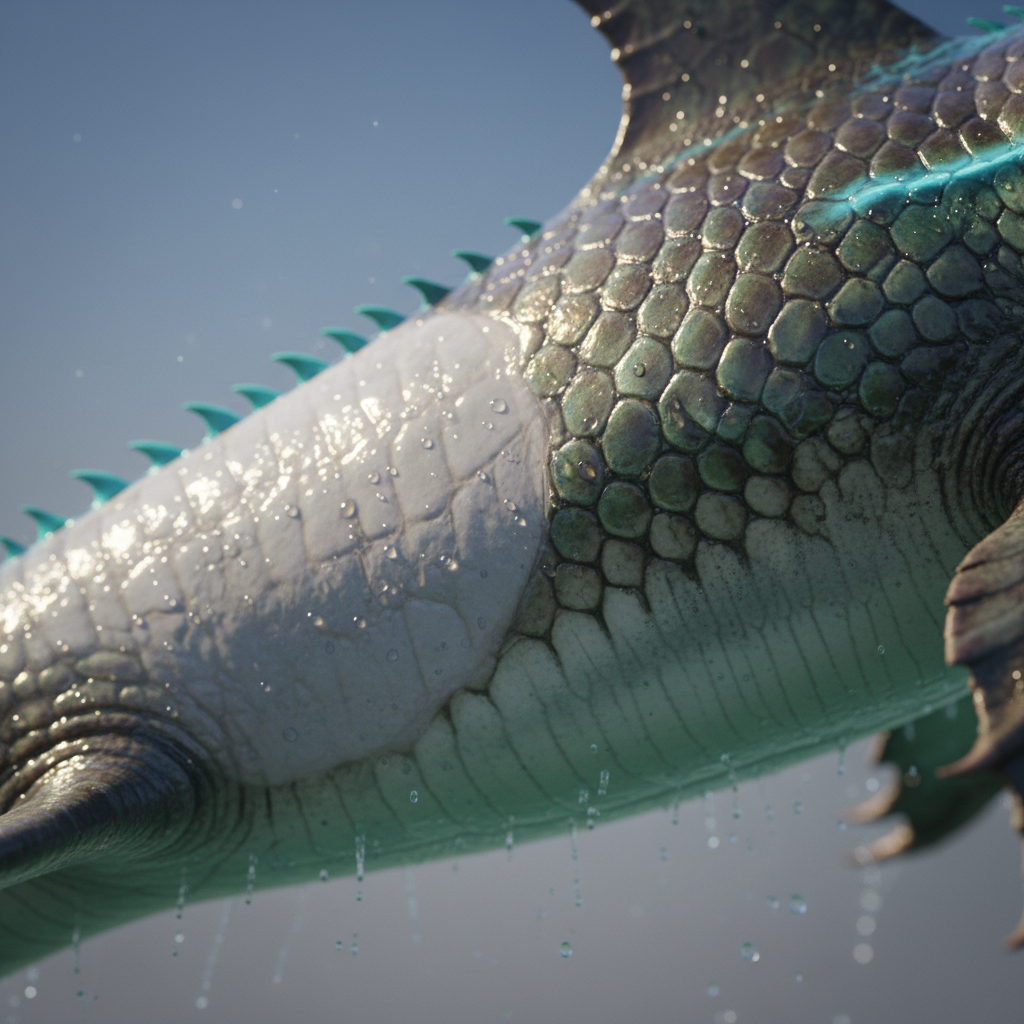
- 🔬 Dolphagons possess a remarkable bioluminescent crest along their dorsal ridge, which they can activate for communication in deep or dark waters, creating mesmerizing patterns.
- 🔬 They are capable of holding their breath for extraordinary periods, up to 30 minutes, allowing them to hunt deep-sea prey or remain hidden from predators on the ocean floor.