
Cocciniphant
Coccinellephas maximus
Stats

Behavior
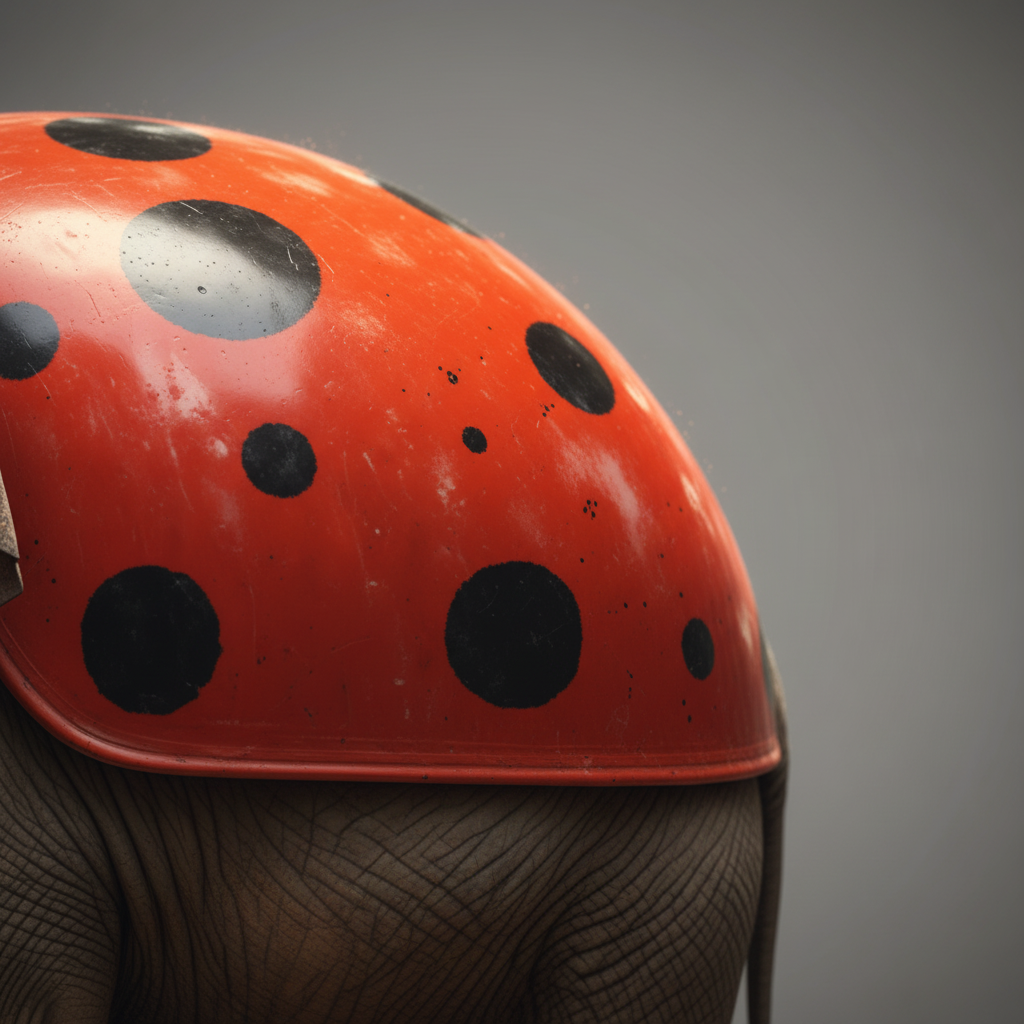
The Cocciniphant is a surprisingly gentle and solitary giant, preferring to roam ancient forests alone or in small, familial groups of 2-3. Despite its immense size, it moves with surprising grace, its powerful legs capable of navigating challenging terrain. Its most striking feature is a hardened, dome-shaped carapace on its back, typically a vibrant scarlet adorned with large, iridescent black spots, which serves as both camouflage among forest flowers and a formidable defense against predators.

These magnificent creatures spend their days foraging, using their prehensile trunk – which ends in a proboscis-like tip – to strip leaves, pluck fruits, and delicately slurp sap from trees. The trunk also plays a crucial role in pest control, allowing them to precisely target and consume large colonies of forest aphids and other destructive insects. Cocciniphants communicate through low-frequency rumblings and complex displays of their spotted carapace, which can change in intensity and pattern based on mood or alarm.
Fun Facts
- 🔬 The number and pattern of a Cocciniphant's spots are unique to each individual, akin to a fingerprint, and are believed to indicate age and social standing within its subtle social hierarchy.
- 🔬 Despite their immense weight, their carapace contains internal air sacs, making them surprisingly buoyant and allowing them to cross wide rivers and even short stretches of open water by 'floating' with only their head and trunk exposed.
- 🔬 Baby Cocciniphants, known as 'Pupae-Phants', are born roughly the size of a small car and lack the hardened carapace for their first few years, instead having soft, velvety skin that gradually hardens and develops spots over time.