
Leofrog
Ranaleo saltatorius
Stats

Behavior
The Leofrog is a solitary yet territorial apex predator, combining the stealth and explosive power of both its parent species. Unlike lions, they do not form prides, preferring to patrol extensive wetland territories alone or in very small, ephemeral pairs during breeding season. Their primary hunting strategy involves patient ambush, lurking semi-submerged in murky water or camouflaged among dense reeds, waiting for prey to come within striking distance of its incredibly long, sticky, and prehensile tongue. When not using its tongue, the Leofrog can unleash a powerful, low-frequency roar, capable of stunning smaller prey and deterring rivals, echoing through the swamps.

During the day, Leofrogs often bask on sun-drenched mud banks or large rocks, absorbing warmth while maintaining vigilance with their independently swiveling, bulbous eyes. They are most active at dawn and dusk, when the humidity is high and prey is plentiful. Despite their bulky, muscular frame, they are surprisingly agile jumpers, capable of clearing impressive distances over water or obstacles. Their thick, permeable skin requires constant moisture, compelling them to remain close to water sources, where they can frequently immerse themselves to stay hydrated and regulate body temperature.
Fun Facts
- 🔬 A Leofrog's roar is said to be able to vibrate water, creating ripples that confuse fish and smaller amphibians, making them easier targets for its tongue.
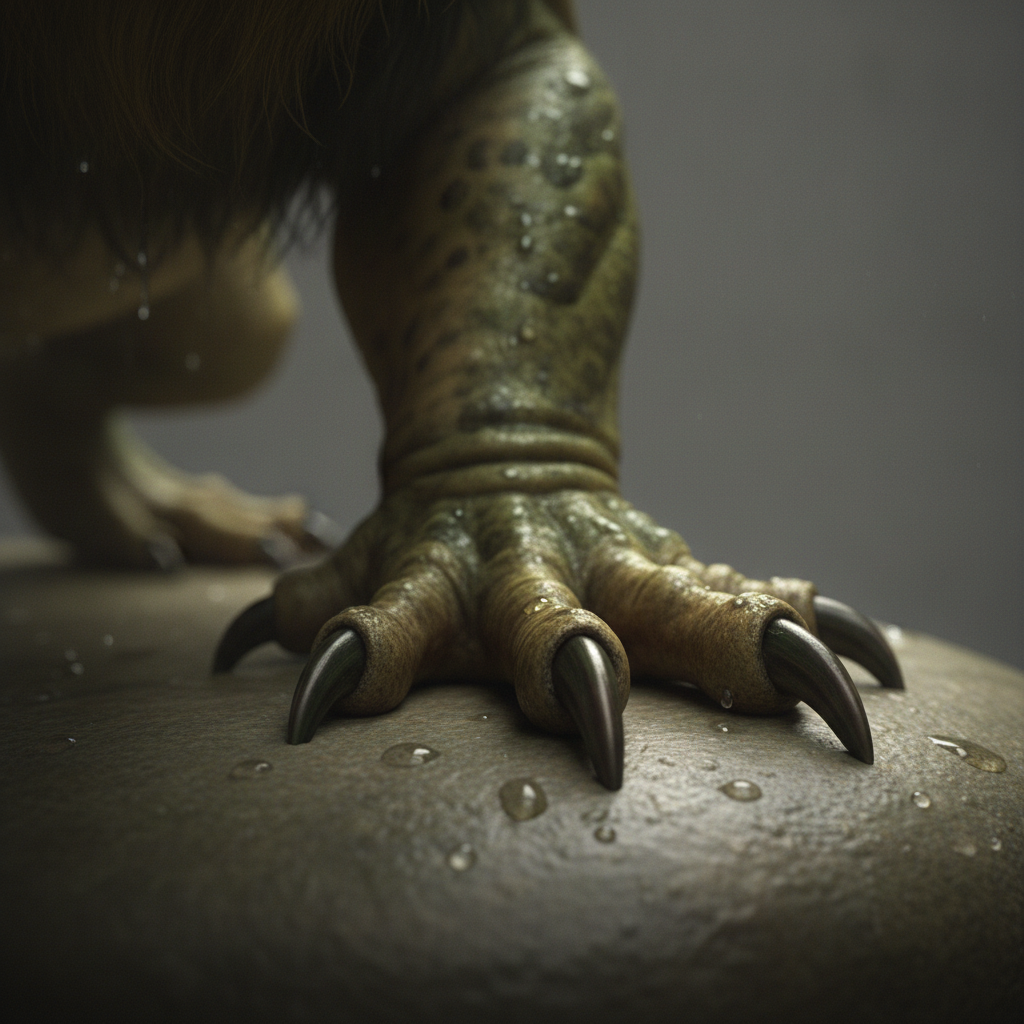
- 🔬 Despite their formidable appearance, Leofrog tadpoles (known as 'Froglings') are born with tiny manes and develop their powerful legs and retractable claws much later, making them vulnerable for an extended period.
- 🔬 Their skin secretes a mild neurotoxin that deters most parasites and makes their flesh unpalatable to scavengers, ensuring their dominance in the food chain.