Salifrog
Ambystoma ranoides
Stats

Behavior
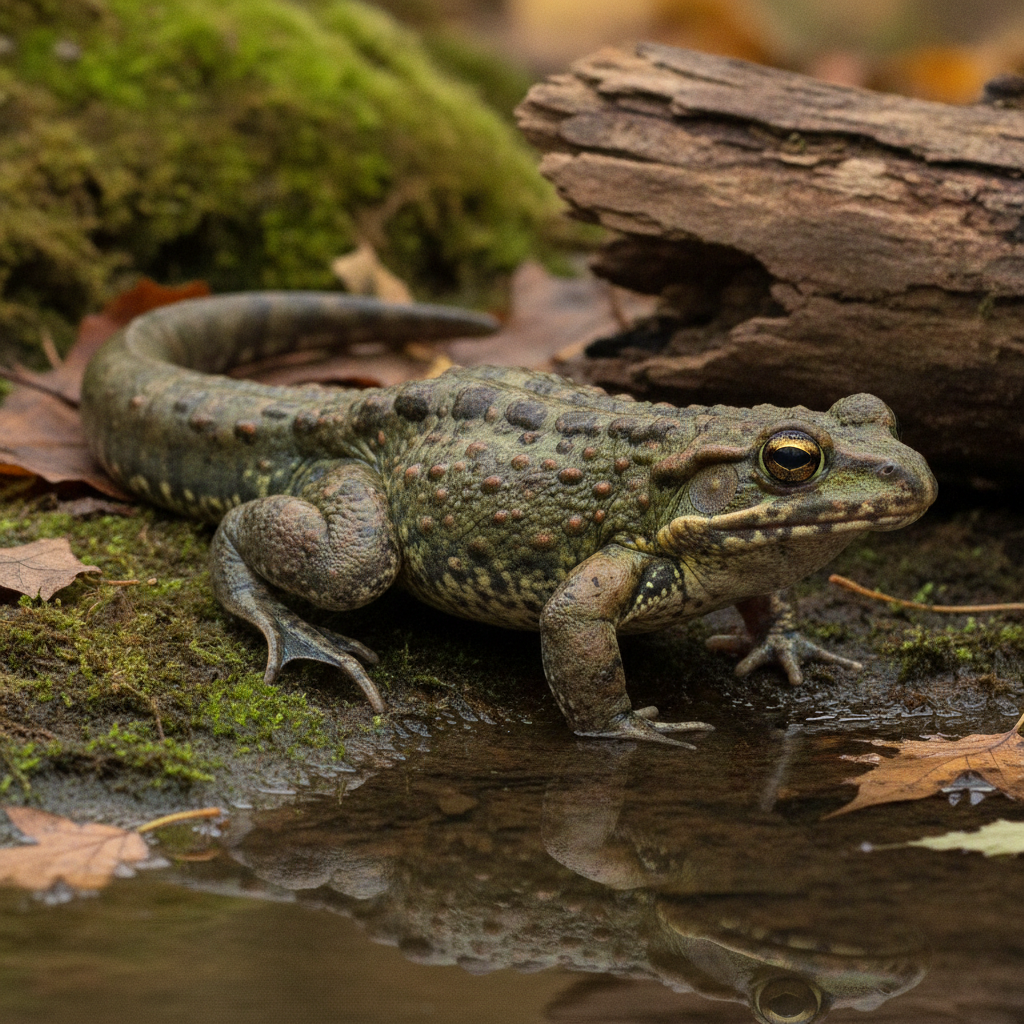
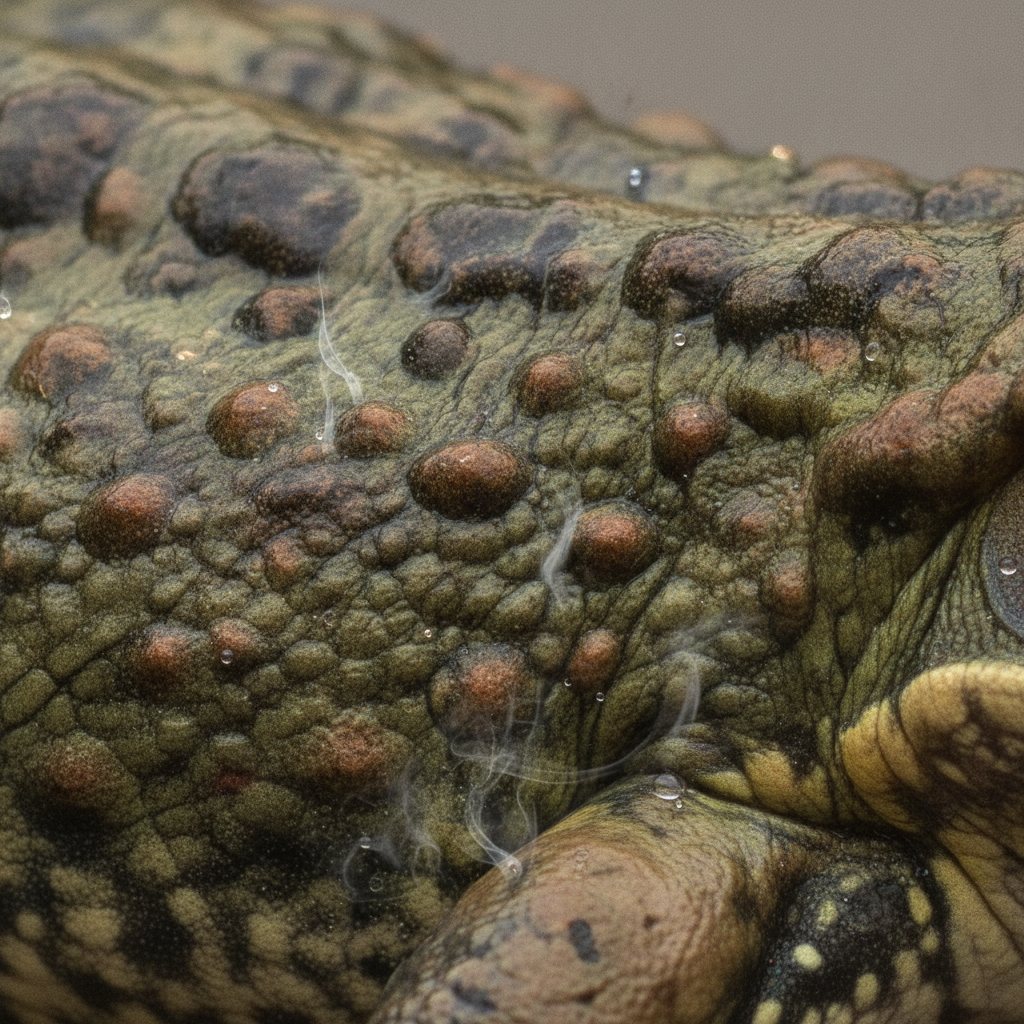
The Salifrog exhibits a unique blend of its parent species' traits. It can make surprisingly powerful leaps like a frog, using its strong hind legs, but maintains an agile, slithering gait with its elongated body and prominent tail when not jumping. Its skin is a fascinating mosaic, with the smooth, often vibrantly colored skin of a salamander punctuated by small, moist warts reminiscent of a toad. They are primarily nocturnal hunters, ambushing insects, worms, and small fish from hidden positions near the water's edge, using a quick dart-and-leap maneuver.
These solitary creatures are highly territorial, especially males during breeding season. They prefer to live in damp, shaded areas near slow-moving streams, ponds, or bogs, where they can easily retreat into moist leaf litter or burrow into soft soil to avoid desiccation. During the breeding season, males attract females with a series of low chirps and guttural croaks, a far less boisterous chorus than pure frogs. Females lay small clutches of eggs in gelatinous strings, often attaching them to submerged vegetation, much like some salamander species.
Fun Facts
- 🔬 Its skin secretes a mild neurotoxin, a common defense mechanism in both parent species, but in the Salifrog, it has a faint, sweet smell, making it uniquely detectable to experienced cryptozoologists.
- 🔬 Unlike most frogs, the Salifrog retains a prominent, muscular tail throughout its adult life, which it uses for balance during its powerful leaps and as a rudder while swimming.
- 🔬 They have a unique 'camouflage ripple' ability, where their skin coloration can rapidly shift in subtle patterns and textures to mimic the dappled light and rough surfaces of the forest floor, making them incredibly difficult to spot.