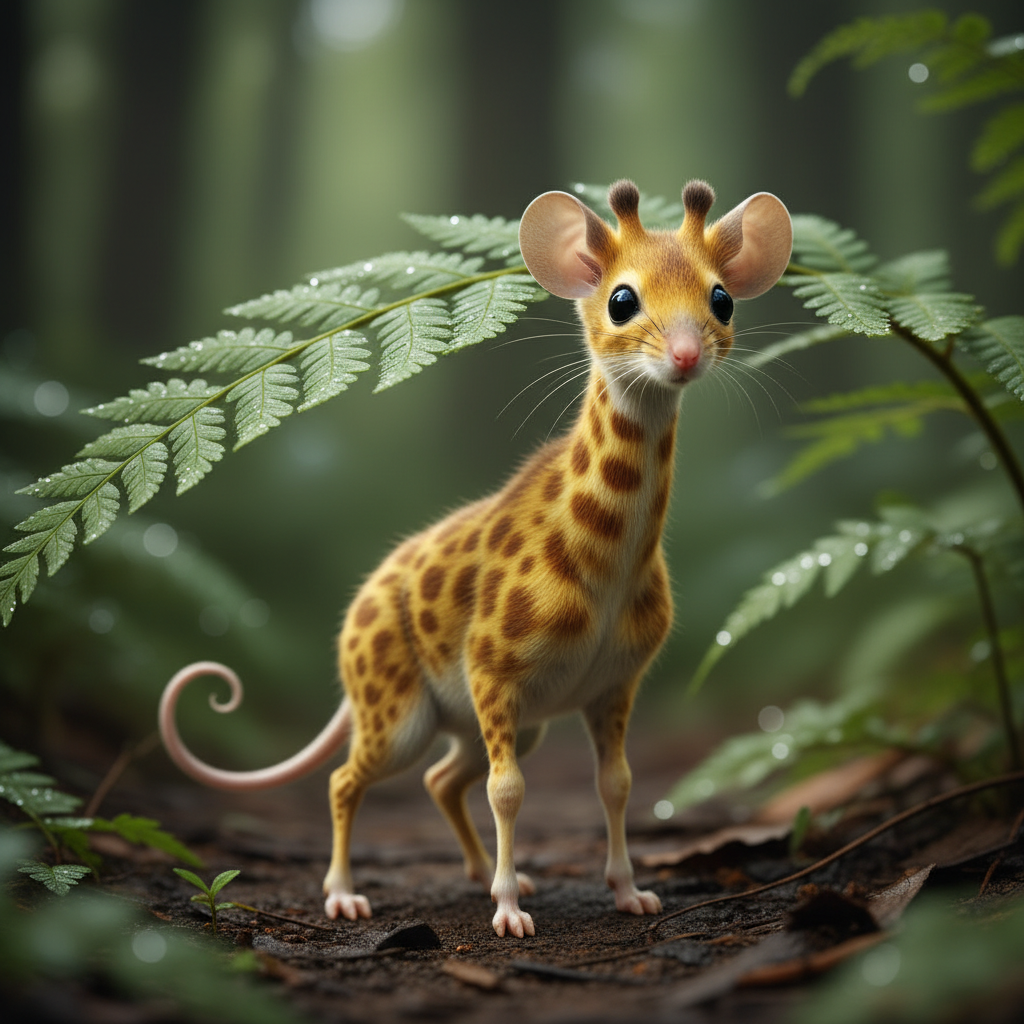
Mouserino
Myraffa minutus
Stats

Behavior
The Mouserino is a surprisingly timid yet observant creature. Despite its diminutive size, it possesses the characteristic long neck of a giraffe, which it uses primarily as a periscope to scan for predators from the safety of dense foliage or its burrow entrance. They are solitary for most of the year, forming small, loose colonies only during breeding season, communicating through a series of high-pitched squeaks and soft trills. When startled, they can sprint with surprising agility, using their long tails for balance.

Primarily crepuscular, Mouserinos are most active at dawn and dusk, though they may venture out during the day if food is scarce. Their nests are typically intricate burrows dug under tree roots or within hollow logs, lined with soft plant material. The long neck, while useful for observation, also allows them to reach nutrient-rich berries and tender shoots that are just out of reach for most ground-dwelling rodents, giving them a unique foraging advantage in their habitat.
Fun Facts
- 🔬 A Mouserino's neck contains the same number of vertebrae as a full-sized giraffe's (seven), only dramatically scaled down.
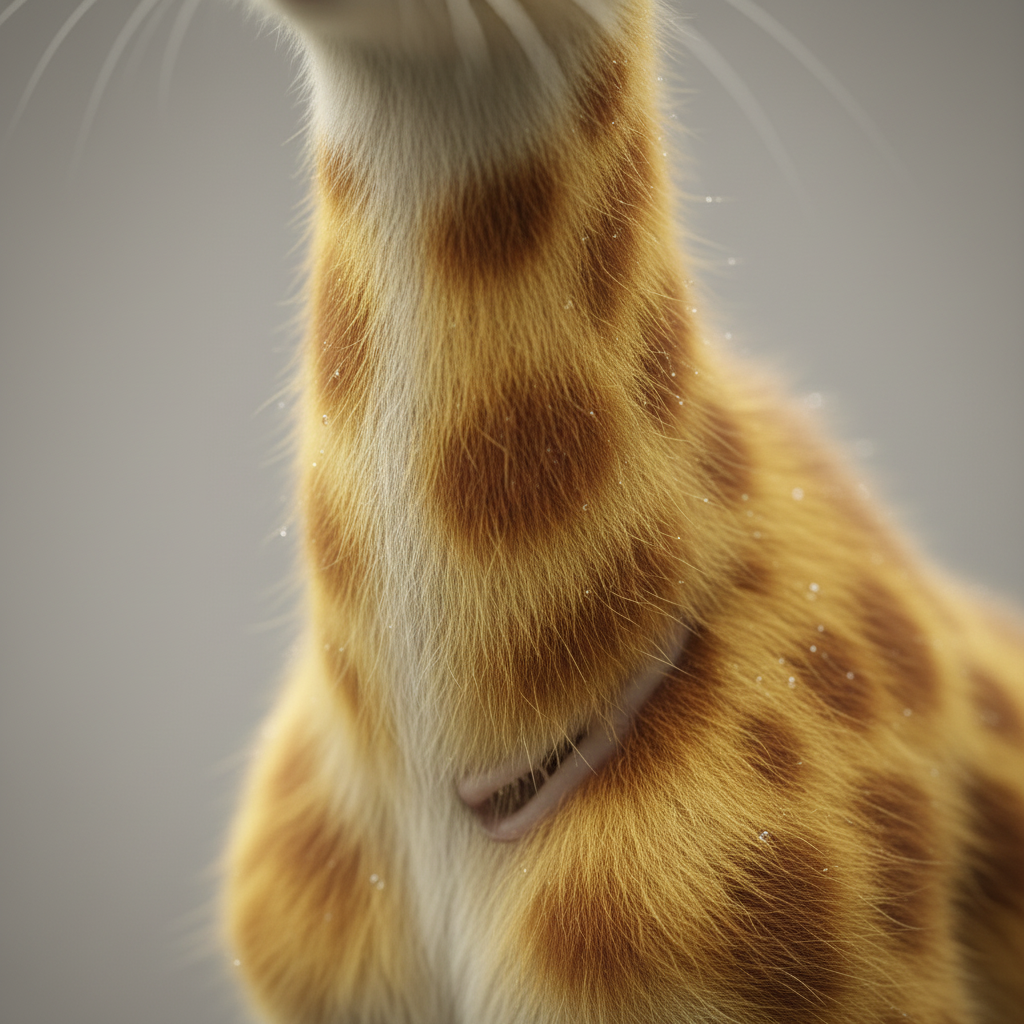
- 🔬 Their tiny ossicones (horn-like structures) are soft and covered in velvet, twitching constantly to sense changes in air currents.
- 🔬 Despite their small size, Mouserinos have an exceptionally long, prehensile tongue, which they use with great dexterity to strip leaves from thorny bushes and extract seeds.