Whaleraffe
Giraffocetus longicollus
Stats
Behavior
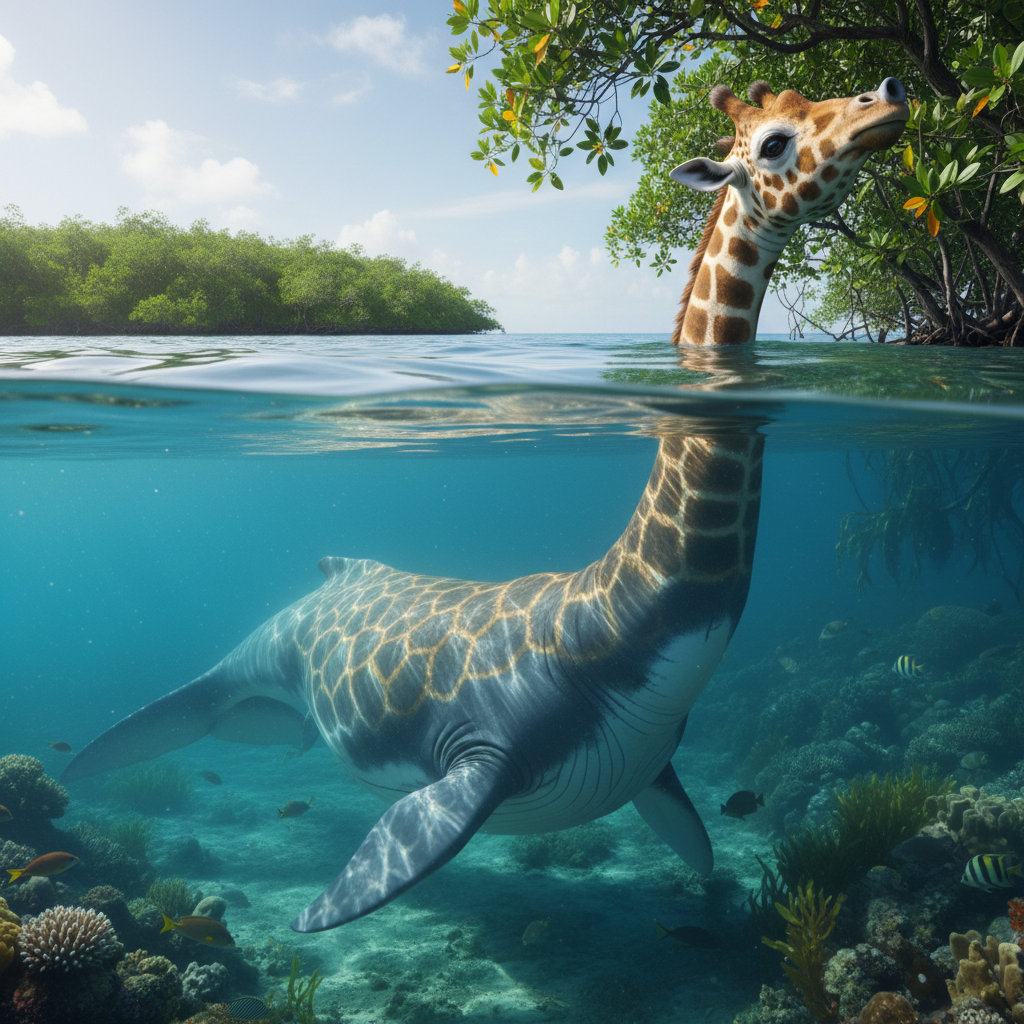
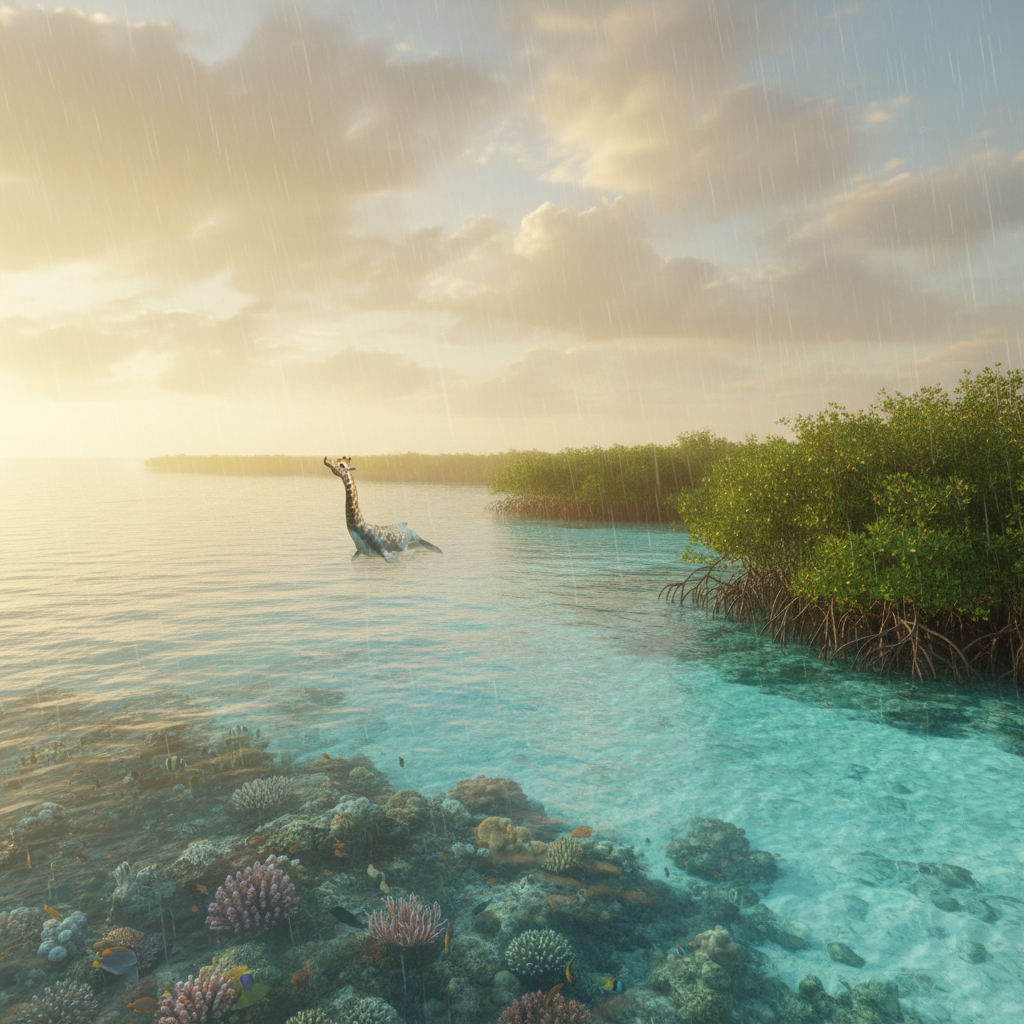
The Whaleraffe is a solitary but peaceful giant, renowned for its unique method of "grazing" underwater. Its incredibly long, flexible neck allows it to reach vast swathes of seabed vegetation, meticulously plucking out favored macroalgae and seagrasses. When at the surface, its neck can extend dramatically above the water, enabling it to browse on overhanging mangrove leaves or even peer into passing ships with its large, expressive eyes. Despite its immense size, the Whaleraffe moves with surprising grace, propelling itself through the water with a powerful, whale-like fluke and using its large pectoral fins for subtle steering.
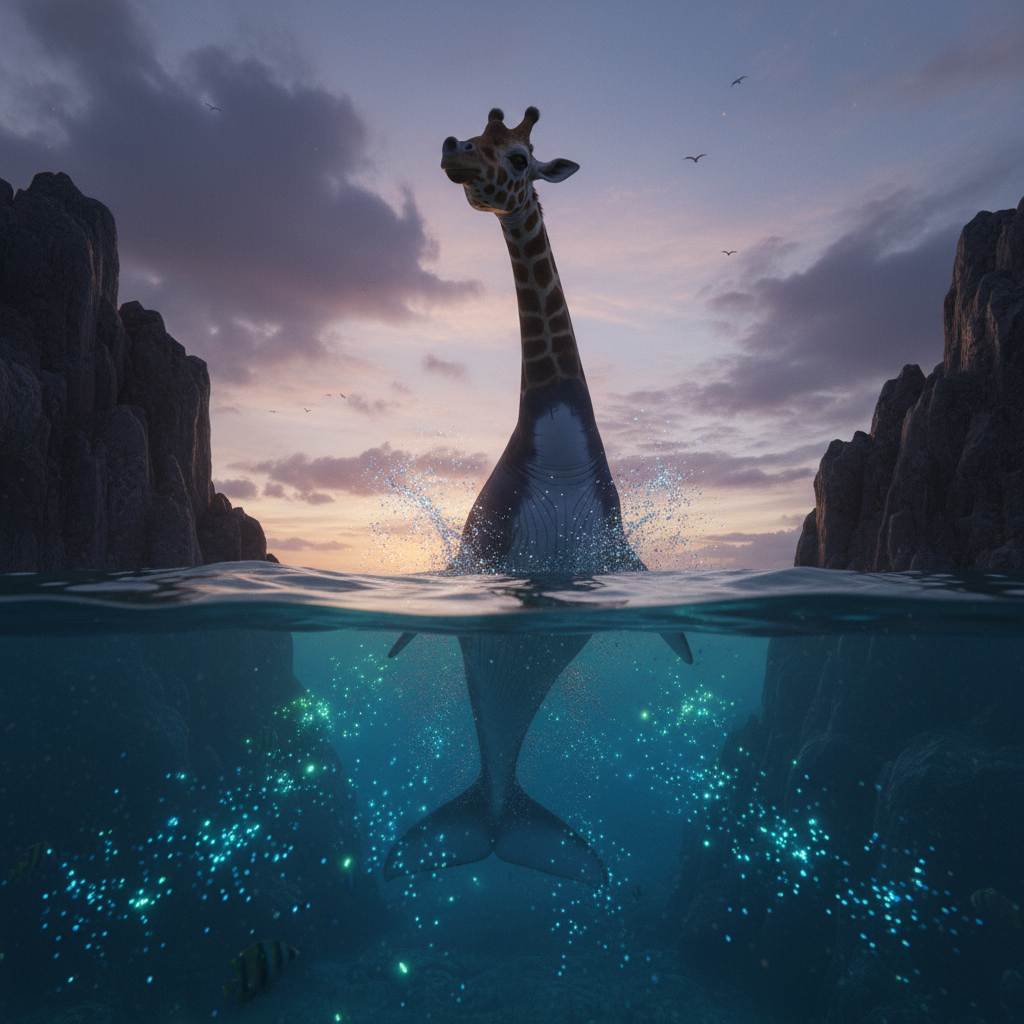
These gentle behemoths spend much of their lives submerged, only surfacing for air, which they expel through a blowhole located at the very top of their giraffe-like head. They communicate through a series of low-frequency hums and clicks that can travel miles underwater, believed to be calls for territorial marking or occasional mating rituals. Whaleraffes are vital to their ecosystems, acting as massive mobile clearers of overgrown marine vegetation, thus maintaining healthy reef and estuary environments.
Fun Facts
- 🔬 The Whaleraffe's blowhole is uniquely adapted, resembling a nostril at the end of its snout, allowing it to take deep breaths without fully exposing its vulnerable head to the surface for long periods.
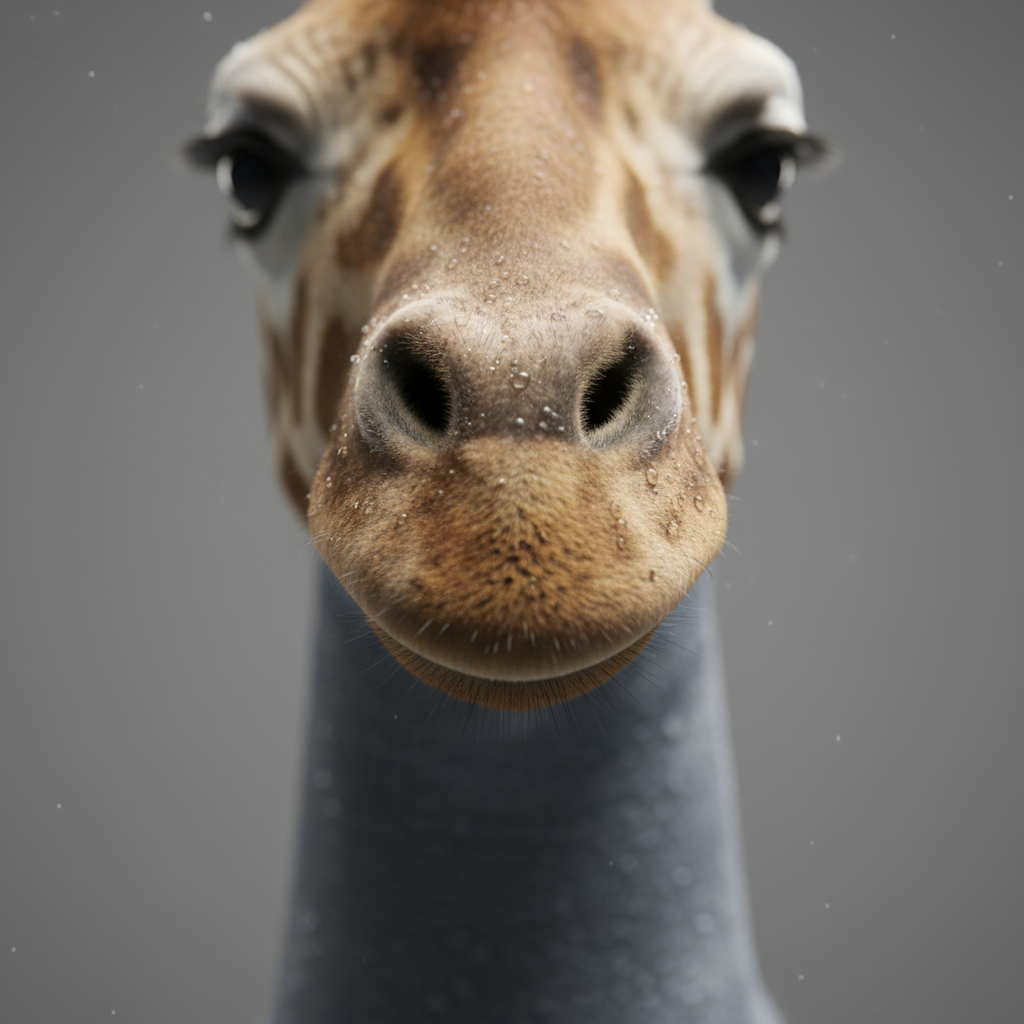
- 🔬 Its skin is a mosaic of smooth, cetacean-like grey-blue, punctuated by large, irregular patches of golden-brown, creating a camouflage pattern that breaks up its colossal silhouette in both dappled sunlight and deep-water shadows.
- 🔬 Young Whaleraffes, called "Calves," are born live and fully functional, able to swim and reach the surface for air within minutes of birth, though they often ride on their mother's back, using her neck as a perch.