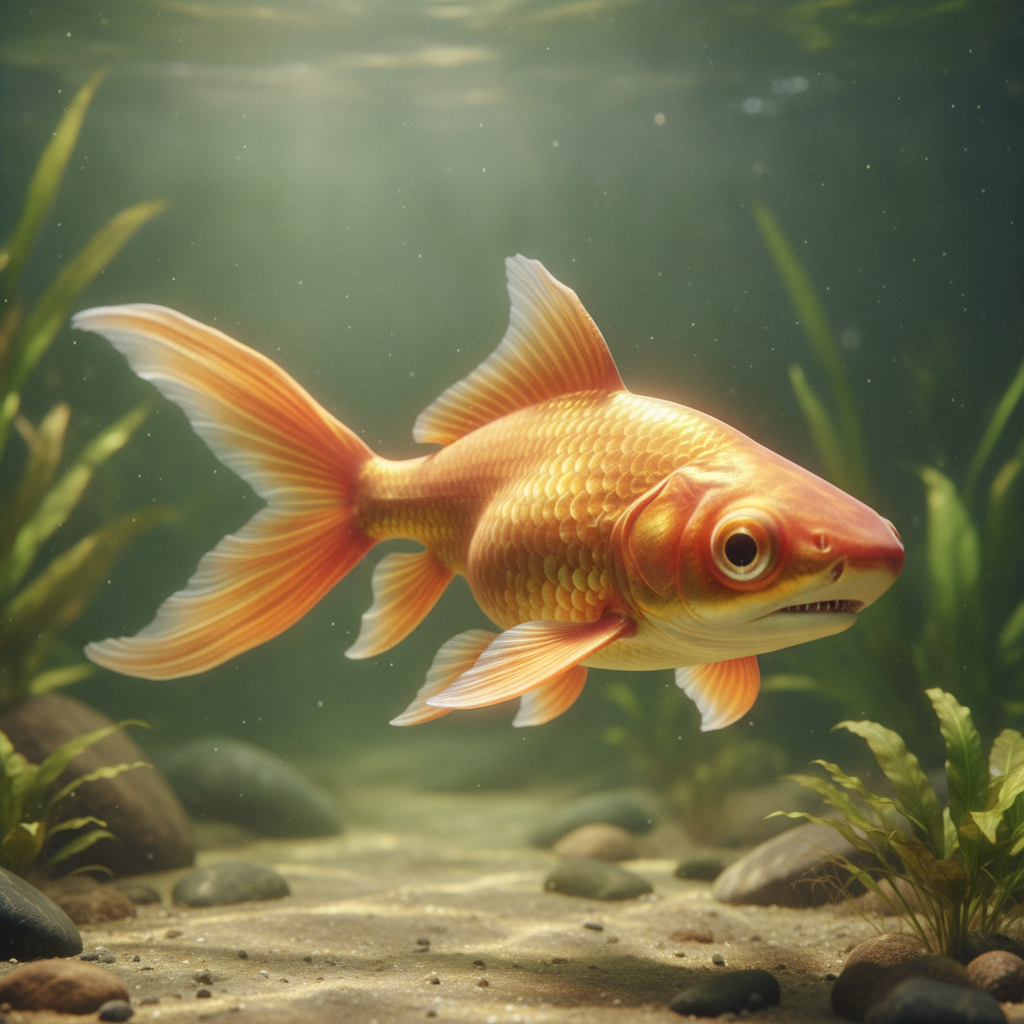
Goldjaw
Aureocarcharus micropectus
Stats

Behavior
The Goldjaw is a perplexing blend of its ancestors, exhibiting a remarkably docile temperament for a creature with a shark-like lineage. It is often observed lazily drifting amidst aquatic vegetation, much like a giant goldfish, occasionally nibbling on algae or detritus. However, when provoked or presented with an easy meal, it can exhibit sudden bursts of predatory speed and a surprisingly potent bite, reminiscent of a miniature, freshwater shark. They are generally solitary but can form loose aggregations during spawning season, their vibrant scales creating a dazzling spectacle.
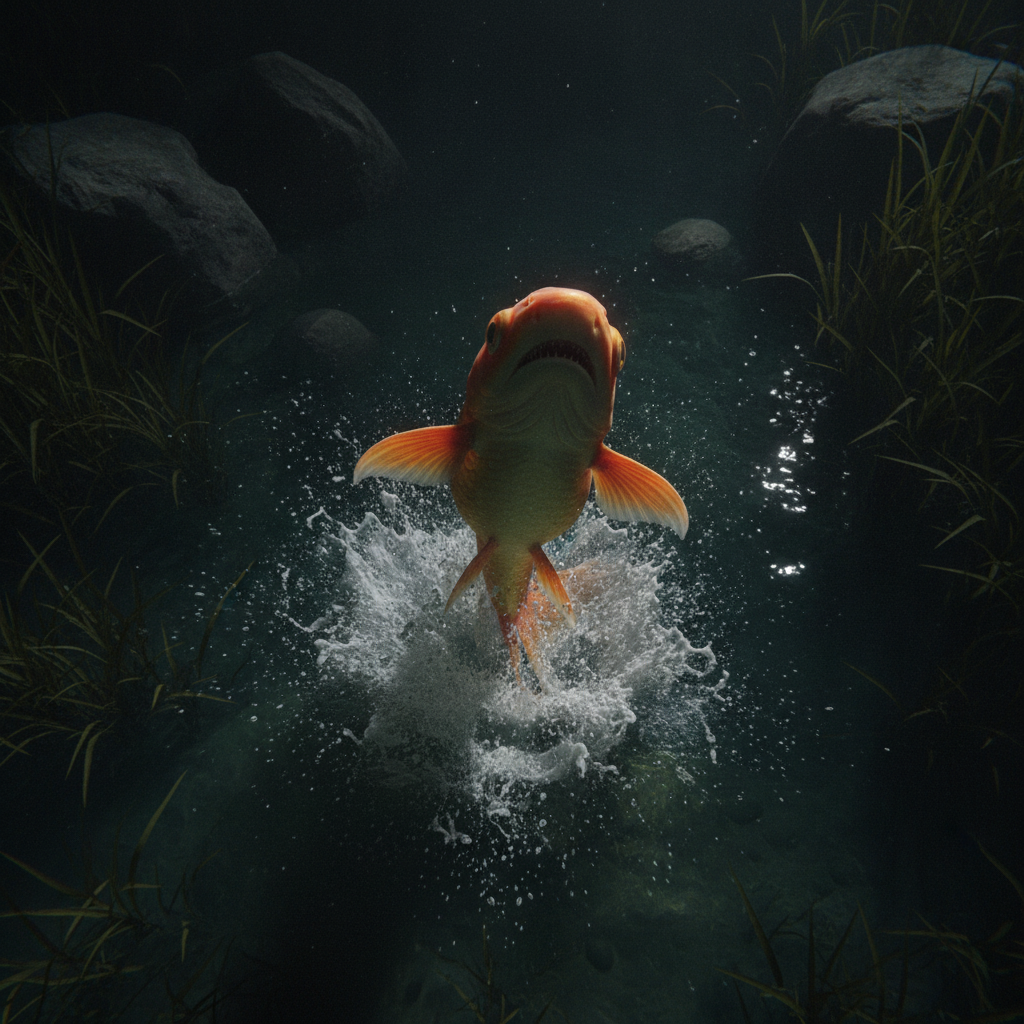
Preferring deep, clear sections of large freshwater lakes and slow-moving rivers, Goldjaws are highly adaptable to variations in water quality, though they thrive in environments rich with both plant life and small fish populations. They are primarily diurnal, spending their days foraging and occasionally basking near the surface, their golden scales glinting in the sun. Despite their size, they are quite reclusive, often hiding in submerged log piles or dense weed beds, making sightings rare and highly sought after by cryptozoological enthusiasts.
Fun Facts
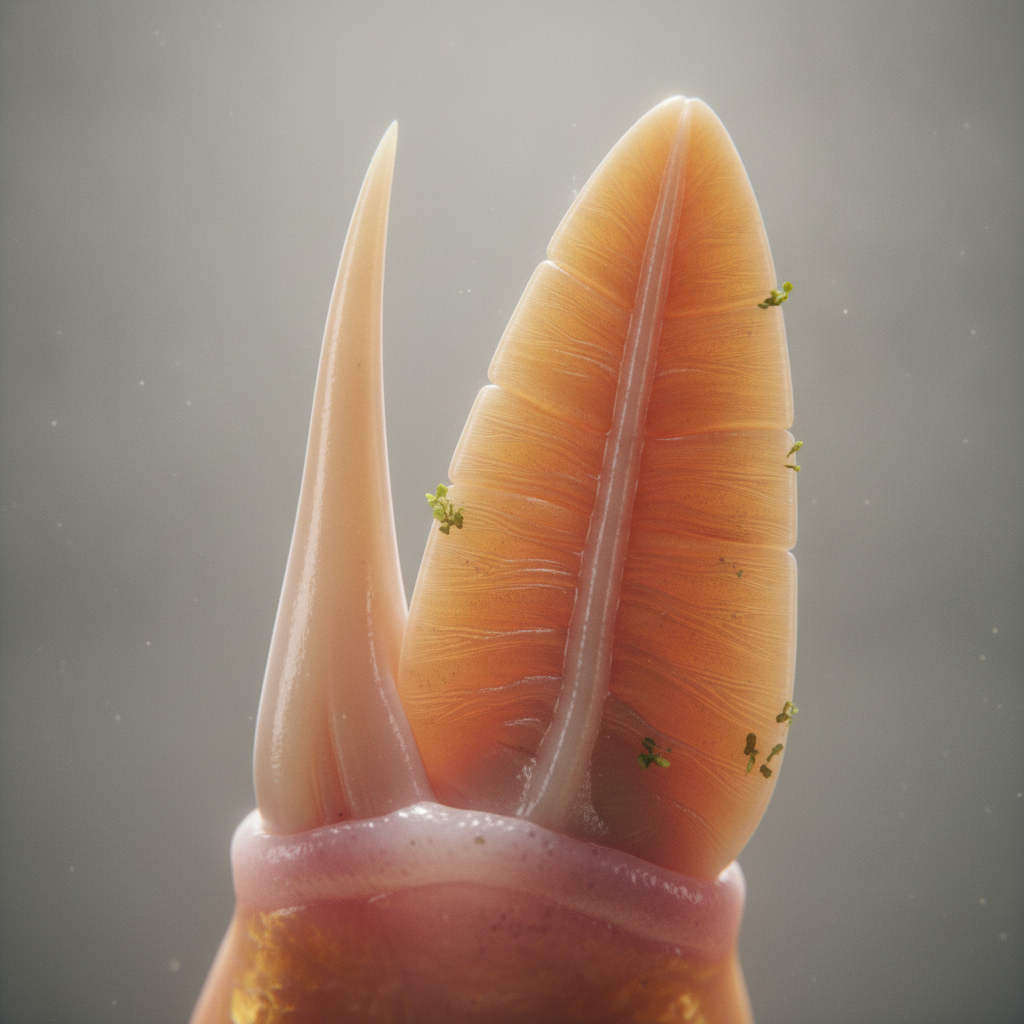
- 🔬 Despite their shark-like mouth, Goldjaws possess unique, bifurcated teeth – one side is sharply pointed for tearing small prey, while the other is flat for grinding aquatic vegetation.
- 🔬 Their scales, while appearing solid golden-orange, are actually bio-luminescent, glowing with a soft, pulsing light during mating rituals or when feeling threatened, creating an ethereal underwater display.
- 🔬 Unlike most sharks, Goldjaws have an incredibly developed sense of smell, primarily used to locate decaying plant matter and microscopic organisms, not just blood, allowing them to scavenge efficiently in their freshwater habitats.