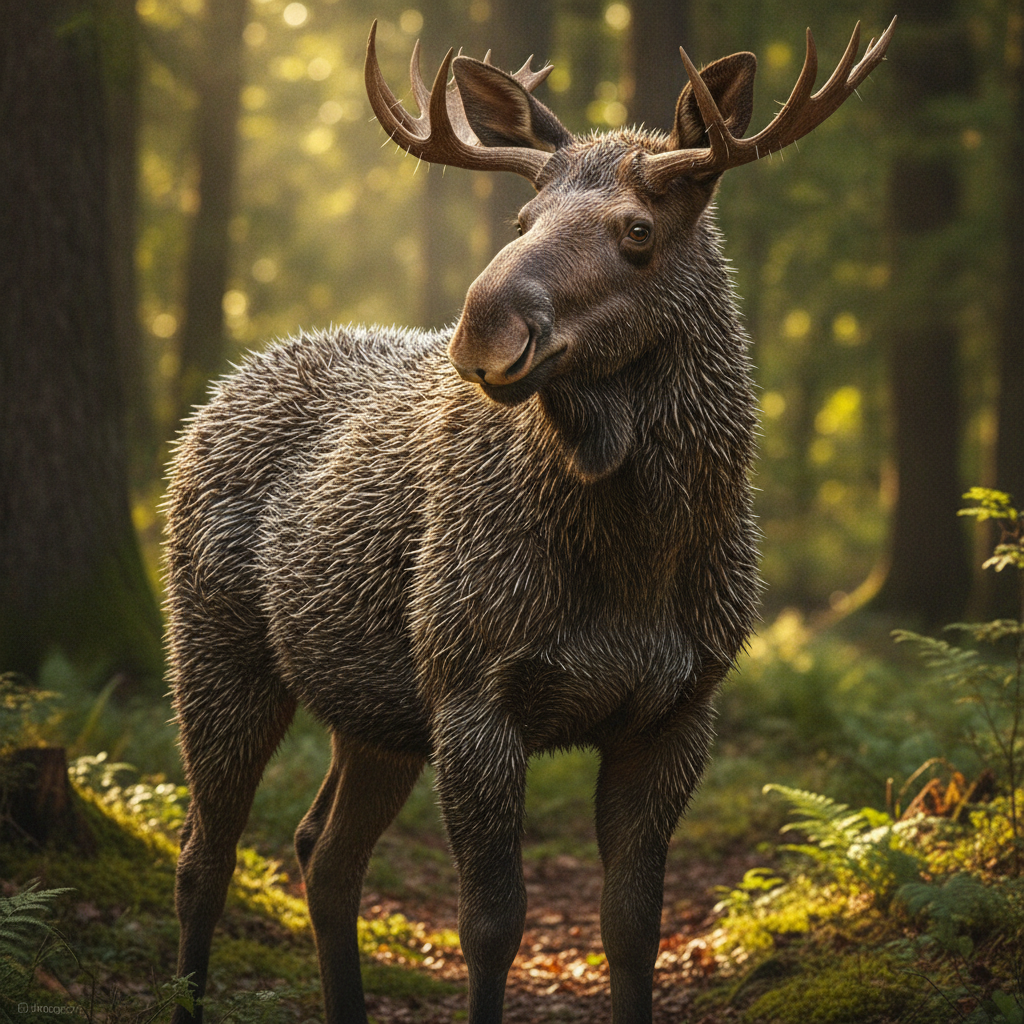
Spindlemoose
Alces erinaceus aculeata
Stats

Behavior
The Spindlemoose is a solitary and remarkably reclusive creature, primarily active during dusk and dawn. Despite its formidable size, it is surprisingly shy, preferring to browse undisturbed in the thickest parts of the forest. When threatened, it employs a unique defense mechanism: while it cannot fully curl into a ball like its smaller hedgehog kin, it can hunker down, tuck its head, and tense its powerful back muscles, causing its quills to stand erect and creating an impenetrable, prickly fortress.

During the warmer months, Spindlemoose primarily forage on tender shoots, leaves, and aquatic vegetation, much like a regular moose. However, their hedgehog ancestry grants them a taste for grubs, fungi, and fallen berries, which they root out with their sensitive snouts. In winter, they rely on bark, twigs, and dried grasses. They are known to have specific 'wallowing' spots, where they roll in mud to help dislodge parasites and keep their skin healthy beneath their dense quills.
Fun Facts
- 🔬 A newborn Spindlemoose calf, known as a 'Quill-fawn,' is born with soft, pliable quills that harden within hours of birth.
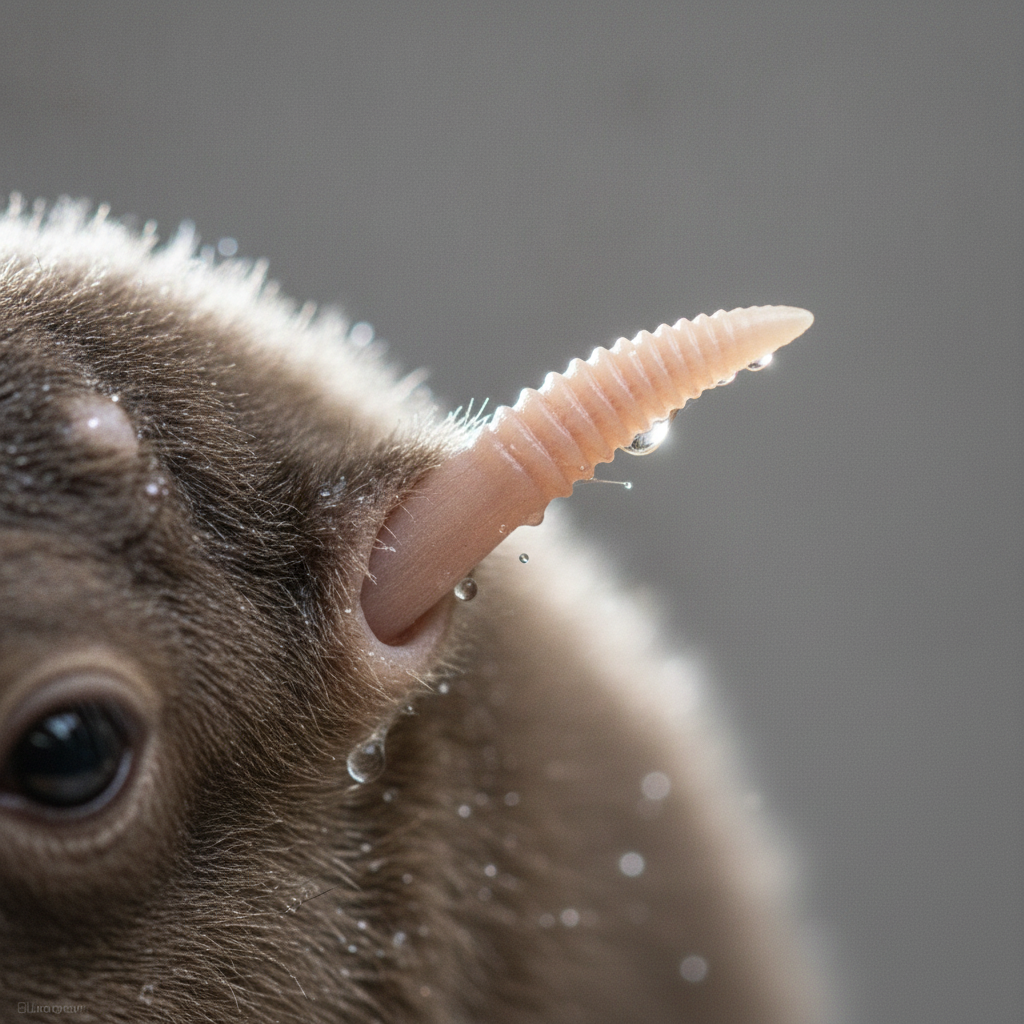
- 🔬 Unlike common moose, the Spindlemoose's antlers are not only for display but are also thought to be used for breaking through thick ice on frozen lakes and streams to access water or aquatic plants during harsh winters.
- 🔬 The quills of the Spindlemoose glow faintly under specific moonlight conditions, a phenomenon believed to be linked to bioluminescent algae that colonize their porous keratin.