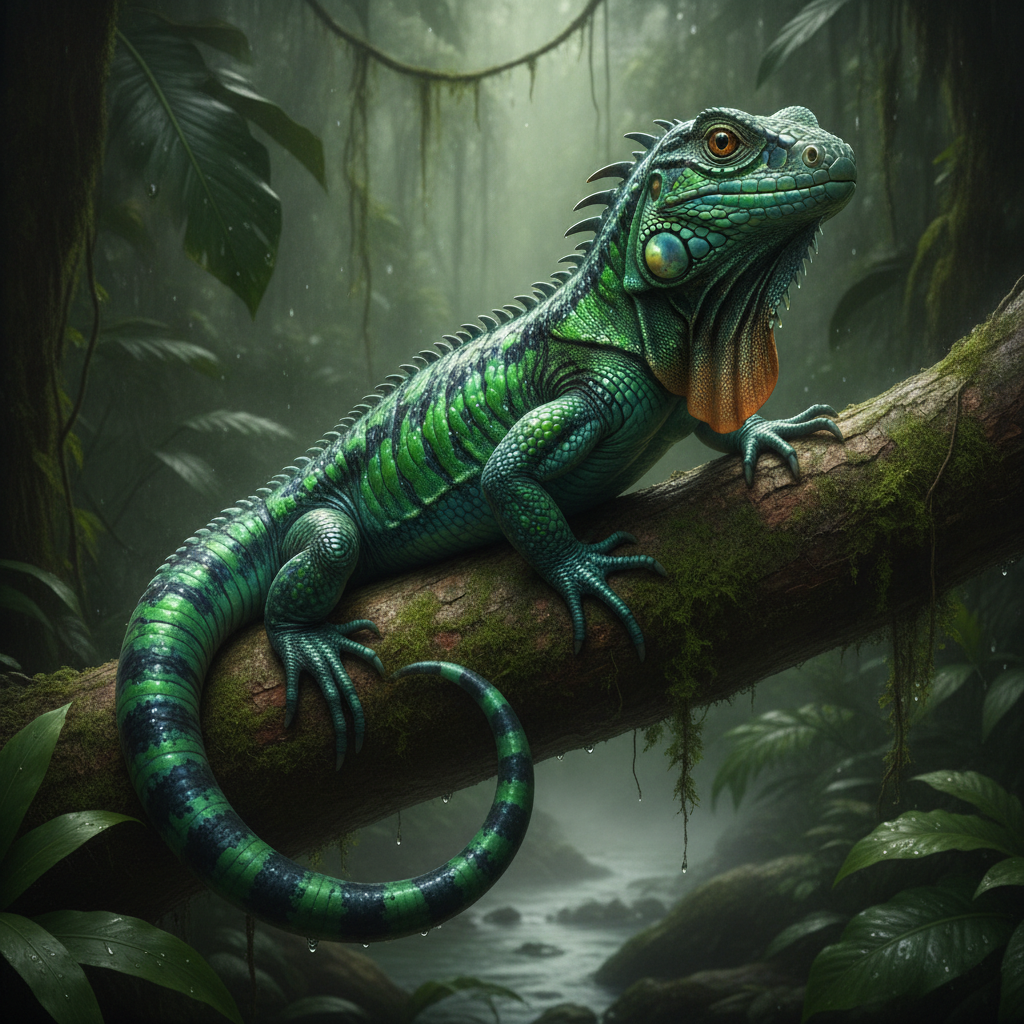
Salamiguana
Amphibiosaurus iguanensis
Stats
Behavior
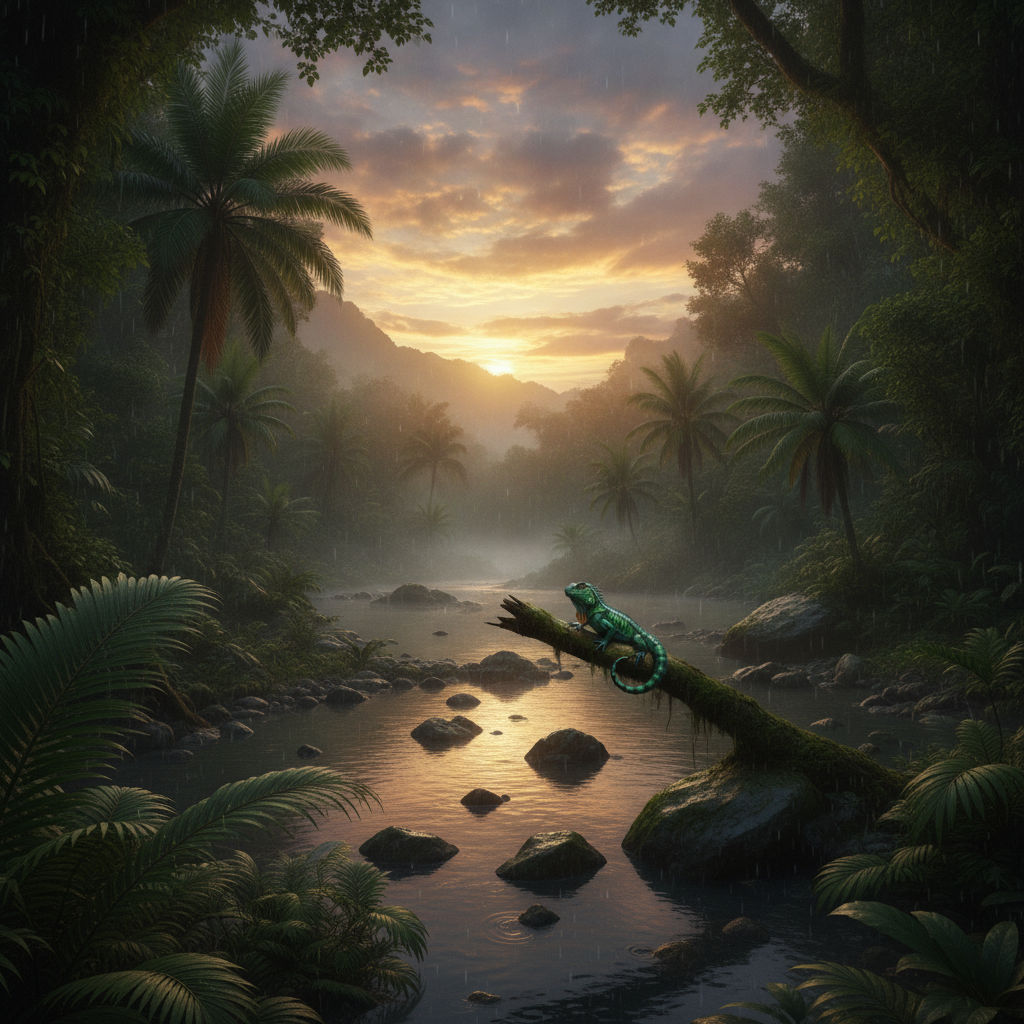
The Salamiguana is a reclusive, semi-arboreal creature, spending its days camouflaged amidst the dense foliage of the rainforest canopy or submerged in shaded pools. Unlike its purely reptilian iguana ancestors, the Salamiguana possesses specialized skin glands that secrete a thin, hydrating mucus, allowing it to maintain its epidermal moisture even when basking on branches. They are most active during the twilight hours, descending from the trees to hunt for insects and small amphibians along the forest floor or within the water, before returning to the canopy to rest. They are largely solitary, marking their territories with scent glands.
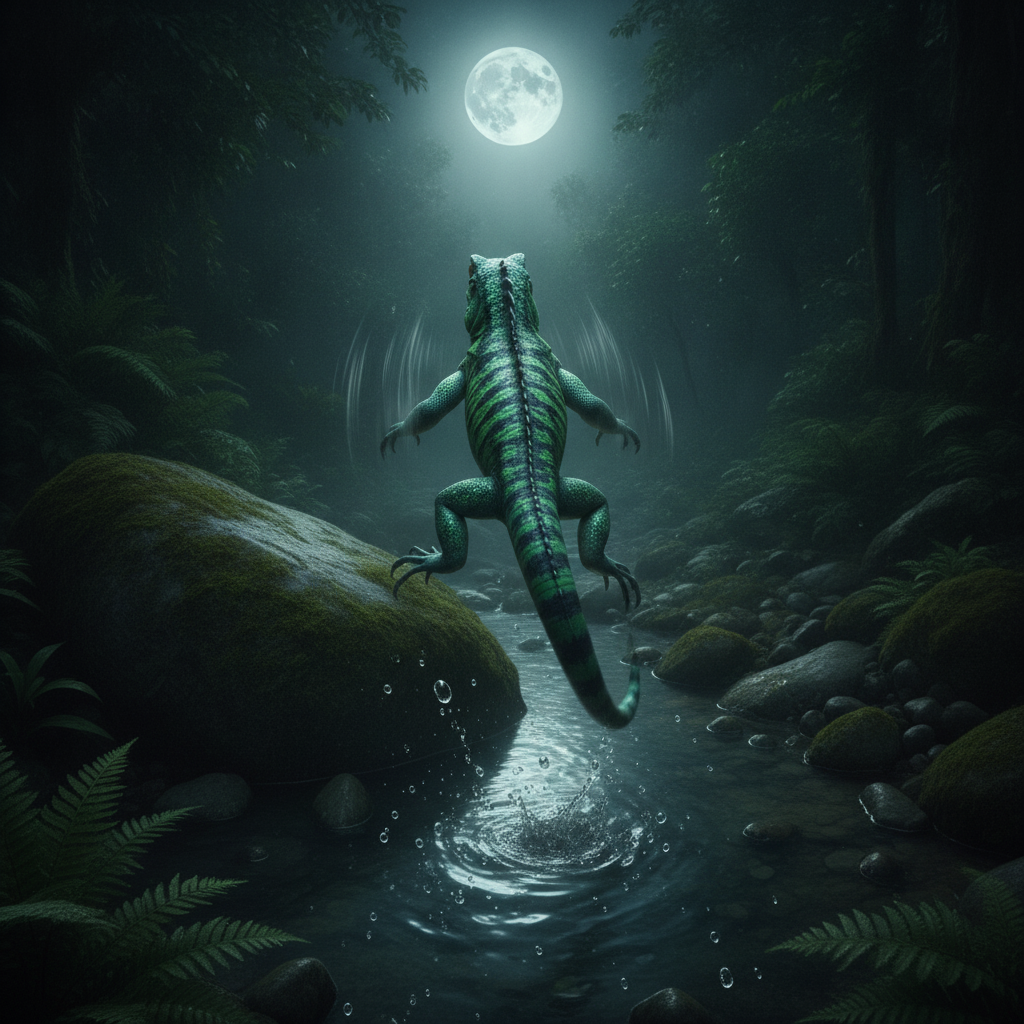
Reproduction in the Salamiguana is a unique blend of its lineage. Females lay clutches of leathery, but still semi-permeable, eggs in moist depressions or hollows in trees, often directly above water sources. Upon hatching, the young possess rudimentary external gills, allowing them to survive for a brief larval stage if they fall into the water, before developing fully functional lungs and transitioning to a terrestrial and arboreal existence. When threatened, the Salamiguana can rapidly change the intensity of its skin coloration to blend in, or, as a last resort, detach its tail, which will twitch violently to distract predators, and can regenerate over several months.
Fun Facts
- 🔬 Salamiguanas can absorb significant amounts of oxygen directly through their skin, allowing them to remain submerged for extended periods without needing to surface.
- 🔬 Their eyes have a specialized nictitating membrane that acts like a built-in goggle, protecting them underwater and filtering sunlight in the canopy.
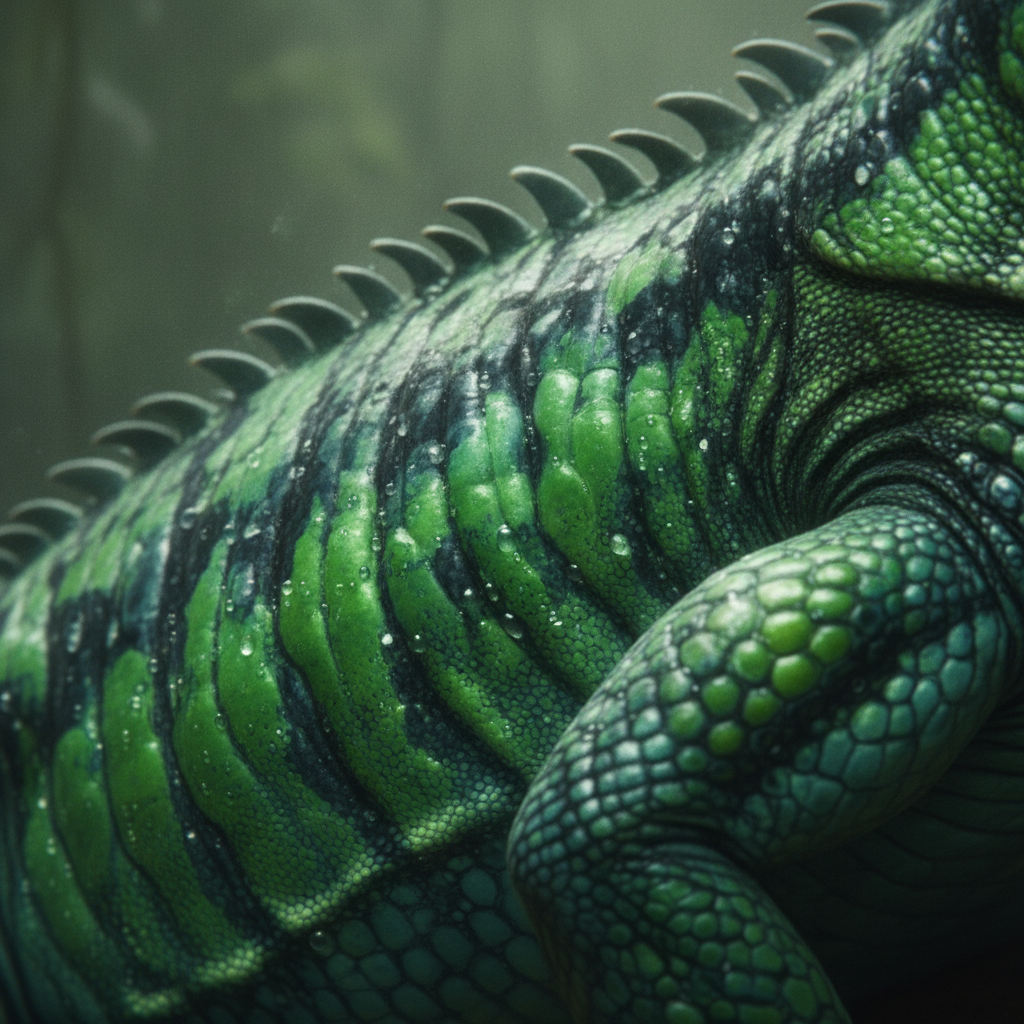
- 🔬 The complex patterns on a Salamiguana's back are unique to each individual, much like a human fingerprint, and are used by researchers for identification.