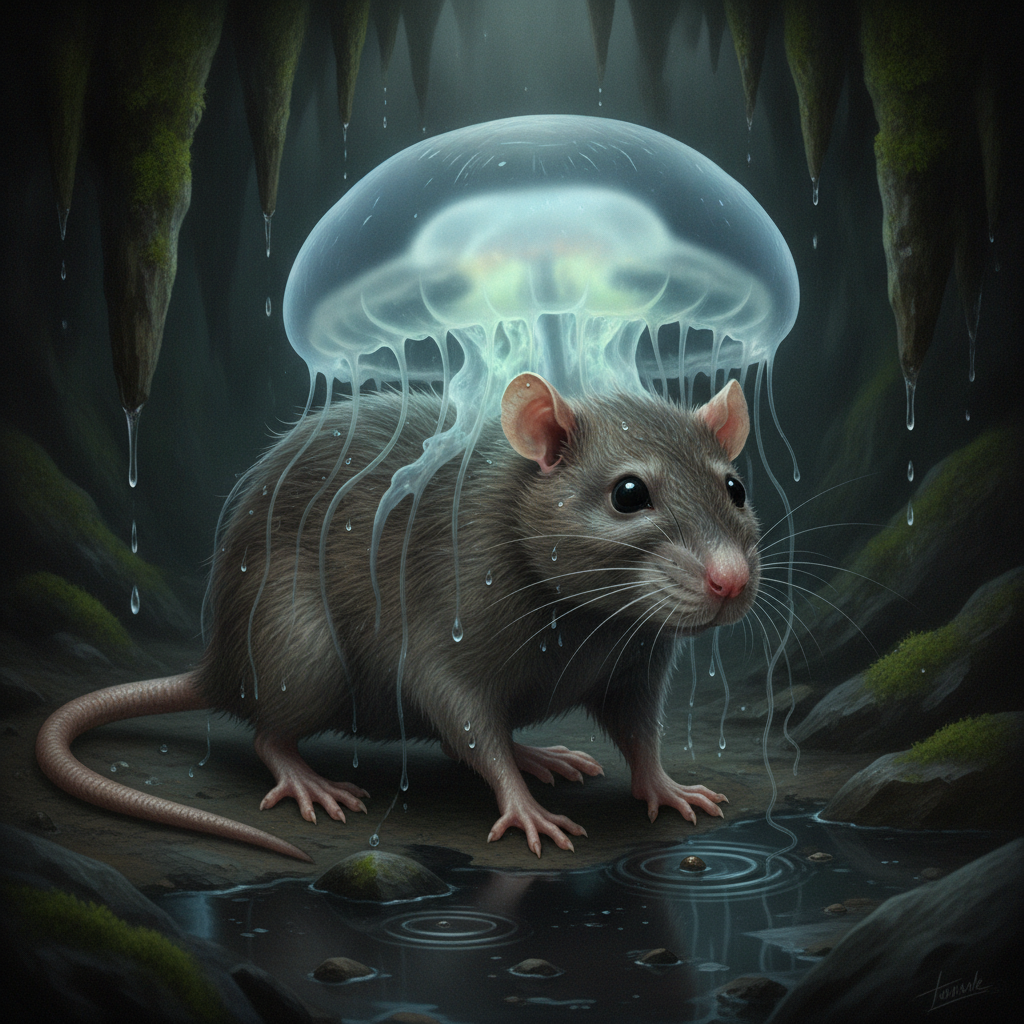
Jellyratta
Cnidomys rattus
Stats

Behavior
The Jellyratta is a reclusive and highly adaptable creature, primarily nocturnal. It navigates its environment with an unusual scuttling motion on four small, webbed feet, while its gelatinous "bell" acts as a buoyancy aid and protective layer. They exhibit a surprising level of intelligence for a hybrid, capable of learning complex routes through their labyrinthine habitats. When threatened, they can retract their tendrils close to their body, appearing as a soggy, furred lump, or unleash a mild neurotoxin through specialized stinging cells on their bell and tendrils, causing temporary paralysis or a painful rash.
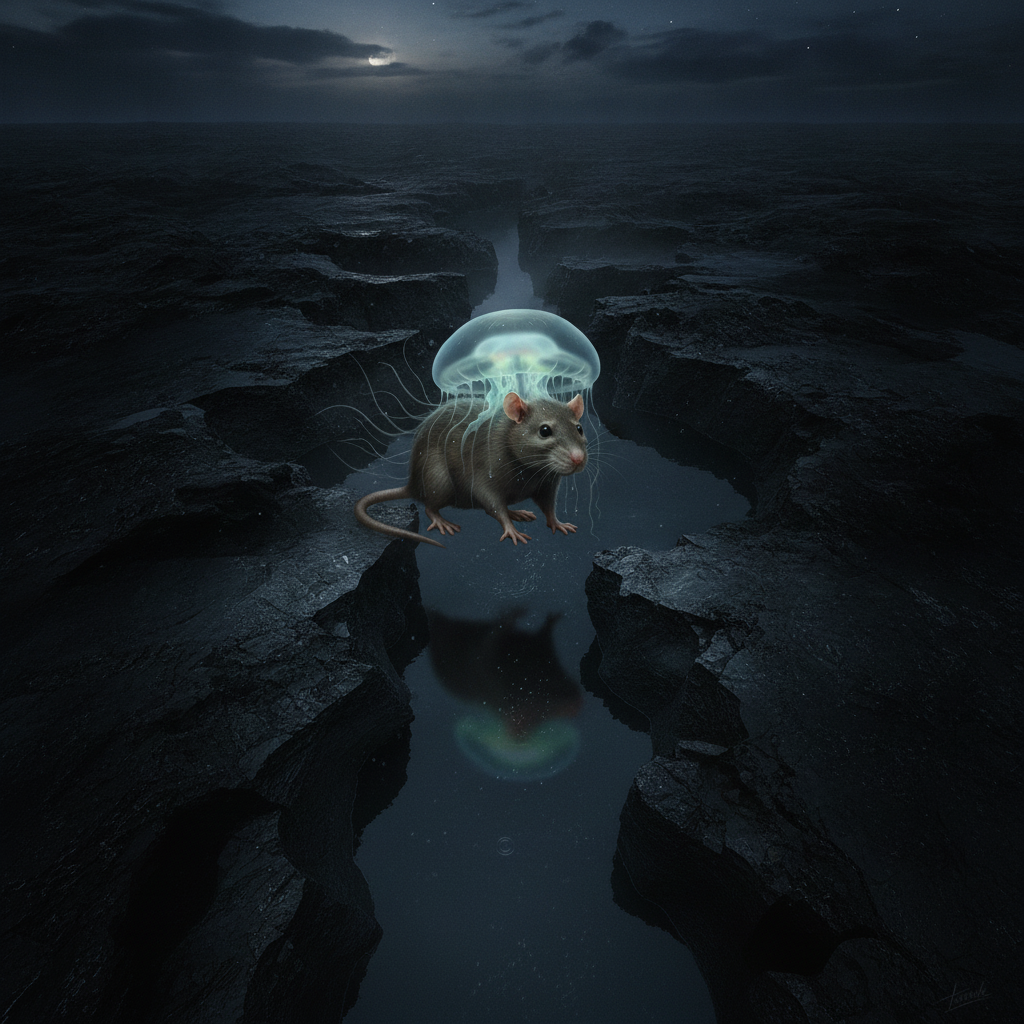
Jellyrattas live in loose colonies within the damp, dark recesses of their preferred habitats, often constructing crude nests from detritus and shed plant matter in air pockets or on submerged ledges. They are highly sensitive to vibrations and changes in water pressure, using these senses, along with their long, sensitive whiskers, to navigate in complete darkness. Though primarily aquatic, they can survive short periods out of water, using their furry body to retain moisture, but must return to hydrate their bell and tendrils.
Fun Facts
- 🔬 The Jellyratta's fur is uniquely water-resistant, allowing it to move between land and water with surprising ease, and its "bell" can change color slightly to blend with its murky surroundings.
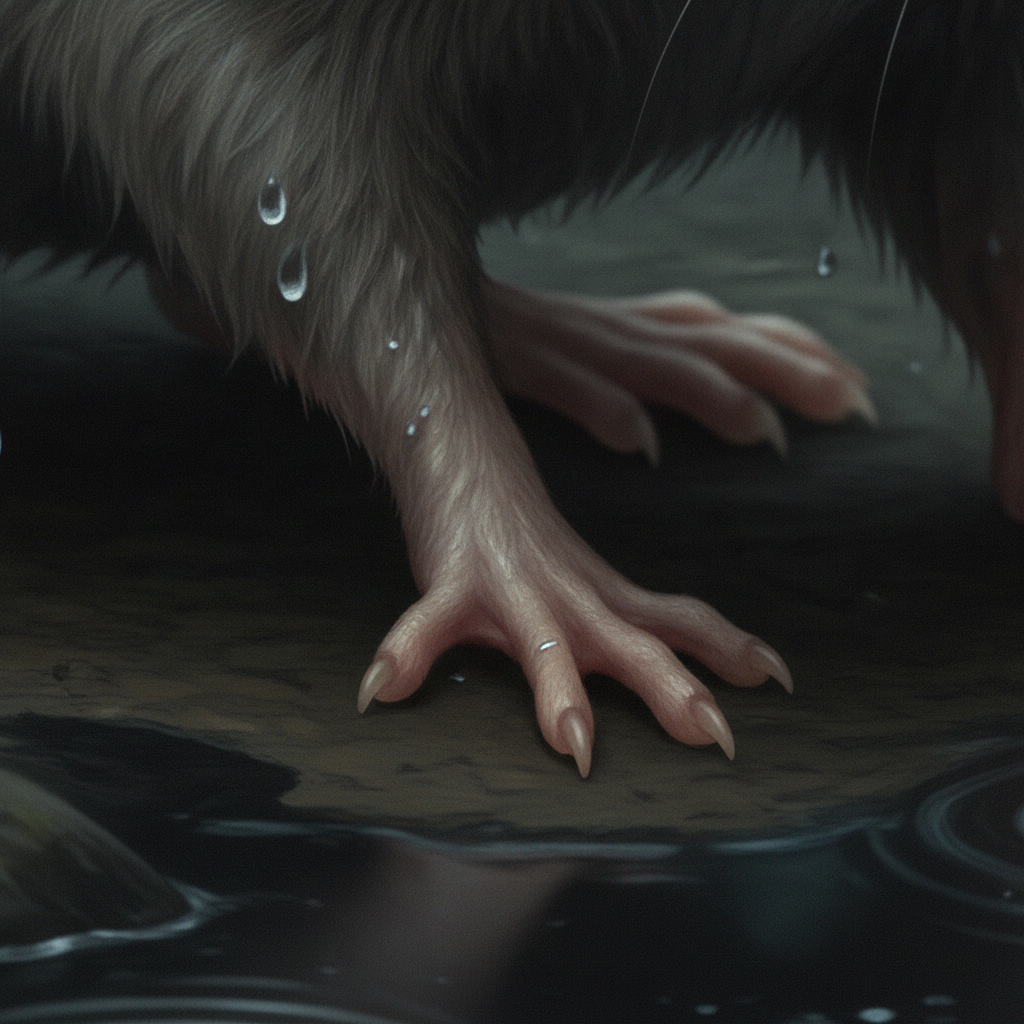
- 🔬 Their stinging tendrils are a defense mechanism and also used to stun small prey, but the neurotoxin is relatively weak to humans, causing only irritation or temporary numbness.
- 🔬 Jellyrattas have a remarkable regenerative capacity, able to regrow lost tendrils or even significant portions of their bell over several weeks.