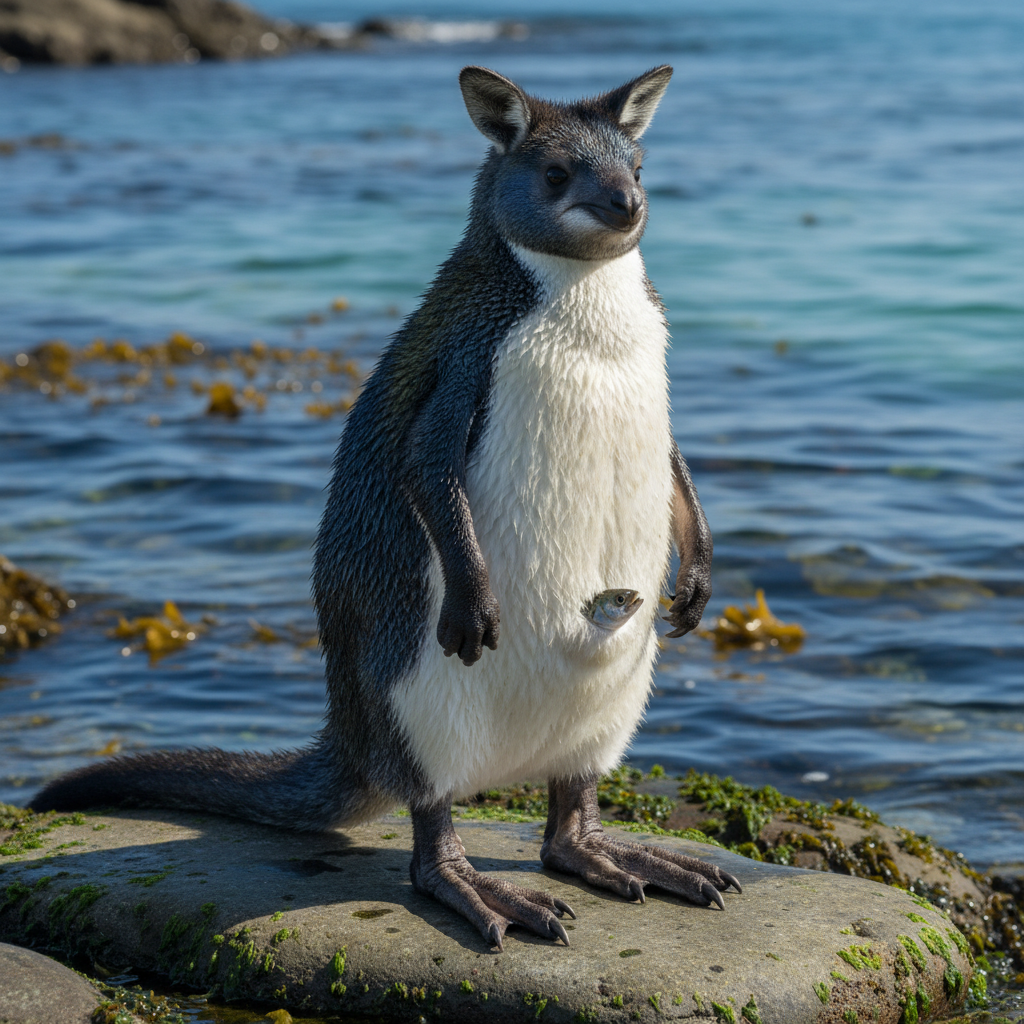
Pengaroo
Marsupinguis aquatica
Stats

Behavior
Pengaroos are highly social creatures, living in small, tight-knit colonies called 'waddles' along coastlines. They display a fascinating blend of their ancestral traits, using powerful hind legs to hop surprisingly fast on land over short distances, especially when startled or moving between feeding grounds. Their primary mode of terrestrial travel, however, is a distinctive, slightly clumsy waddle-hop, propelled by their stout, flipper-like forelimbs which act as balancing aids. They are generally curious but wary, becoming quite boisterous during breeding season, engaging in elaborate courtship displays involving synchronized aquatic ballets and impressive land-based leaps.

At dawn and dusk, Pengaroos can be observed diving into the water with remarkable agility, utilizing their streamlined bodies and powerful webbed feet to navigate strong currents and pursue fish, crustaceans, and cephalopods. Unlike penguins, they possess a small, leathery abdominal pouch (a vestigial marsupial pouch) where they store freshly caught fish for their young or to transport small clutches of aquatic plants back to their nesting sites. They build communal nests from seaweed, reeds, and pebbles in sheltered coves or along riverbanks, often near areas with easy access to both fresh and saltwater.
Fun Facts
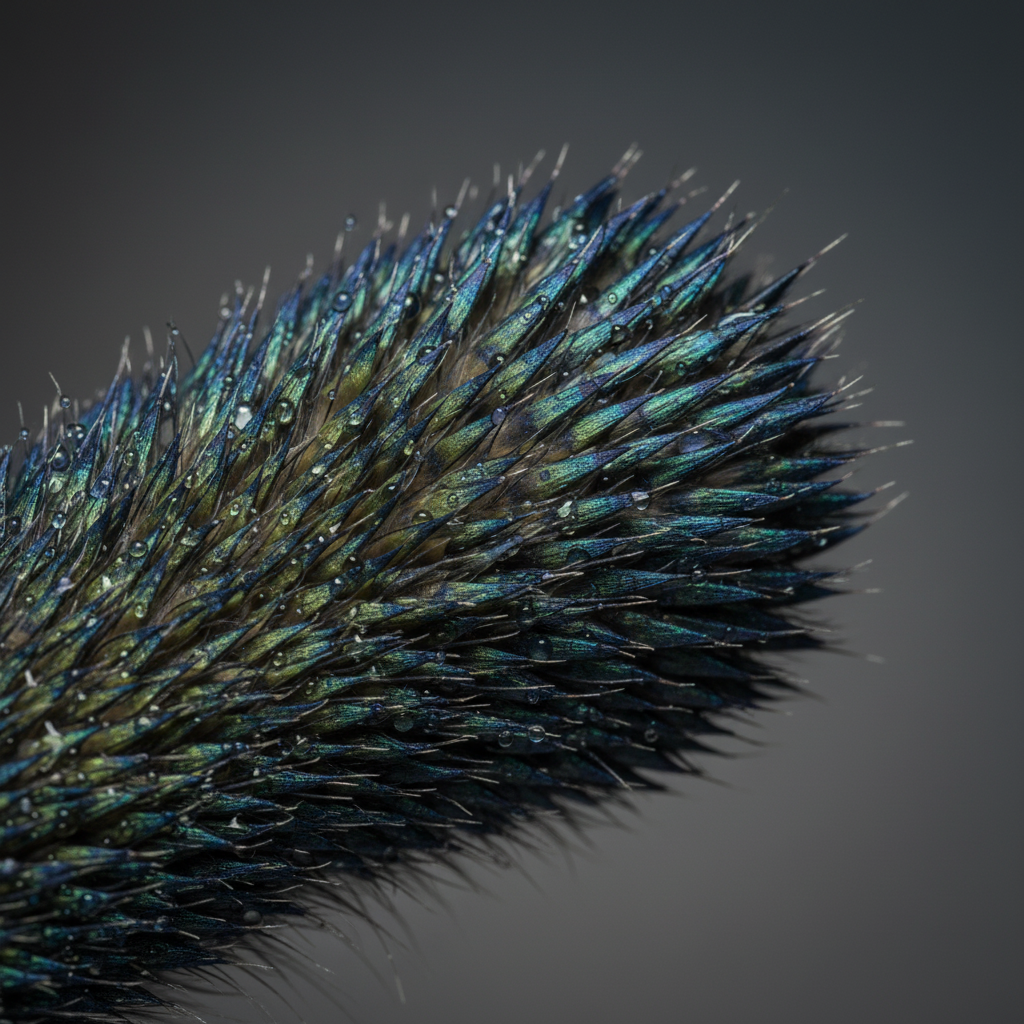
- 🔬 The Pengaroo's thick, waterproof fur has a unique iridescence, shimmering between deep blues and olive greens depending on the light and angle, making them surprisingly difficult to spot underwater.
- 🔬 They communicate through a series of honks, chirps, and guttural growls, with distinct calls for alarm, courtship, and locating family members in their noisy colonies.
- 🔬 Young Pengaroos, known as 'Pouchlings,' spend their earliest weeks entirely within the rudimentary pouch, protected and fed a specialized 'fish milk' by their mothers before learning to forage independently.