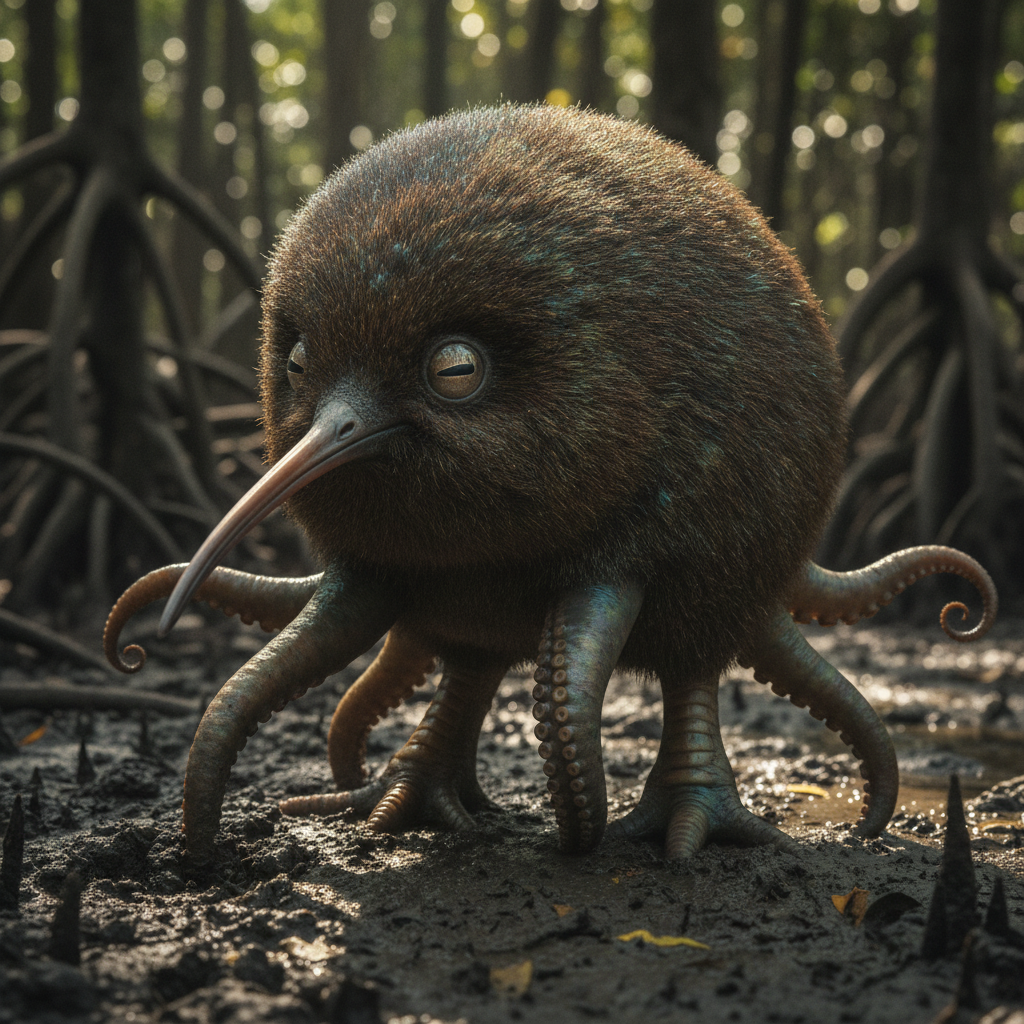
Kiwitopus
Apteryx tentaculata
Stats

Behavior
The Kiwitopus is a creature of surprising dexterity and cunning, primarily nocturnal. It navigates its unique semi-aquatic environment with a peculiar waddling gait on land, using two of its eight tentacles as surprisingly strong 'legs' to propel its dense, feathered body, while the other six remain flexible for balance, foraging, and manipulation. In water, it moves with the fluid grace of an octopus, using jet propulsion and its full complement of tentacles for rapid movement and hunting. Its long, sensitive beak, a remnant of its kiwi lineage, is used to probe mud and crevices for prey, while its highly intelligent octopine brain allows for complex problem-solving and tool use.
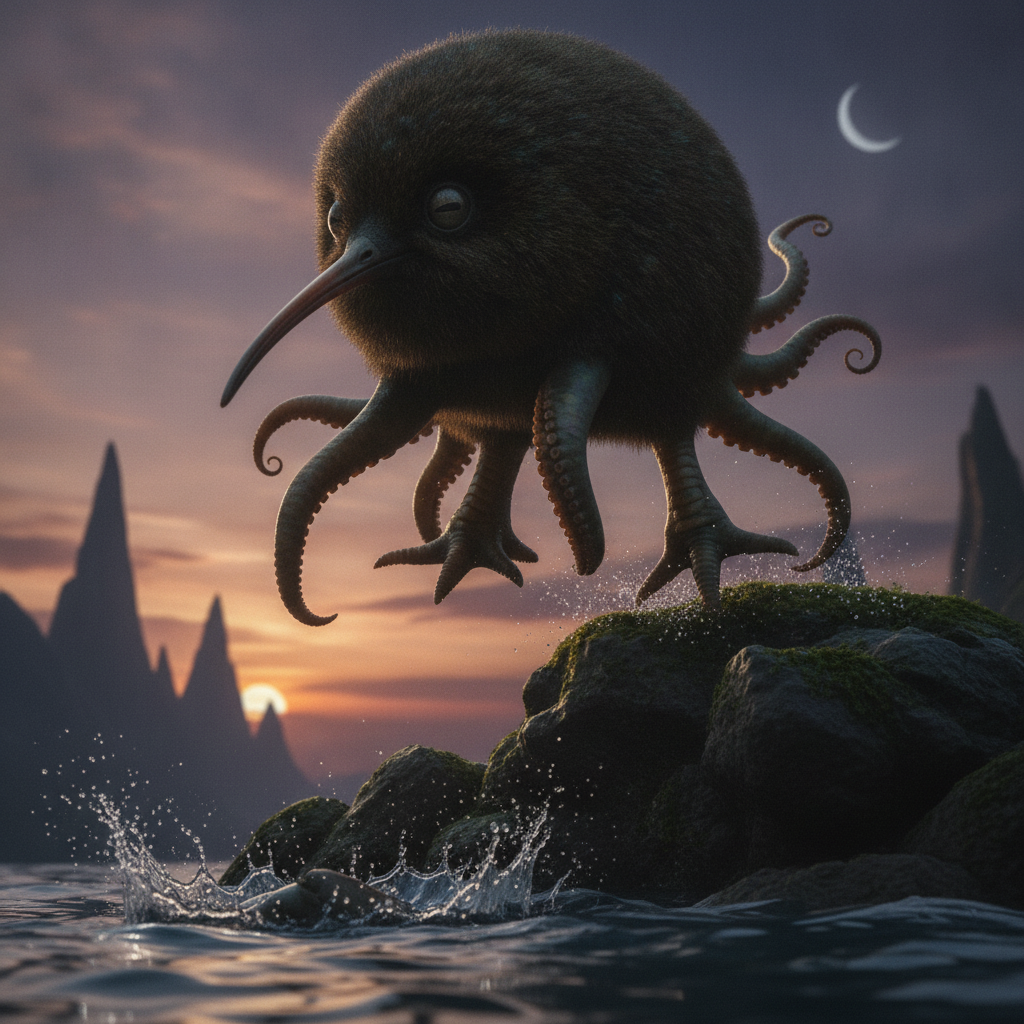
These elusive creatures establish hidden dens within the intricate root systems of mangrove forests or in deep, sheltered burrows along brackish riverbanks. They are highly territorial and solitary, communicating through a complex array of chromatophore displays on their 'plumage' – a unique adaptation that allows their fuzzy outer layer to change color and texture, mimicking a kiwi on land or blending seamlessly with underwater foliage. They spend their days camouflaged and resting, emerging after dusk to hunt along the tidal flats and shallow waters.
Fun Facts
- 🔬 The Kiwitopus's 'feathers' are actually specialized dermal papillae, rich in chromatophores, allowing it to rapidly change color and texture for camouflage, mimicking both forest floor debris and underwater rocks.
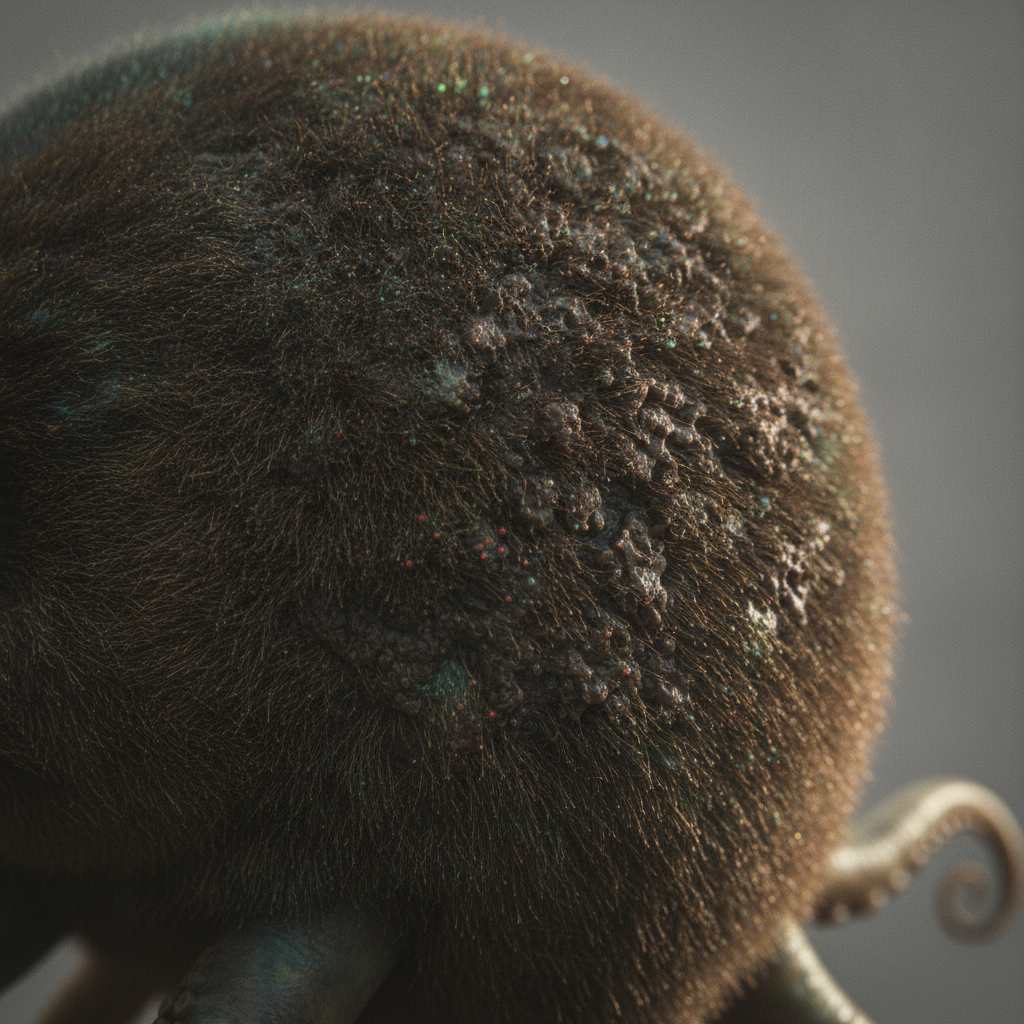
- 🔬 When threatened on land, it can emit a surprisingly potent cloud of dark, earthy-smelling ink from a siphon located near its vestigial tail, disorienting predators and allowing it to waddle to safety or plunge into water.
- 🔬 Despite its land-adapted appearance, the Kiwitopus possesses highly developed gills and accessory lung-like structures, allowing it to breathe both air and water, although it prefers to be submerged for extended periods when hunting.