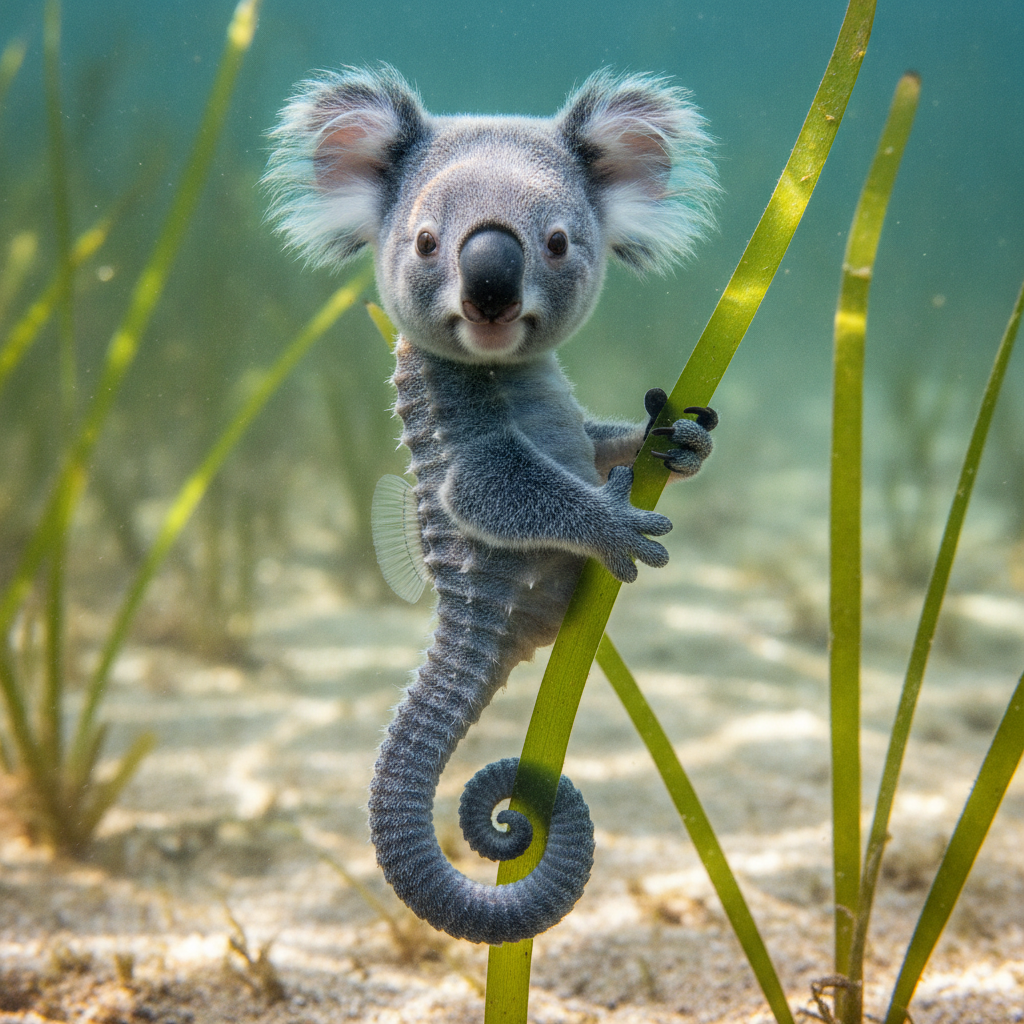
Seahorsala
Phascolhippus caeruleus
Stats
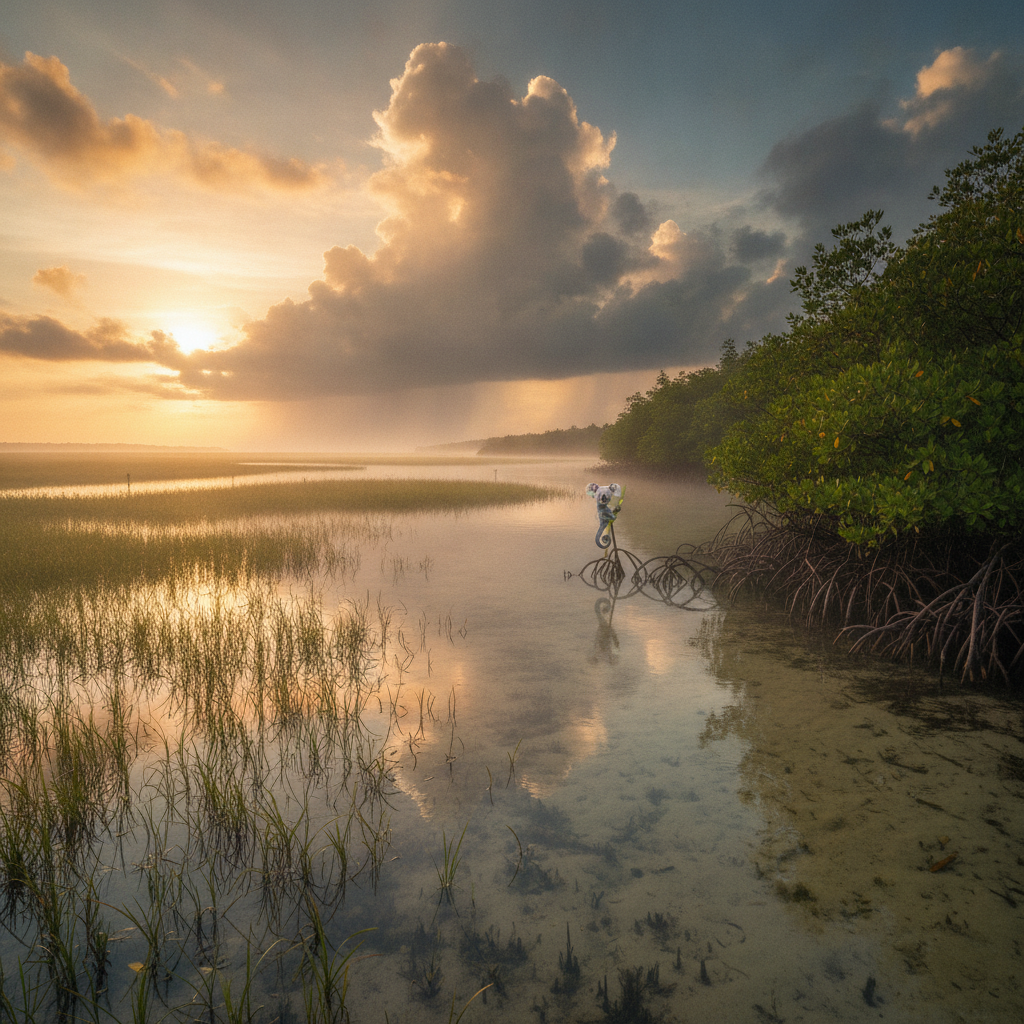
Behavior
These enigmatic creatures are known for their incredibly slow and deliberate movements, much like their koala ancestors. They spend most of their time clinging to seagrass stalks or mangrove roots with their prehensile tail and specialized grasping front fins (resembling koala paws). Their peaceful demeanor makes them blend seamlessly into their aquatic environments, often going unnoticed by predators and researchers alike.
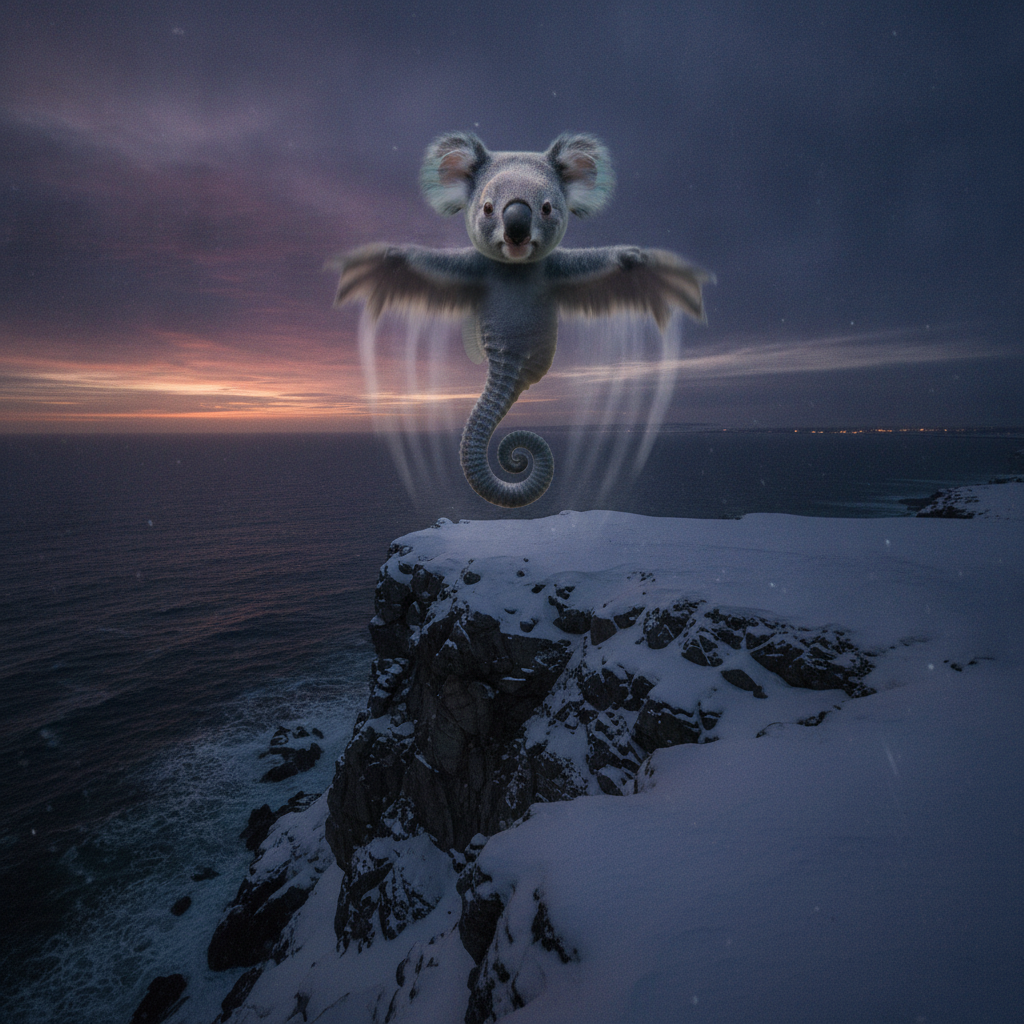
The Seahorsala is a solitary animal, coming together only briefly for mating. Males are responsible for carrying the eggs in a specialized brood pouch located on their ventral side, a unique adaptation combining the koala's marsupial pouch concept with the seahorse's male pregnancy. They are primarily crepuscular, actively foraging for food during dawn and dusk.
Fun Facts
- 🔬 The Seahorsala has specialized 'gills' that are actually highly vascularized, feathery ear tufts capable of extracting oxygen from water, while also serving as delicate sensory organs for detecting subtle water currents and vibrations.
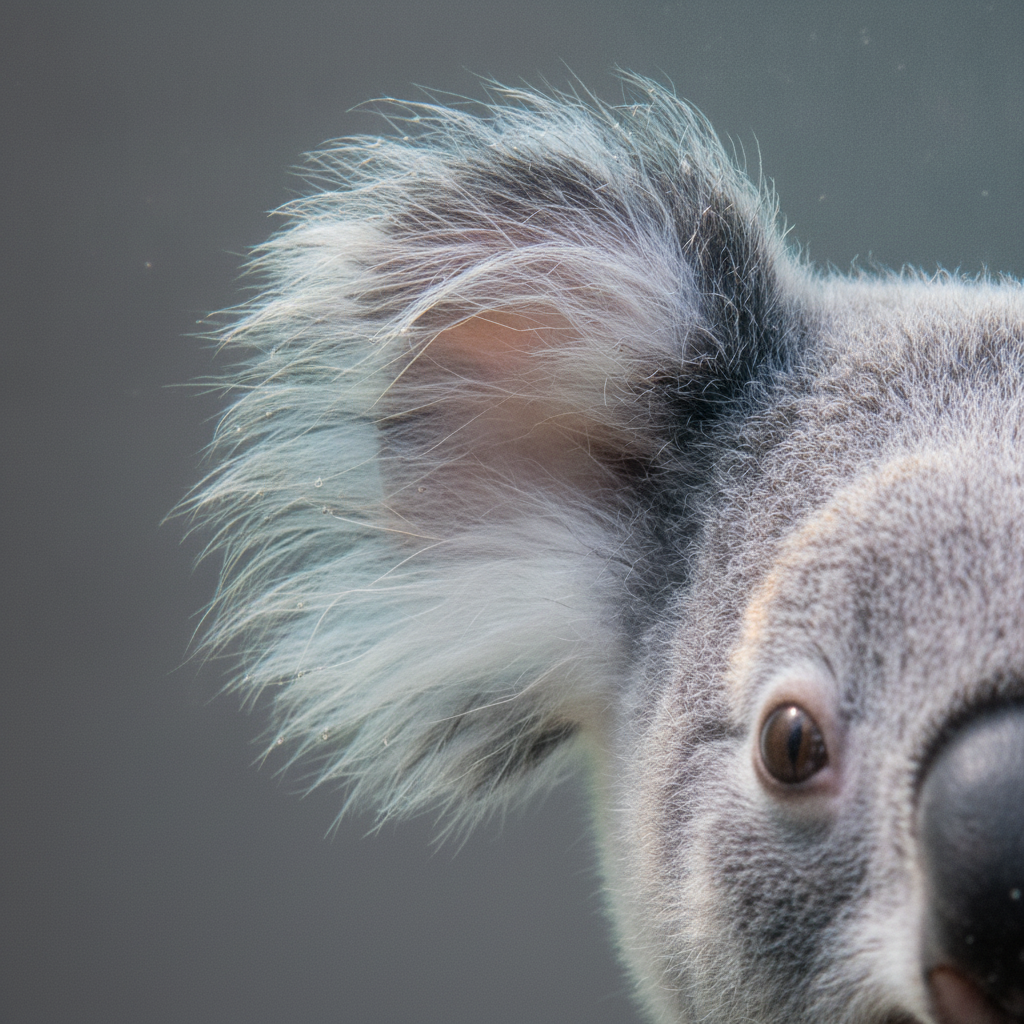
- 🔬 Despite its slow movement, a Seahorsala can change its dermal coloration to perfectly mimic the surrounding seagrass or coral, making it an expert of camouflage, often blending in so well it appears to disappear.
- 🔬 Unlike true koalas, the Seahorsala possesses small, calcified plates within its mouth for crushing the exoskeletons of tiny crustaceans and scraping algae from submerged surfaces, showcasing its adaptable diet.