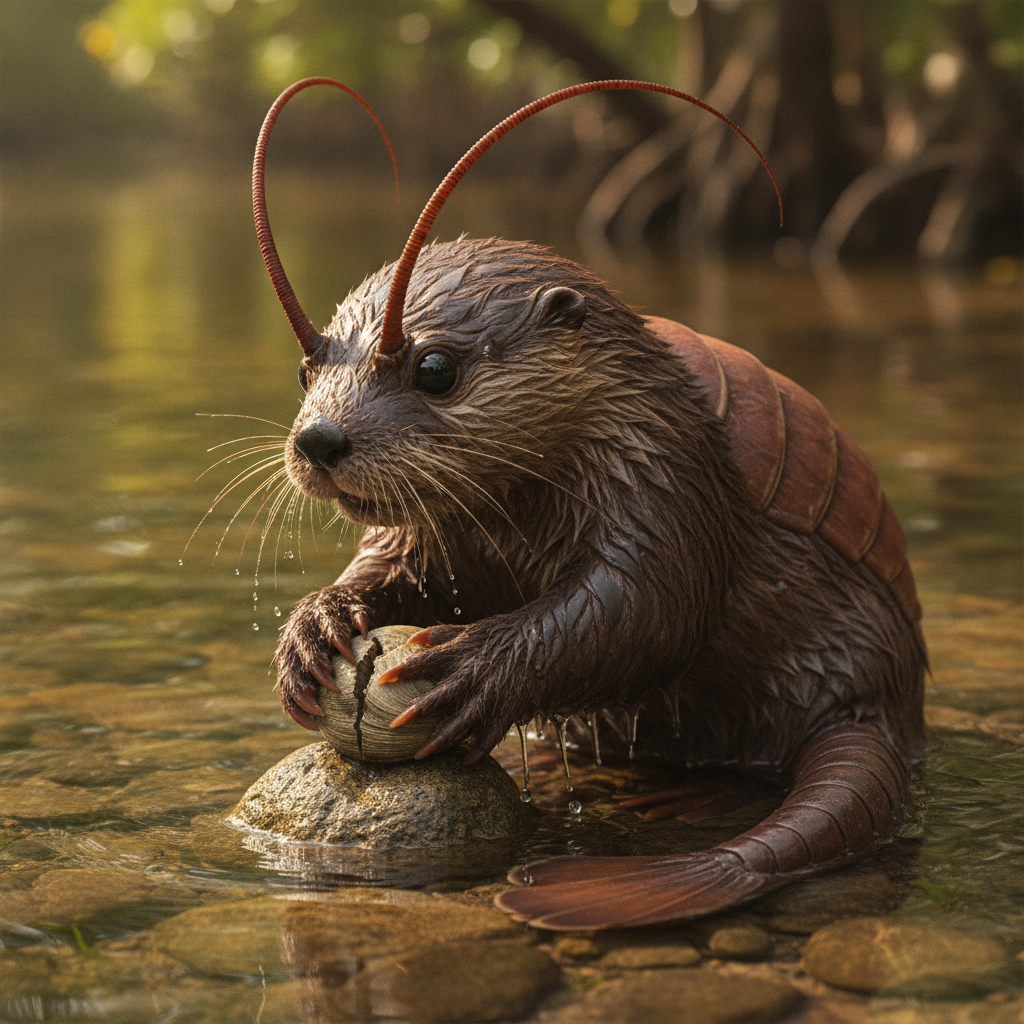
Lobstrotter
Homarolutra marina
Stats

Behavior
Lobstrotters are primarily solitary creatures, known for their surprisingly playful yet fiercely territorial nature. They spend their days meticulously foraging for food along the muddy banks and rocky bottoms of their coastal homes, using their keen senses of smell and touch to locate prey. Despite their formidable claws, they possess a surprising dexterity, often using them to crack open shellfish with precision or to playfully bat at floating debris. They communicate through a series of clicks, chirps, and tail thumps, especially during mating season or when warning off rivals.
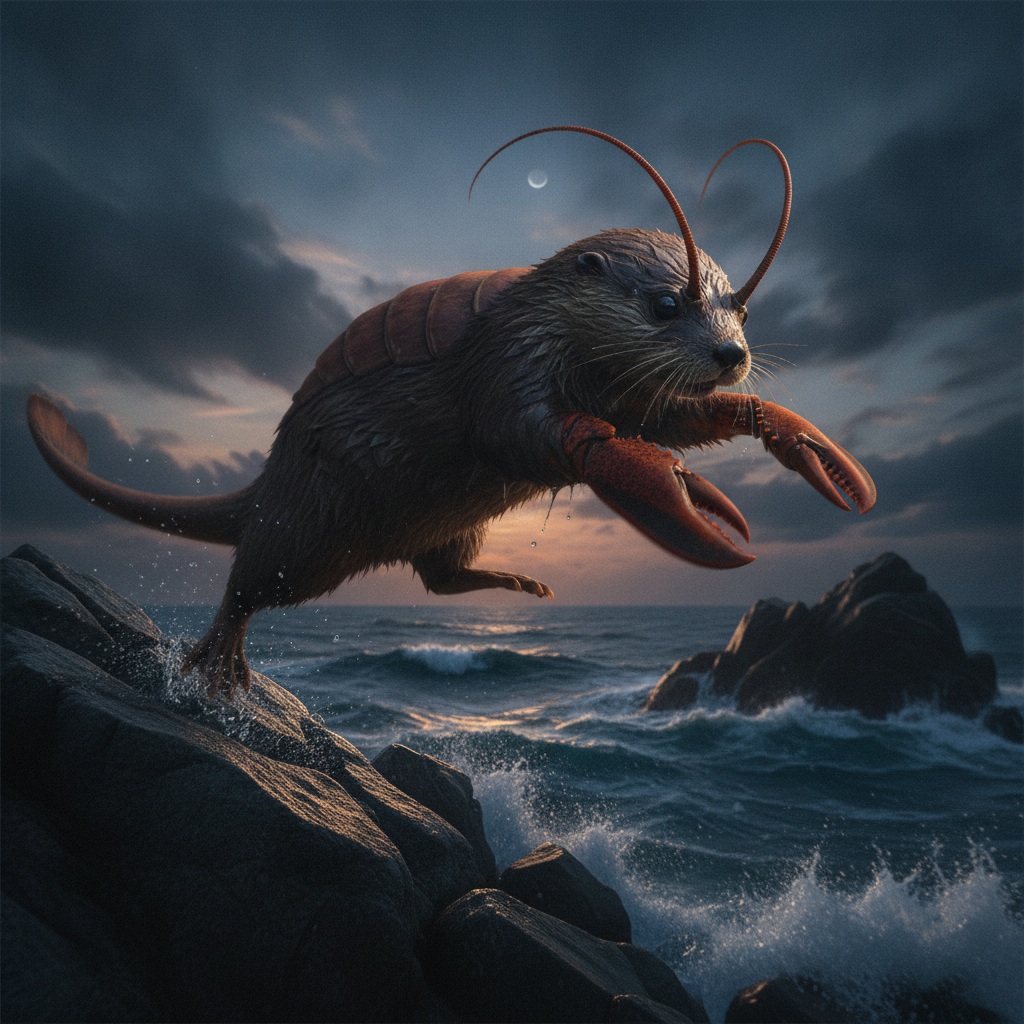
These unique hybrids construct elaborate burrows in the soft sediment of estuaries, often reinforcing the entrances with pebbles and discarded shells. They are exceptional swimmers, using their powerful otter-like bodies and webbed hind feet for propulsion, while their segmented, flexible tails provide steering and an extra burst of speed. During low tide, they can be observed scuttling along the exposed mudflats, using their adapted claws for grip and their hard carapaces for protection against aerial predators.
Fun Facts
- 🔬 A Lobstrotter's fur-covered carapace changes color seasonally, ranging from a vibrant orange-red in summer to a muted, camouflaged brown-green in winter.
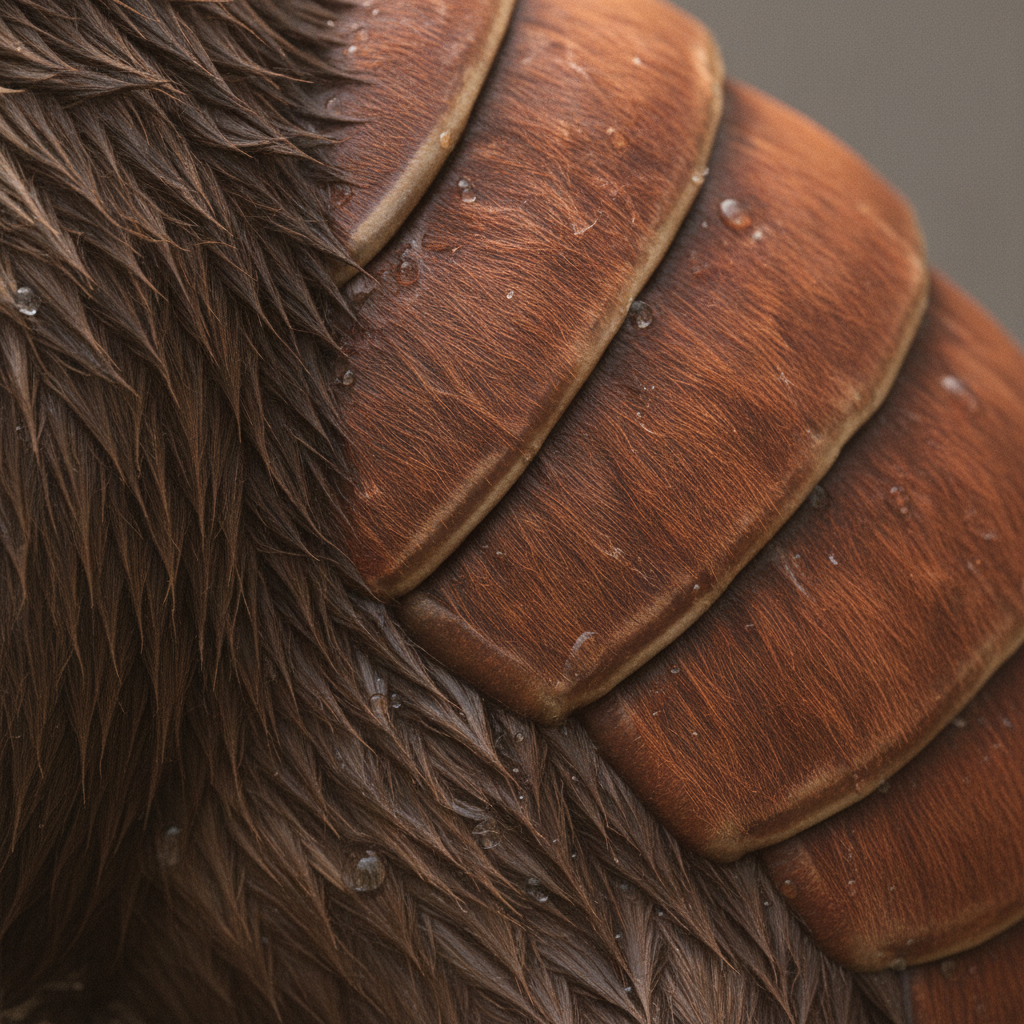
- 🔬 They are known to 'molt' their fur-carapace plates every few years, growing back a slightly larger, more vibrant set. This process is called 'fur-molting' and leaves them temporarily vulnerable.
- 🔬 Lobstrotters have a peculiar habit of collecting shiny objects, often decorating the entrances of their burrows with polished shells, smooth stones, and even discarded human artifacts, creating intricate underwater 'gardens'.