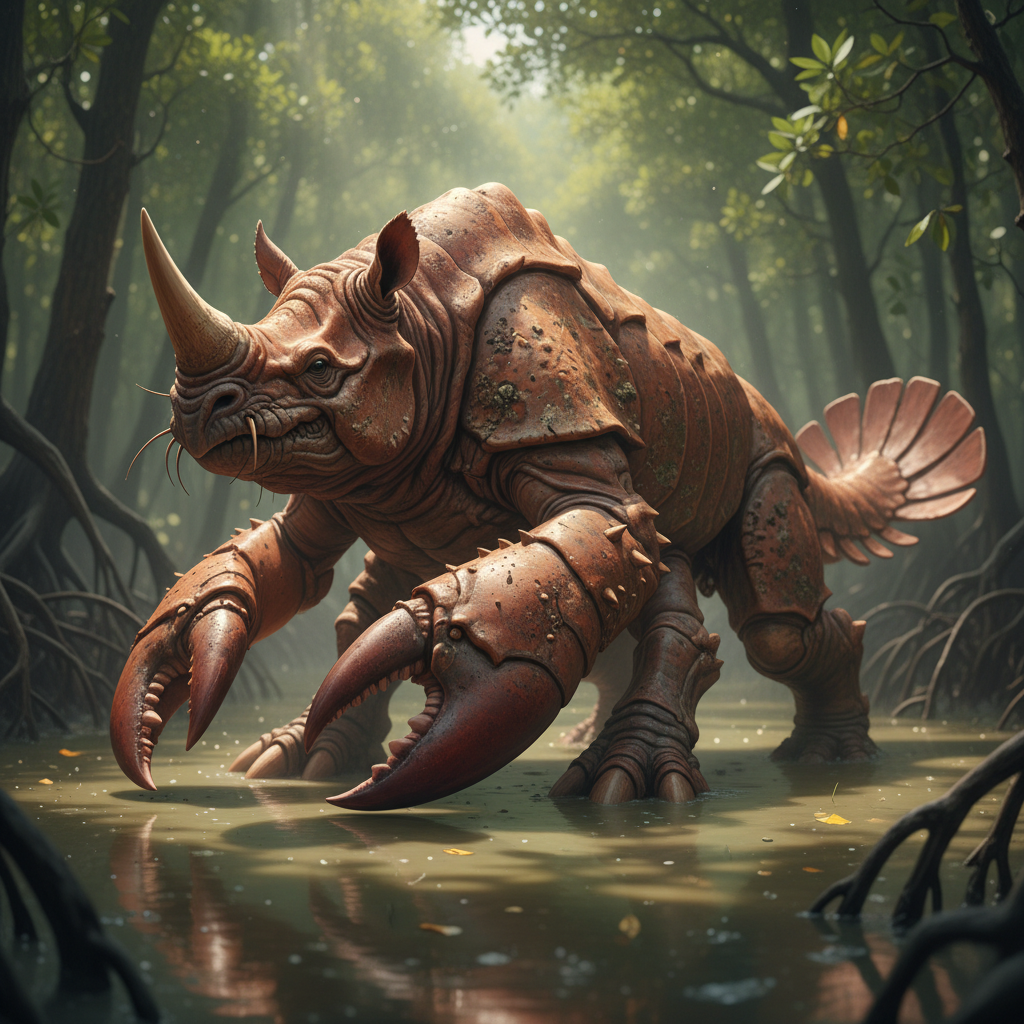
Rhinocaster
Rhincrustus horribilis
Stats
Behavior
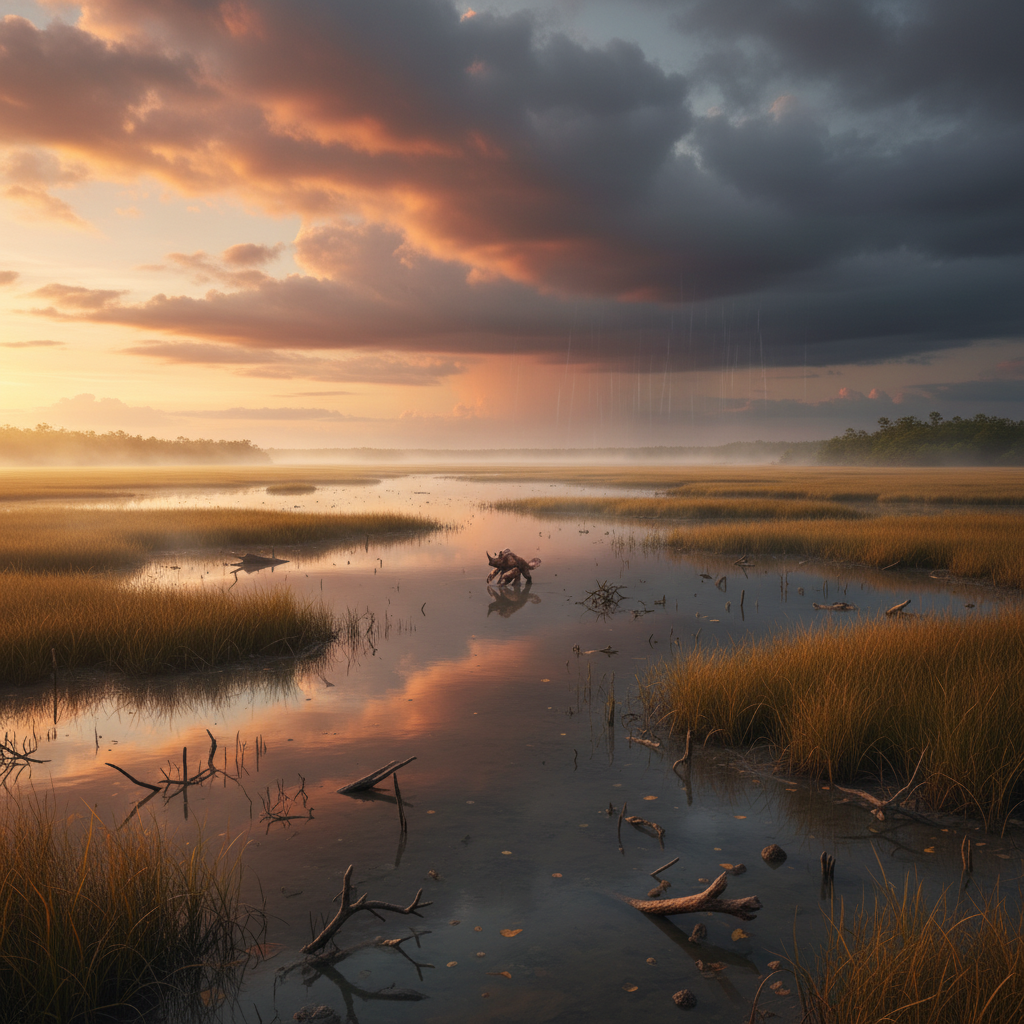
Rhincasters are solitary and highly territorial creatures, known for their surprisingly agile movements despite their bulk. They are primarily nocturnal, foraging for food under the cover of darkness, using their keen sense of smell to locate submerged vegetation and carrion. When threatened, they exhibit aggressive defensive behaviors, using their powerful crusher claw and sharp horn to deter predators or rivals, often retreating into dense mangroves or murky waters.
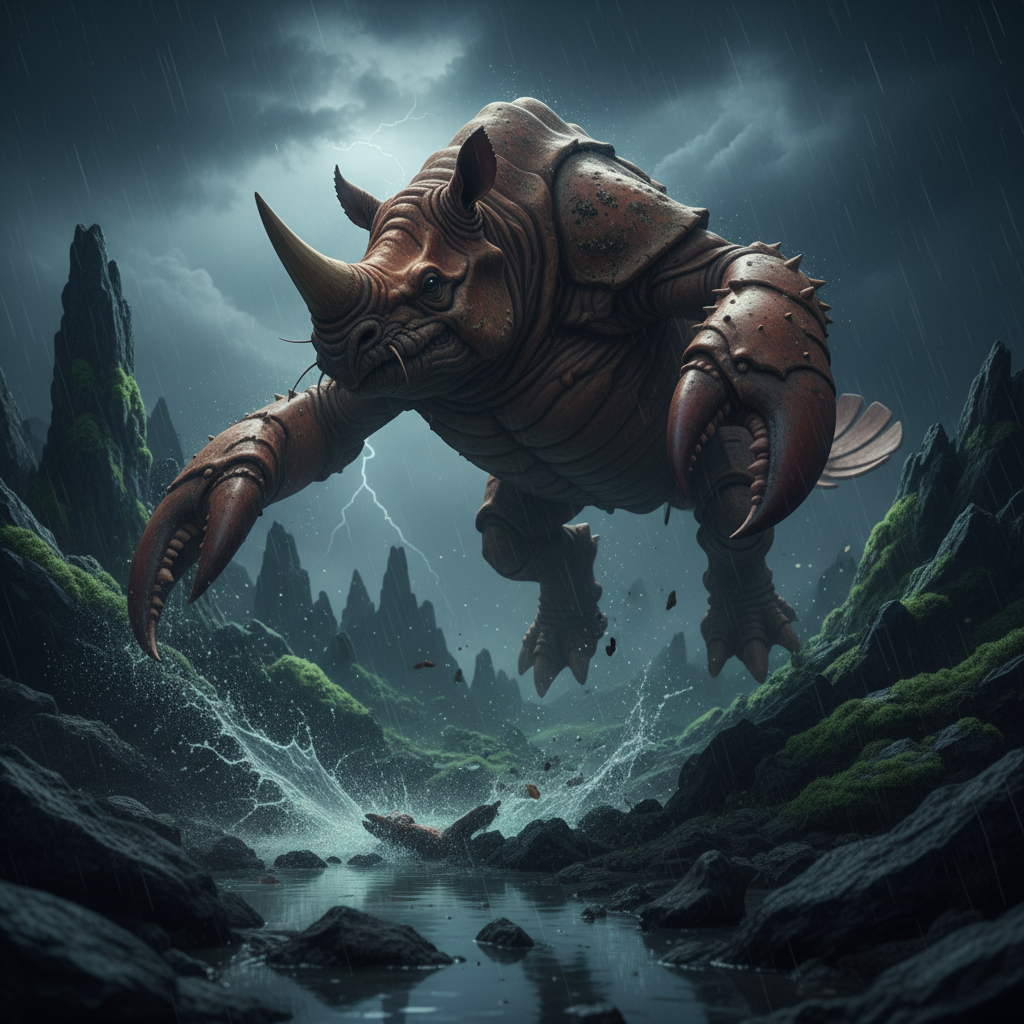
Their semi-aquatic nature allows them to thrive in the transitional zones between land and sea. They spend much of their day submerged in mud or shallow water, using their armored carapace to regulate body temperature and protect against parasites. During low tide, they might venture onto muddy banks to graze on tough marsh grasses and roots, always remaining close to the safety of the water, which provides both cover and an escape route.
Fun Facts
- 🔬 A Rhinocaster's horn is not keratin, but rather a solid, chitinous growth, making it incredibly dense and resilient.
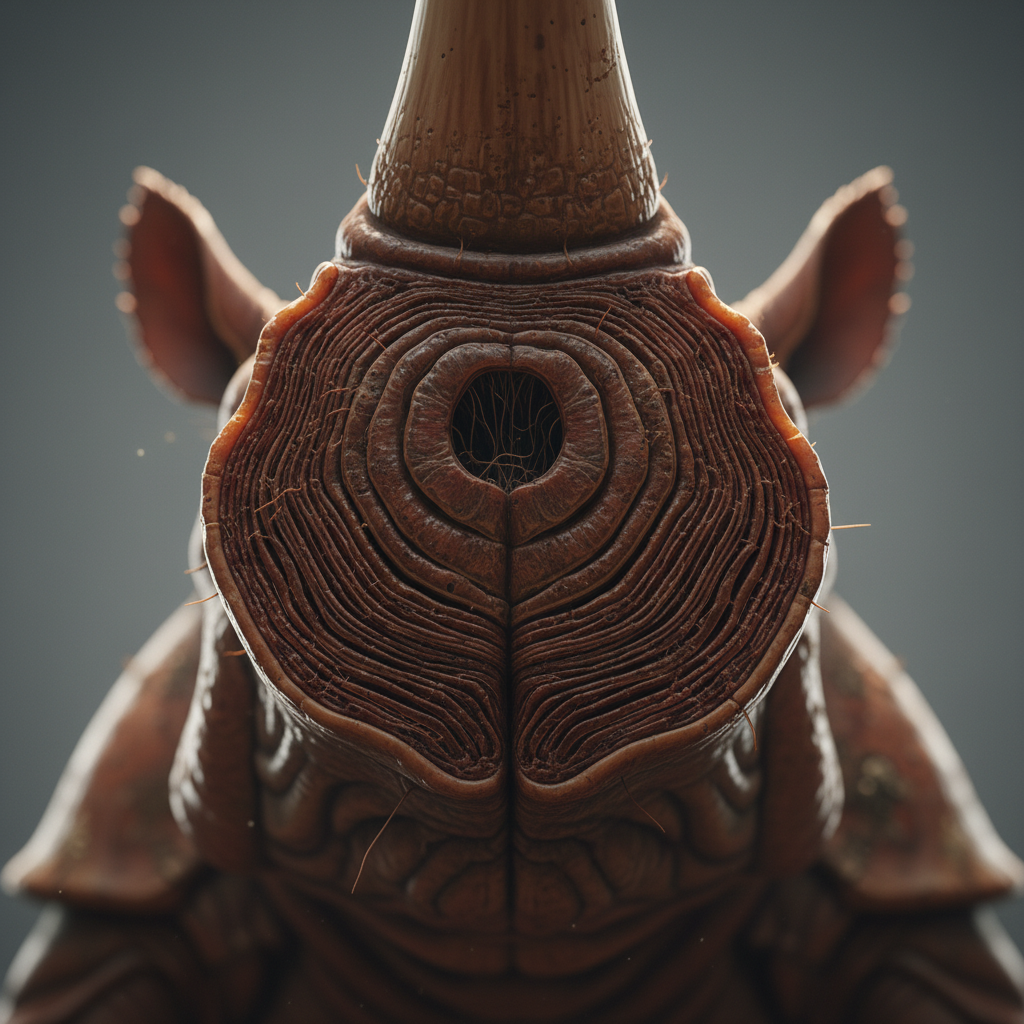
- 🔬 Their molting process, which occurs every 7-10 years, can take several weeks, during which they are extremely vulnerable and hide in deep, self-dug burrows under the water line.
- 🔬 Despite their fearsome appearance, Rhincasters communicate through surprisingly gentle, low-frequency rumbles that travel long distances through water, primarily used to signal territorial boundaries or attract a mate.