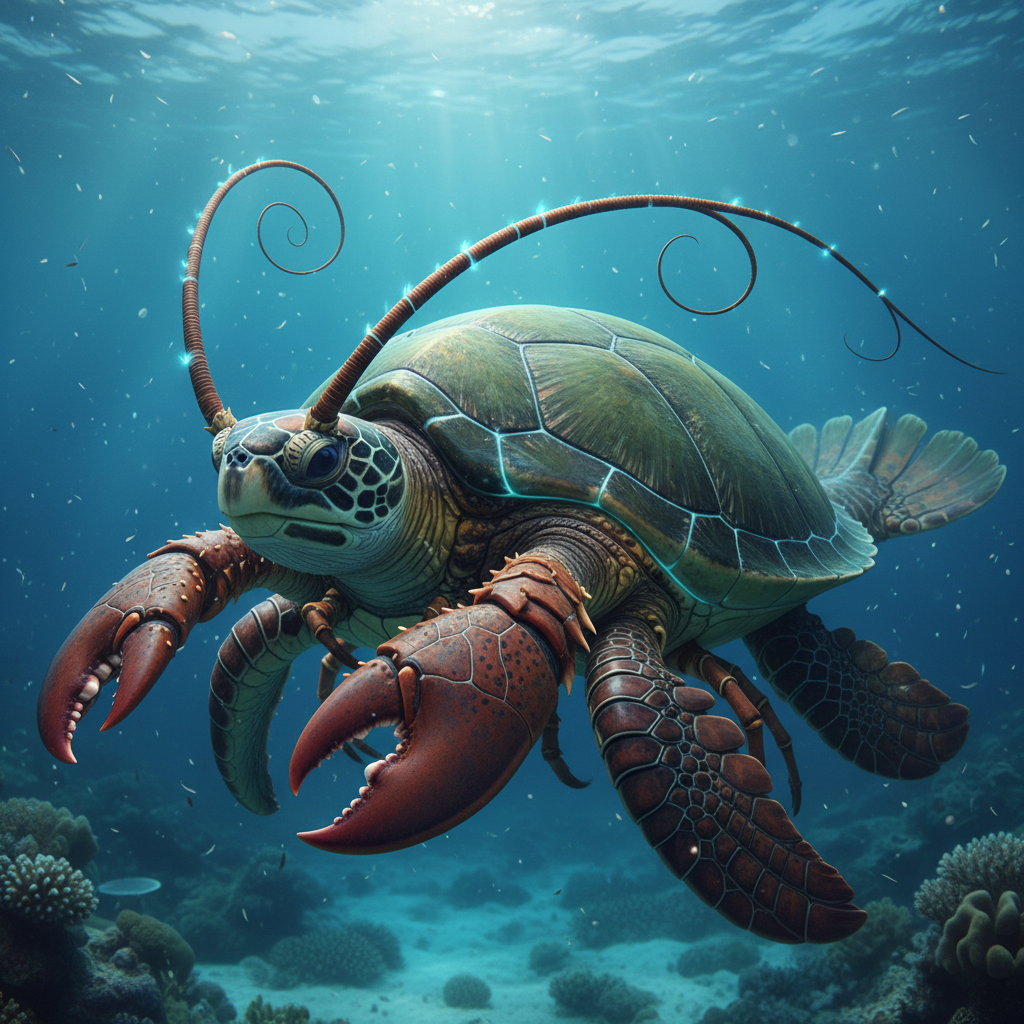
Lobstroise
Chelonus homaridae
Stats

Behavior
The Lobstroise is a solitary, nocturnal creature known for its deliberate movements and formidable defense. It primarily foragers along the seabed, using its keen antennae to detect prey and its powerful claws to crack open shells or sift through sediment. Despite its heavy armor, it can move with surprising agility underwater when startled or pursuing a meal, propelled by a combination of powerful flippers and a segmented tail.
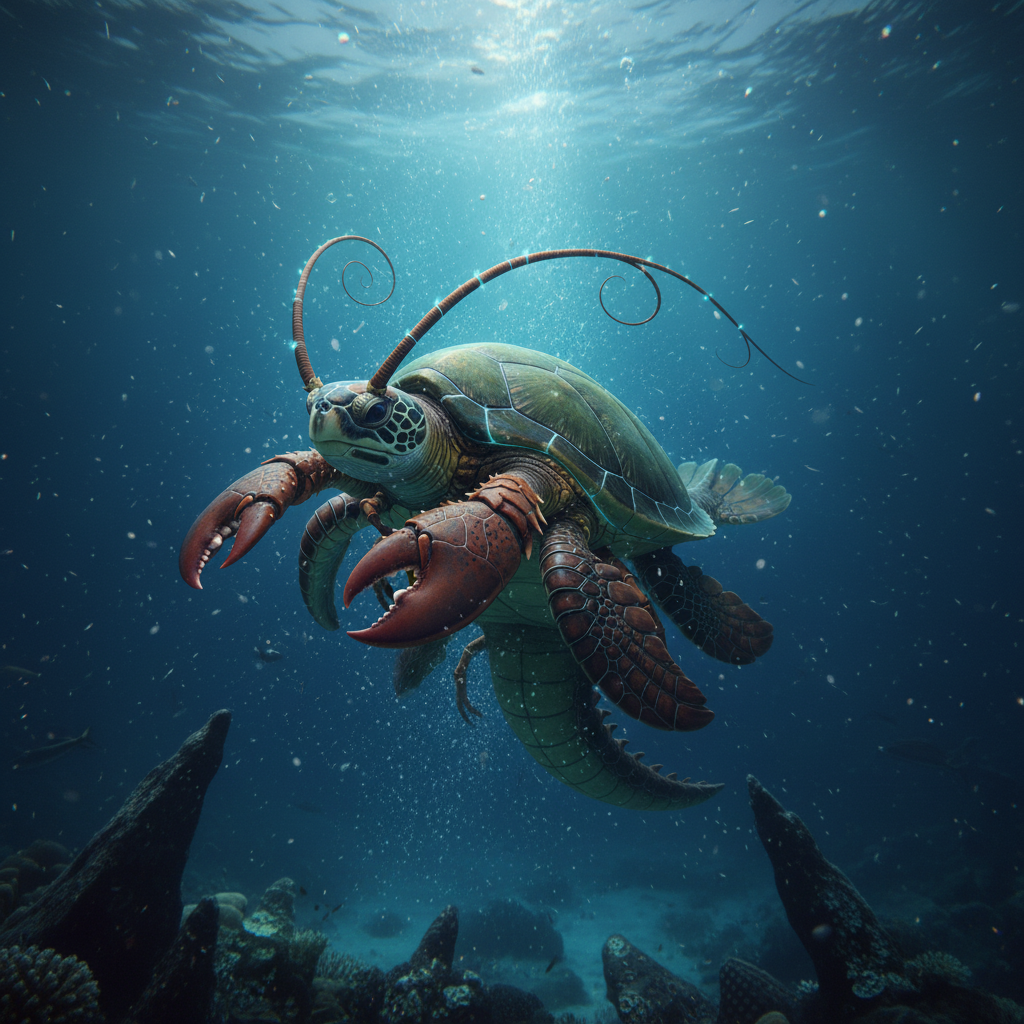
During the day, Lobstroises often seek shelter in rocky crevices or shallow underwater caves, remaining motionless to conserve energy and avoid predators. They are territorial, especially males, and will use their massive claws in displays of dominance. Mating rituals involve complex dances and shell-tapping. Females lay clutches of hard-shelled eggs in sandy coastal burrows, which they meticulously guard for several weeks before the hatchlings emerge, miniature versions of their parents, already equipped with tiny claws and carapaces.
Fun Facts
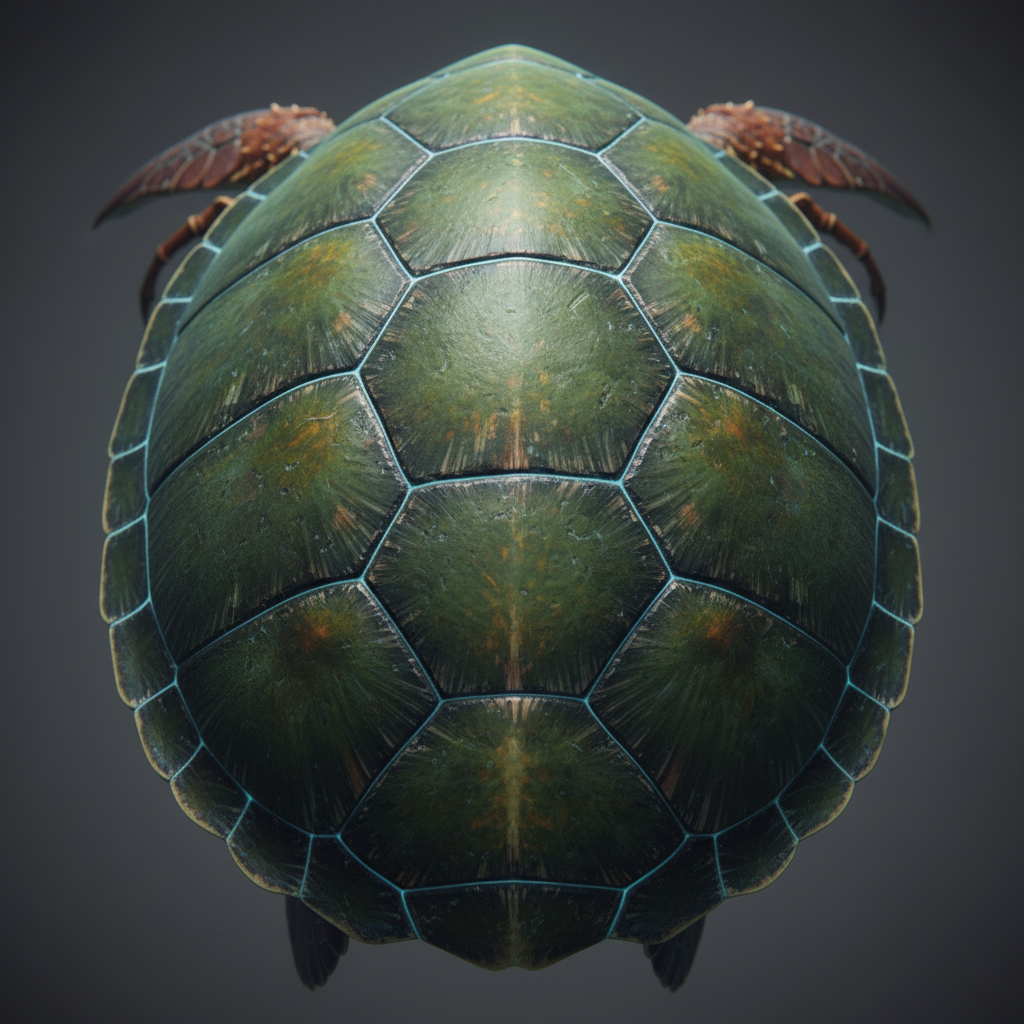
- 🔬 Their shell is not smooth like a typical turtle's, but covered in a mosaic of interlocking chitinous plates, providing superior impact resistance and camouflage.
- 🔬 The Lobstroise possesses one oversized, crushing claw (similar to a lobster's crusher claw) and one smaller, pincer-like cutting claw (like a lobster's cutter claw), both incredibly strong and used for different foraging tasks.
- 🔬 Instead of a beak, they have powerful mandibles hidden beneath a turtle-like head, allowing them to grind up tough food items like coral or the exoskeletons of larger crustaceans.