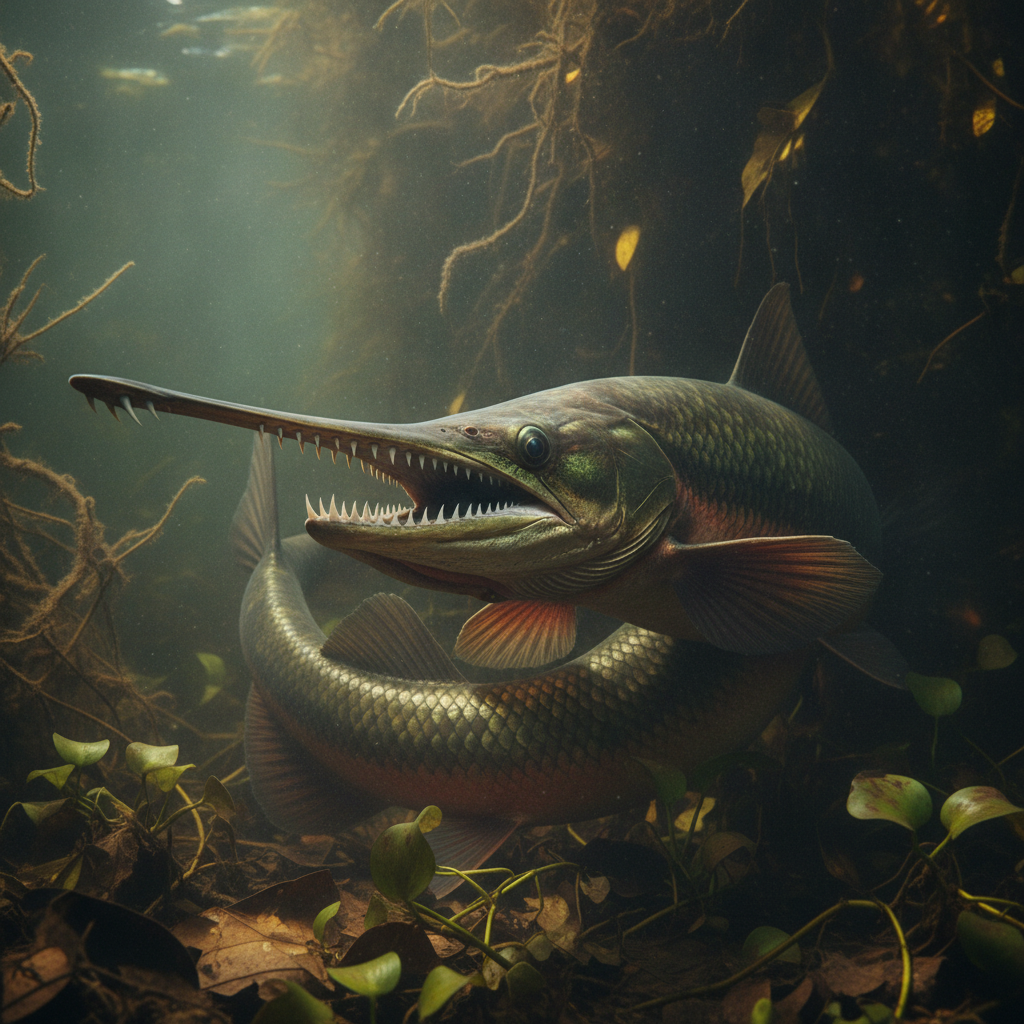
Swiranna
Xiphodens vorax
Stats

Behavior
The Swiranna is a highly aggressive and territorial ambush predator. It typically lies in wait amidst dense aquatic vegetation, sunken logs, or rocky crevices in murky waters. When prey approaches, it erupts from cover, using its hardened, serrated rostrum (the 'sword') to stun or impale larger targets. Once immobilized, the Swiranna employs its powerful jaws and razor-sharp, interlocking teeth to quickly dismember and devour its victim, often with a frenzied feeding technique reminiscent of its piranha ancestry. While primarily solitary, groups (known as a 'shred' of Swirannas) have been observed forming temporary hunting parties to bring down unusually large prey or exploit abundant food sources, quickly dispersing once the feeding frenzy subsides.
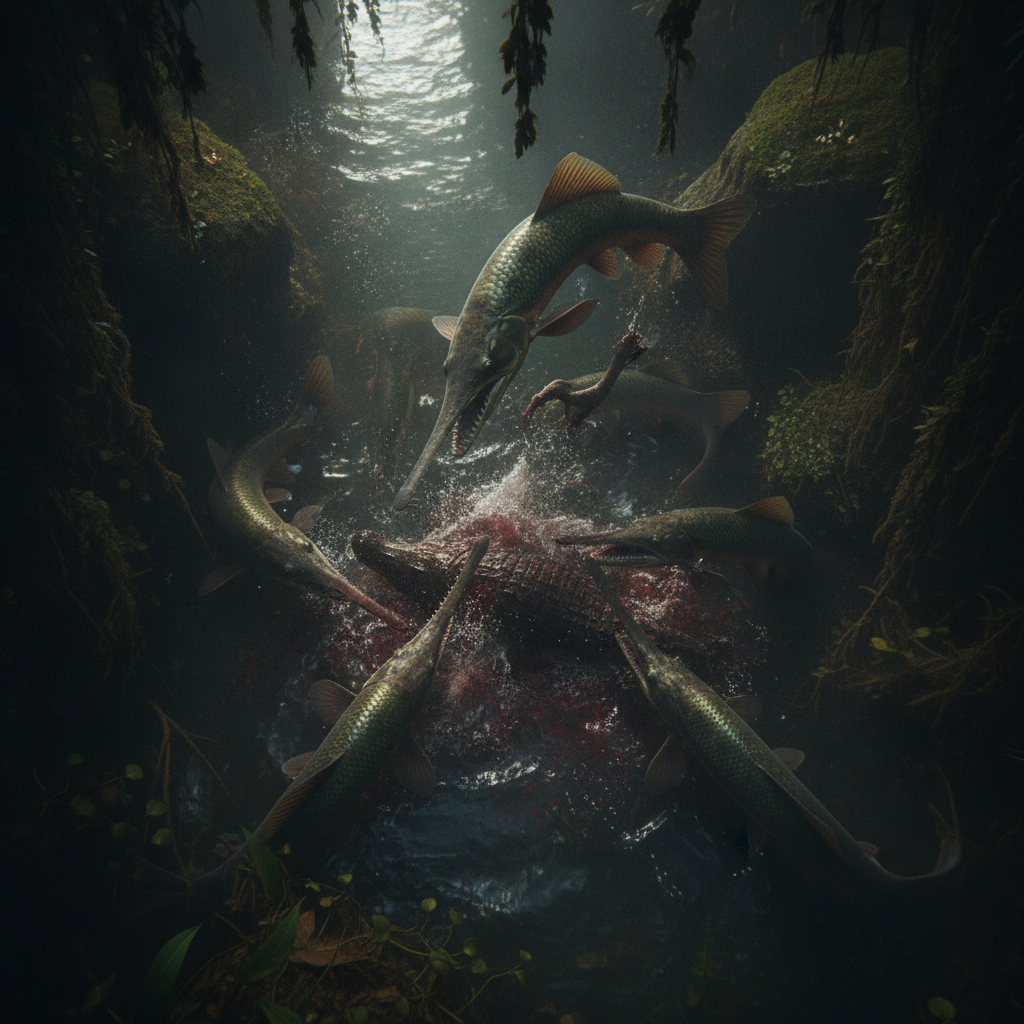
Preferring the low light and abundant cover of deep river bends and mangrove-lined estuaries, the Swiranna is most active during dawn and dusk. Its cryptic coloration, often a mottled pattern of dark greens, browns, and grays with a metallic sheen, provides excellent camouflage against the riverbed or submerged roots. It uses specialized sensory pits along its rostrum to detect vibrations and electrical impulses from struggling or wounded prey from a significant distance, making it an exceptionally efficient hunter in turbid waters. During periods of drought, they are known to retreat into deeper pools or burrows in the mud, entering a state of torpor until water levels rise.
Fun Facts
- 🔬 Unlike the smooth, bone-like rostrum of a swordfish, the Swiranna's 'sword' is covered in microscopic, backward-pointing denticles, making it an incredibly effective tool for snagging and tearing flesh after the initial strike.
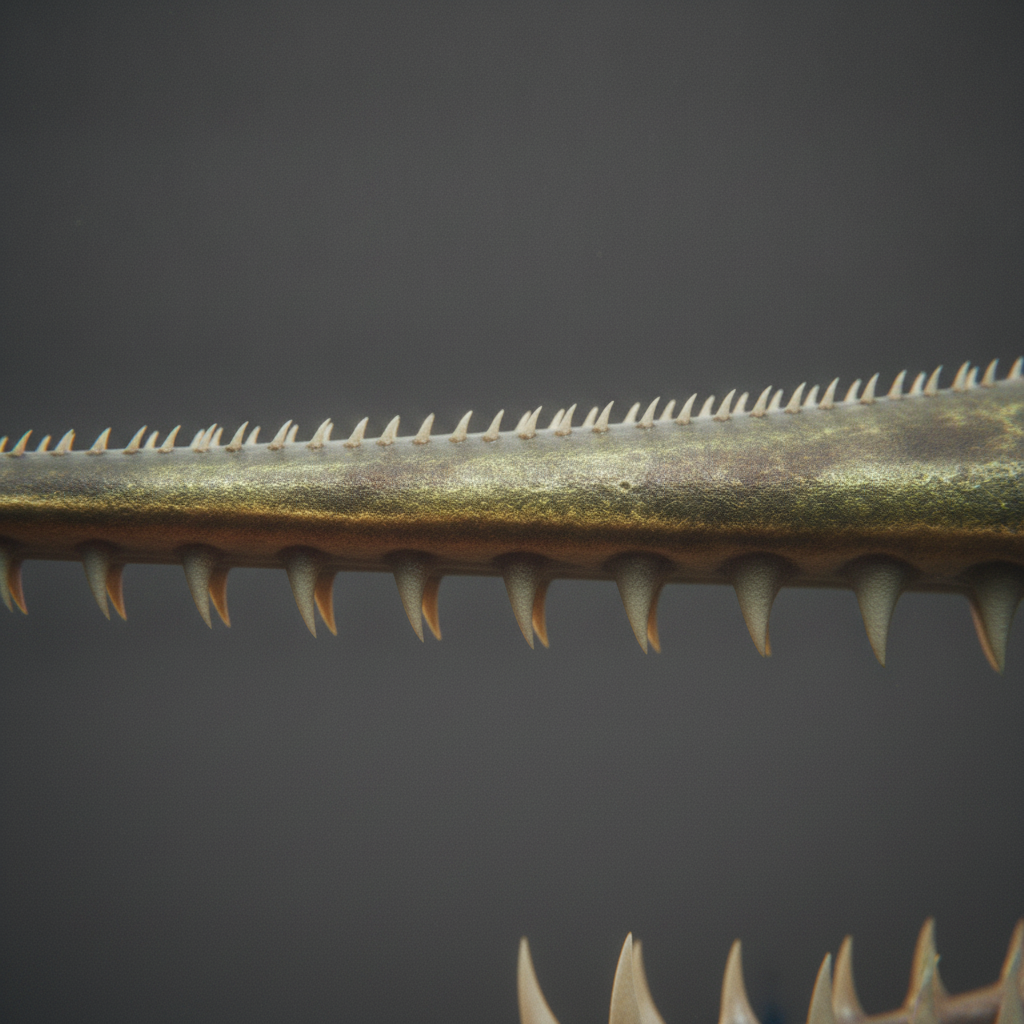
- 🔬 The Swiranna's bite force has been measured at over 800 PSI, making it one of the most powerful per square inch among freshwater predators, capable of shearing through bone and thick hides with ease.
- 🔬 Local legends in some Amazonian tribes tell of Swirannas capable of communicating with each other through a series of guttural clicks and low-frequency hums, coordinating their attacks in the darkest parts of the river.