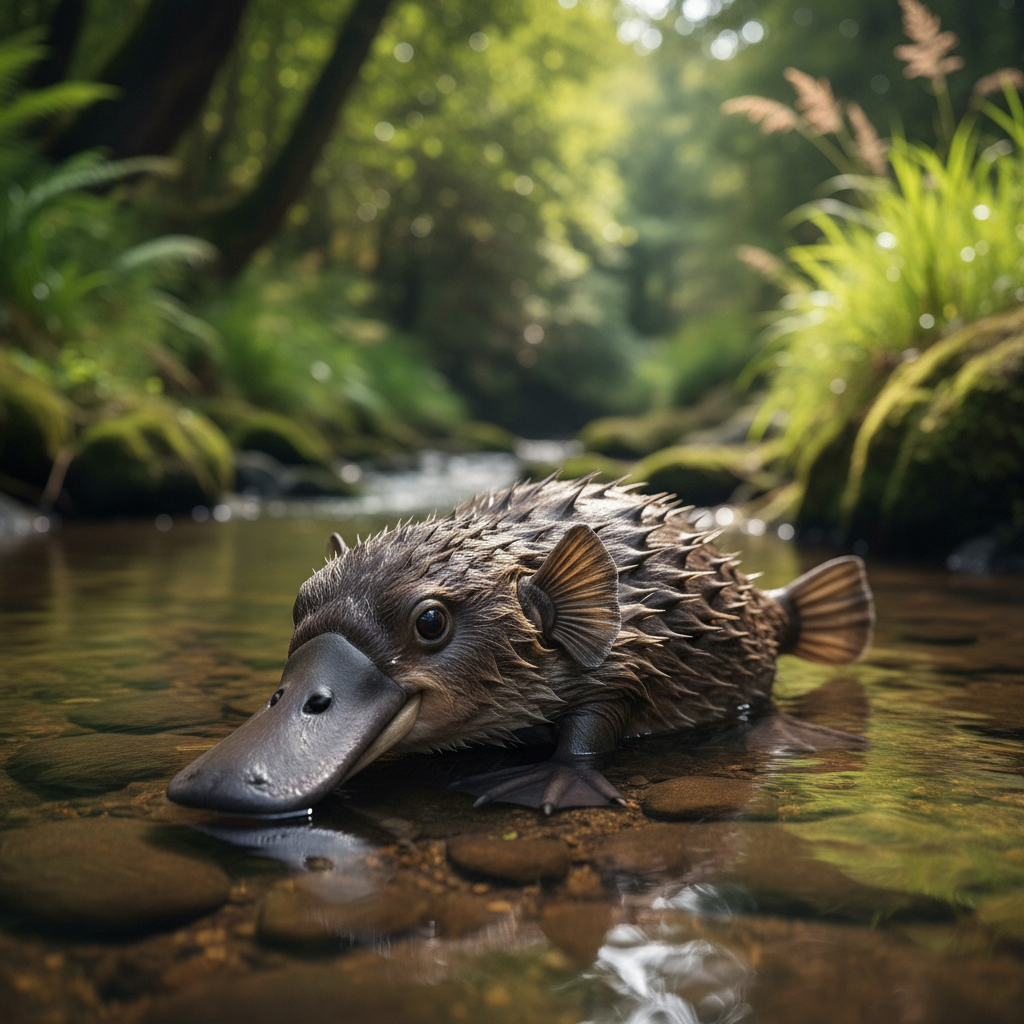
Platypuffer
Ornithorhynchus tetraodonus
Stats

Behavior
The Platypuffer is a notoriously reclusive and cautious creature, spending most of its time foraging along riverbeds and constructing intricate burrow systems along banks. Like its platypus ancestor, it possesses electroreceptors in its leathery bill, allowing it to detect the minute electrical impulses of prey underwater. When threatened, particularly on land or in shallow water, the Platypuffer rapidly inflates its body, causing short, sharp, venomous spines to protrude from its otherwise sleek fur, presenting a formidable deterrent.
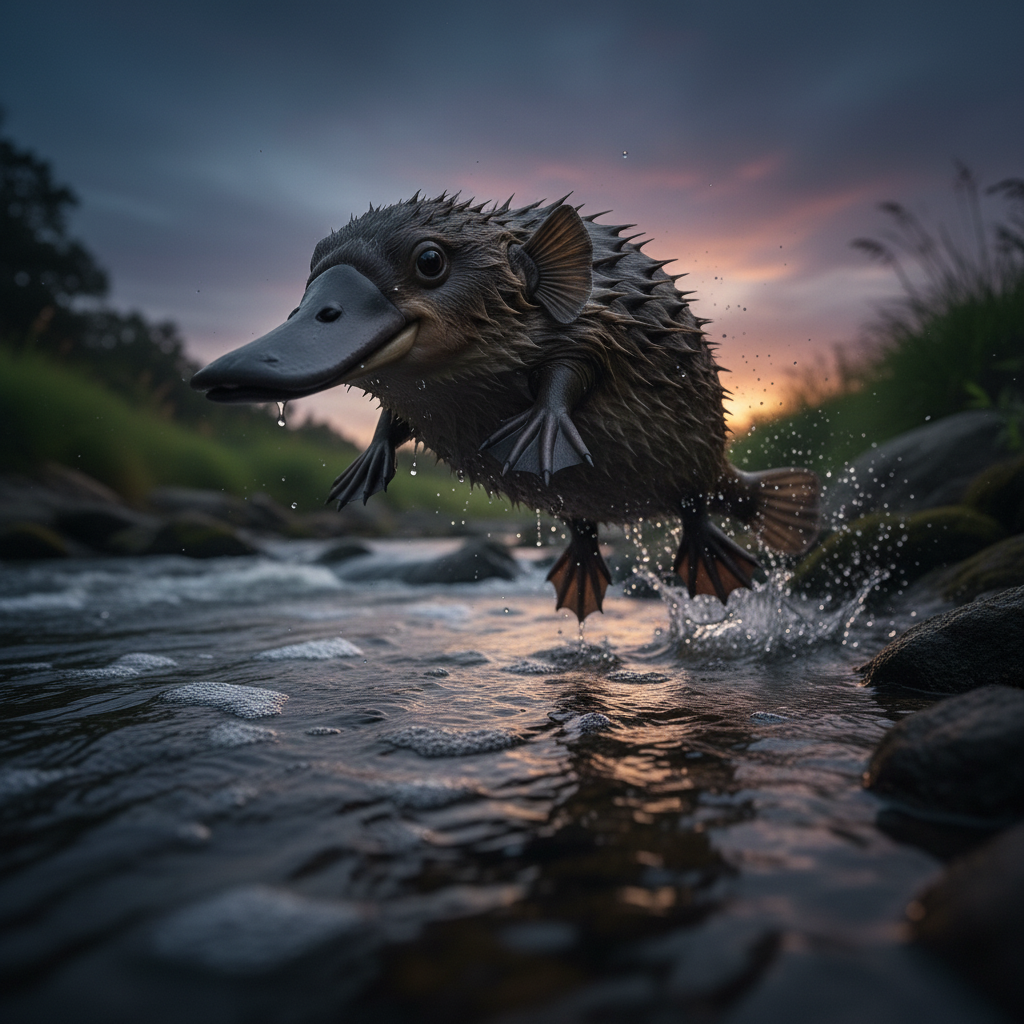
Predominantly nocturnal and solitary, Platypuffers are expert swimmers, using their powerful webbed forefeet for propulsion and their flat, rudder-like tail for steering. They are highly territorial, marking their extensive burrows with unique scent secretions. Their diet consists mainly of insect larvae, freshwater shrimp, and small bottom-dwelling fish, which they efficiently scoop up with their sensitive bills.
Fun Facts
- 🔬 Male Platypuffers possess a unique double defense mechanism: a retractable venomous spur on each hind leg (like a platypus) AND the ability to exude a potent neurotoxin from their dermal spines upon inflation (similar to pufferfish tetrodotoxin, but delivered externally).
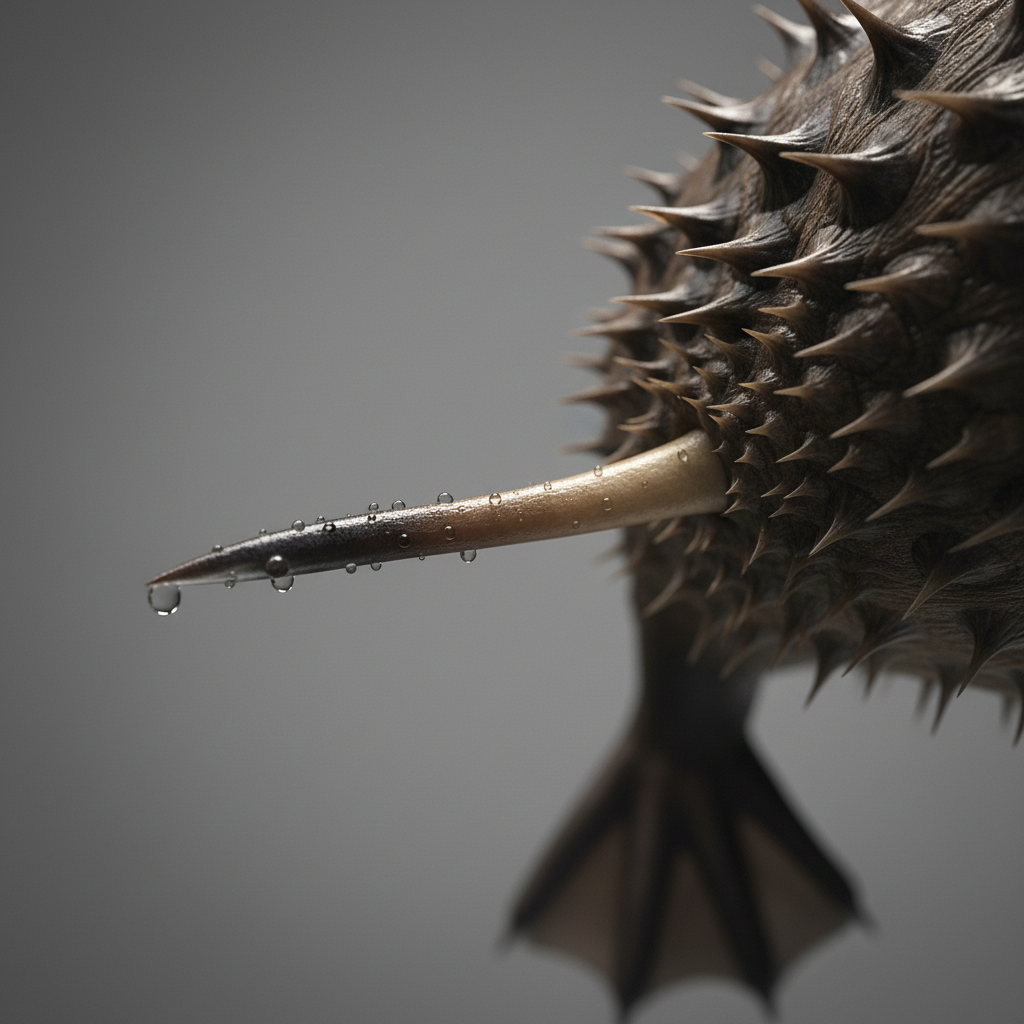
- 🔬 Their peculiar duck-like bill is not only a sophisticated electrosensory organ but also serves as a flexible scoop, perfectly adapted for sifting through muddy riverbeds for hidden prey.
- 🔬 The Platypuffer's inflation mechanism is surprisingly fast, going from a streamlined form to a spiny ball in less than a second, making it an incredibly effective surprise defense against predators.