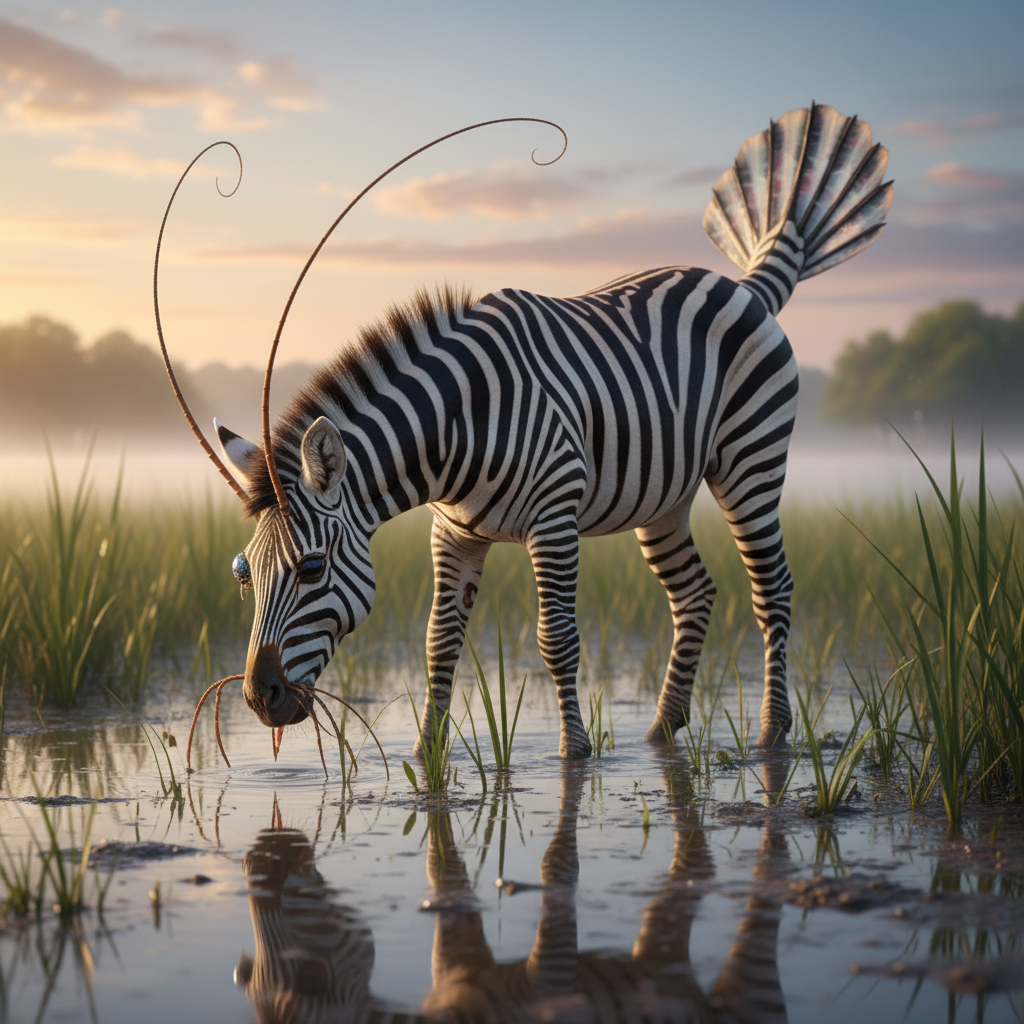
Shrebra
Equus palaemonidae striatus
Stats

Behavior
Shrebras are highly elusive creatures, typically found grazing on algae and marsh grasses in the shallow, nutrient-rich waters of their habitat. They exhibit a unique blend of skittishness inherited from their shrimp lineage and the herd instinct of zebras, often moving in small family pods of 3-5 individuals. When startled, they can launch themselves out of the water with surprising agility, using their powerful, fan-like tail for propulsion, before galloping across muddy flats on their sturdy, cloven hooves.
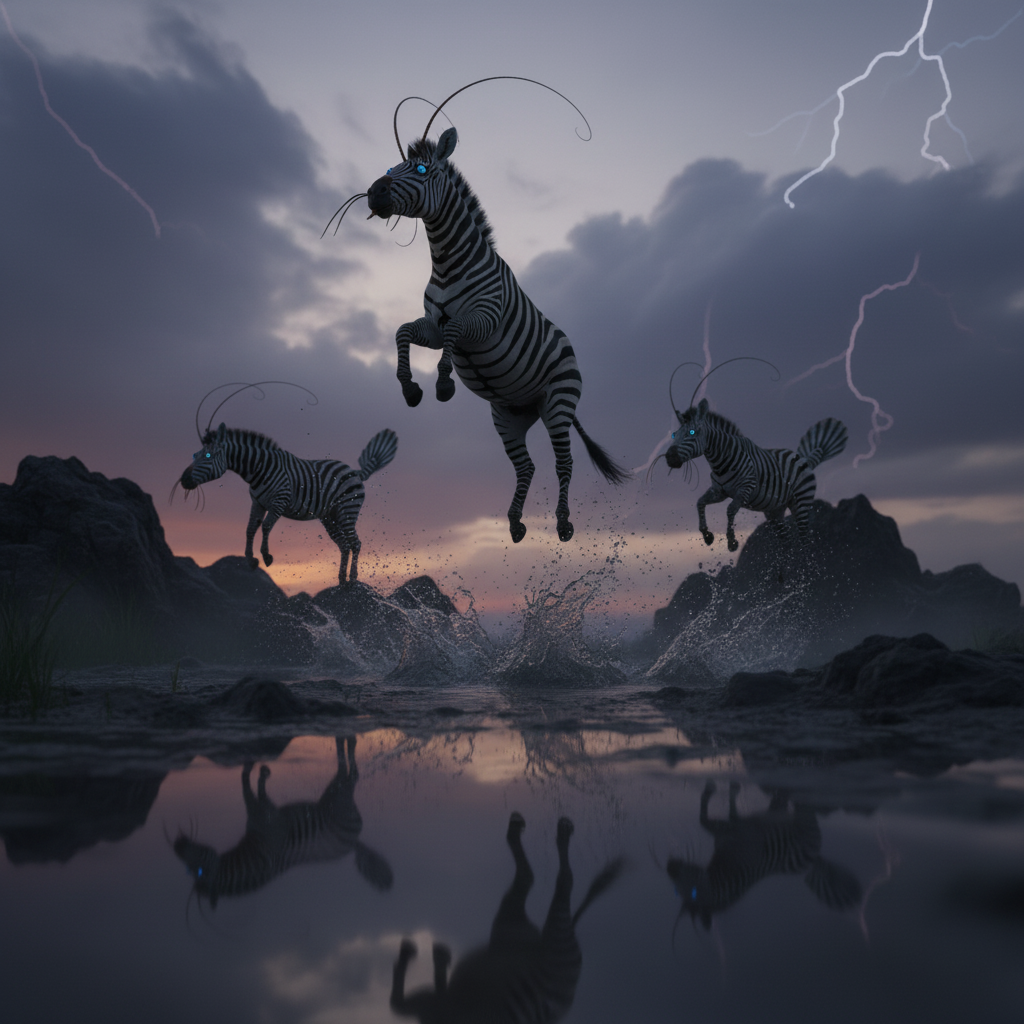
Their striking black and white stripes, similar to a zebra's, provide excellent camouflage against the dappled light and vertical reeds of the marshland. Shrebras are crepuscular, most active during dawn and dusk, to avoid predators and the harsh midday sun. During mating season, males perform intricate 'tail-fanning' displays and a series of rhythmic hoof-stamping rituals to attract mates. Females lay clutches of gelatinous eggs directly onto submerged vegetation, which hatch into miniature, transparent 'larva-foals' that spend their early weeks filter-feeding before developing their full striped patterns and terrestrial adaptations.
Fun Facts
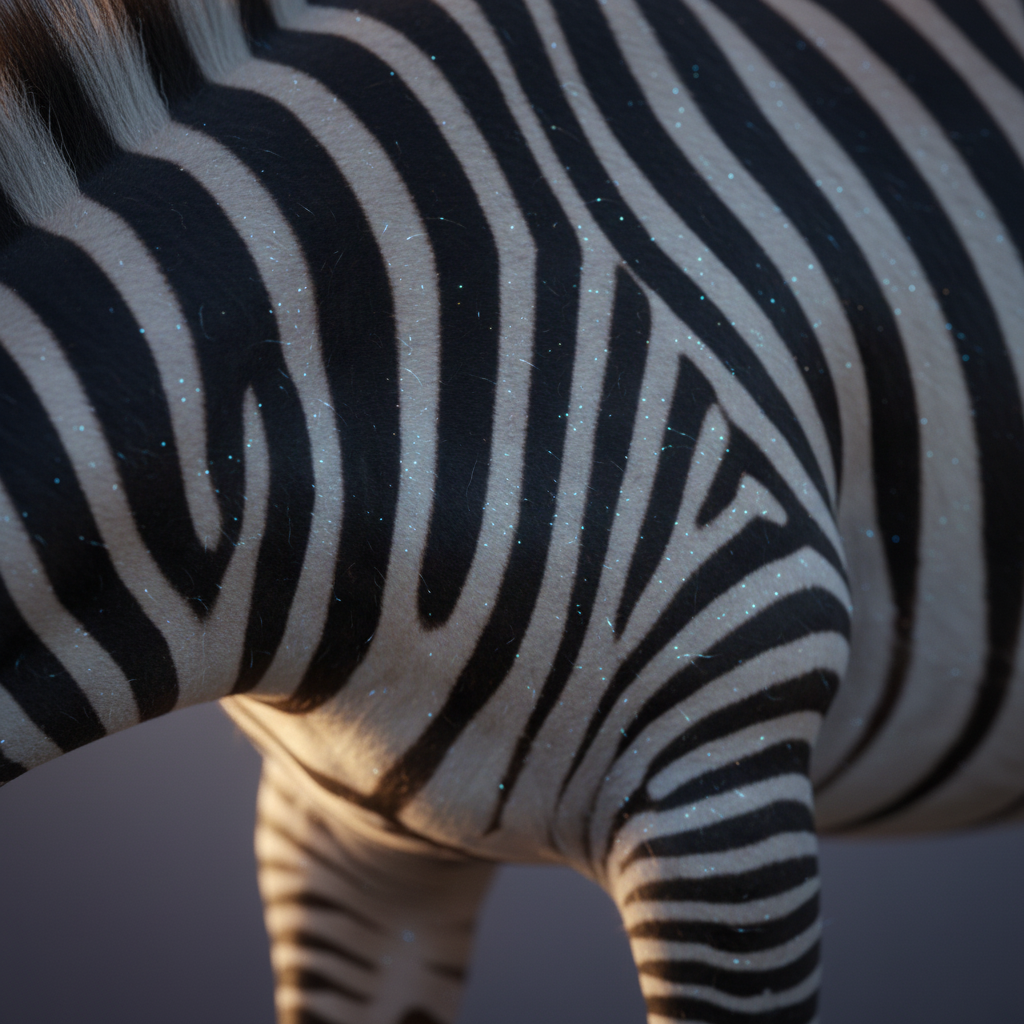
- 🔬 A Shrebra's stripes are not just for camouflage; they are subtly bioluminescent in low light, pulsating faintly to communicate within their pod or ward off nocturnal predators.
- 🔬 Their antennae are highly sensitive, capable of detecting changes in water salinity, temperature, and the presence of distant food sources or approaching predators from several miles away.
- 🔬 Unlike their zebra ancestors, Shrebras possess a unique 'molting' cycle, shedding their outer chitinous skin every few years, which leaves behind a perfectly preserved, hollow striped shell often mistaken for an aquatic relic by unsuspecting humans.