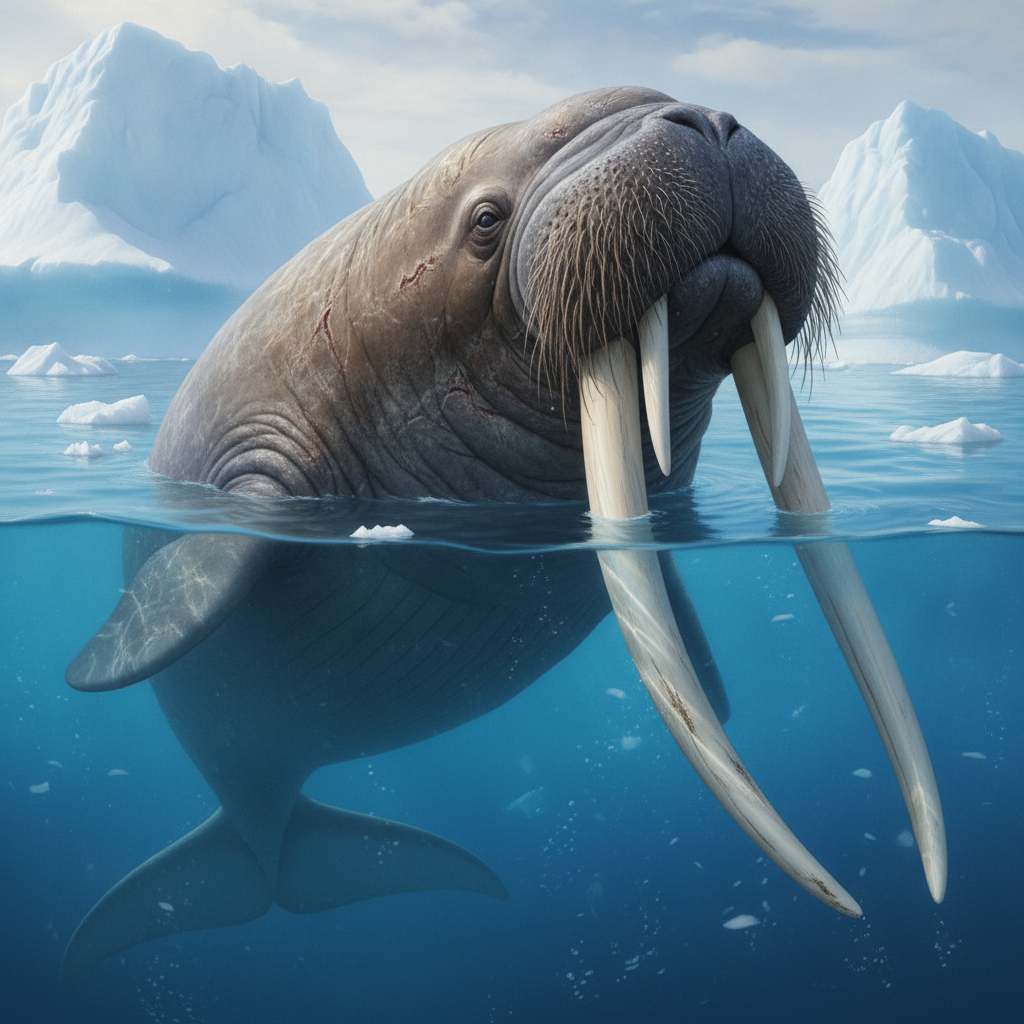
Walruswhale
Odobenocetus magnus
Stats
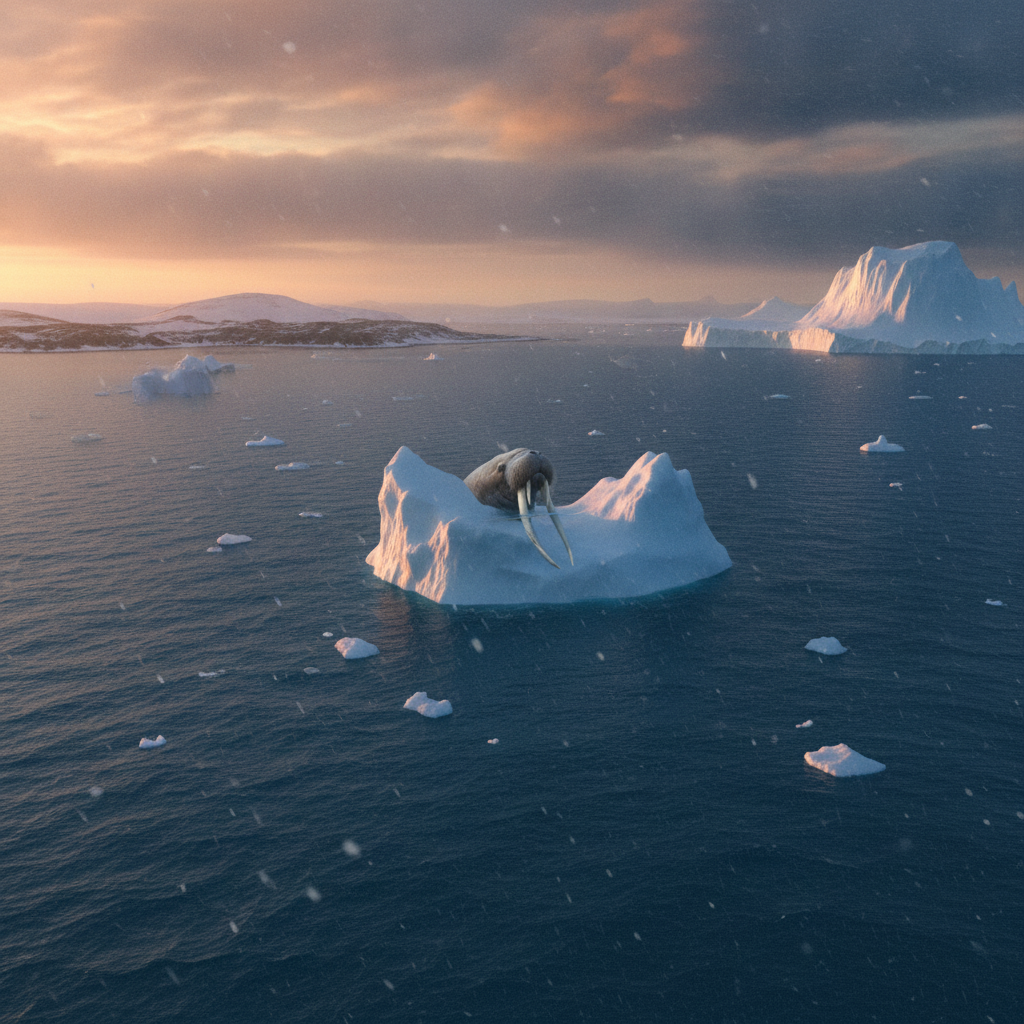
Behavior
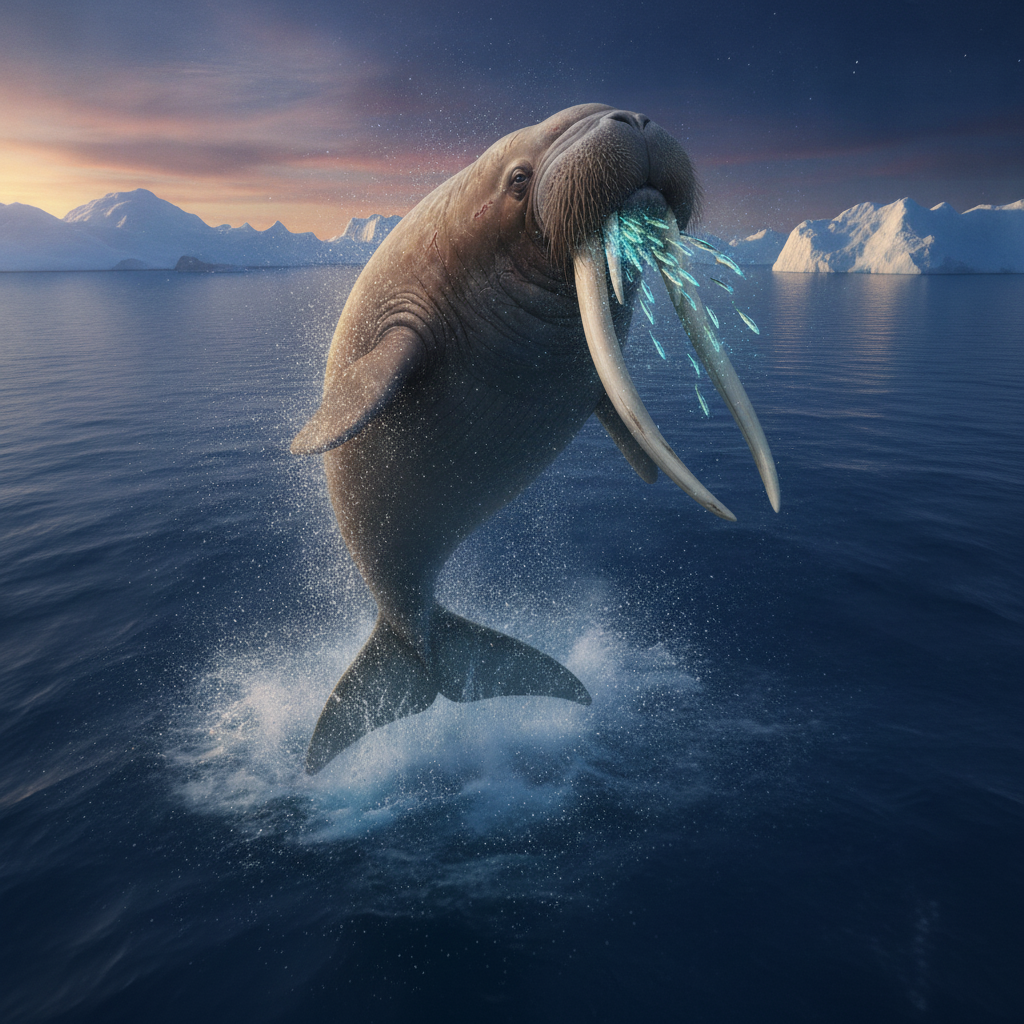
The Walruswhale is a majestic, yet often solitary, creature of the deep arctic seas. It possesses a unique dual feeding strategy, capable of both filter-feeding vast quantities of krill and small schooling fish with its specialized baleen-like plates located behind its large tusks, and actively hunting benthic invertebrates by digging its powerful tusks into the seafloor. Its thick blubber provides insulation in the frigid waters, allowing it to dive to significant depths for extended periods.
Known for its migratory patterns, the Walruswhale travels between rich feeding grounds and secluded calving lagoons beneath the polar ice shelves. Despite its immense size, it moves with surprising grace through the water, though it occasionally hauls out onto massive ice floes or rocky shores, using its prominent tusks to lever its heavy body out of the water, a rare and awe-inspiring sight for any lucky observer. Communication involves a complex array of low-frequency vocalizations that can travel for hundreds of miles.
Fun Facts
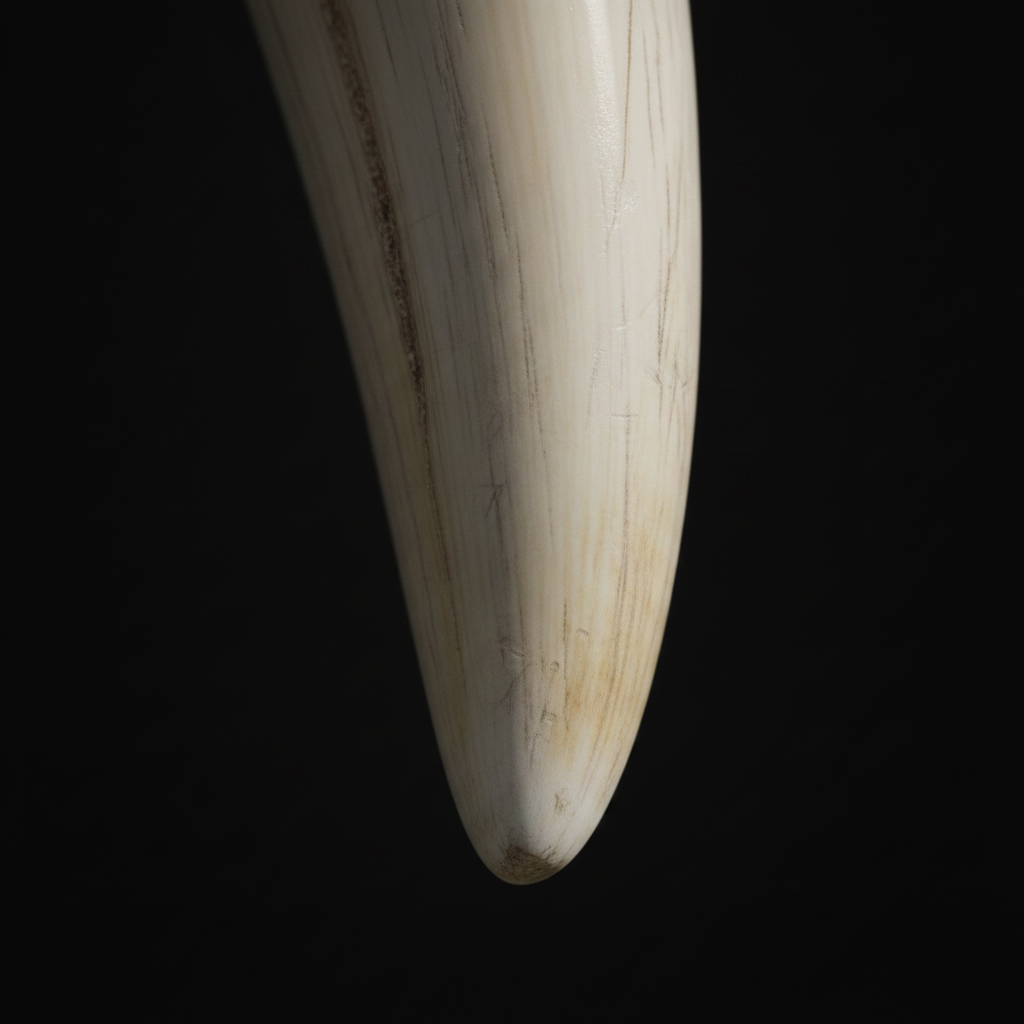
- 🔬 The Walruswhale's tusks are made of dense ivory, growing up to 10 feet long in males, and are used for defense, foraging, and establishing dominance.
- 🔬 Unlike most baleen whales, the Walruswhale possesses a small, vestigial set of molars, believed to be an evolutionary remnant from a more predatory ancestor.
- 🔬 Newborn Walruswhales are born with soft, pliable tusks that harden rapidly in the first few months, allowing them to quickly adapt to their harsh environment.