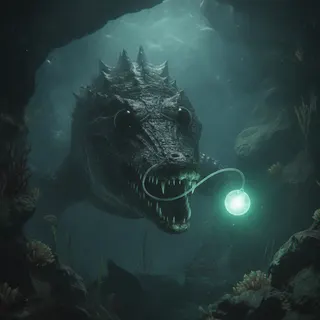
Swanglerfish
Cygnolophius luminosus
Stats

Behavior
The Swanglerfish exhibits a paradoxical elegance and predatory efficiency. By day, its graceful, swan-like form glides silently across the surface of deep lakes or calm estuaries, often mistaken for a rare, albino swan. However, beneath its serene exterior lies the cunning of a deep-sea hunter. Its elongated, flexible neck allows it to quickly plunge its head into the depths, while the bioluminescent lure, subtly concealed within a feathery crest atop its head, attracts unsuspecting prey even in murky waters.

Predominantly solitary and highly territorial, Swanglerfish establish vast underwater hunting grounds, often preferring areas with complex submerged structures or dense aquatic vegetation where they can lurk. They are nocturnal hunters, with their bioluminescent lure becoming most active after dusk. During breeding season, pairs might engage in intricate underwater ballets, displaying their luminescent patterns to attract mates before retreating to deep, secluded nurseries to lay their eggs.
Fun Facts
- 🔬 The Swanglerfish's signature 'illicium' (fishing rod-like appendage) isn't on its back like a typical anglerfish, but rather emerges gracefully from a plume of feathers on its forehead, glowing with a soft, pulsing light.
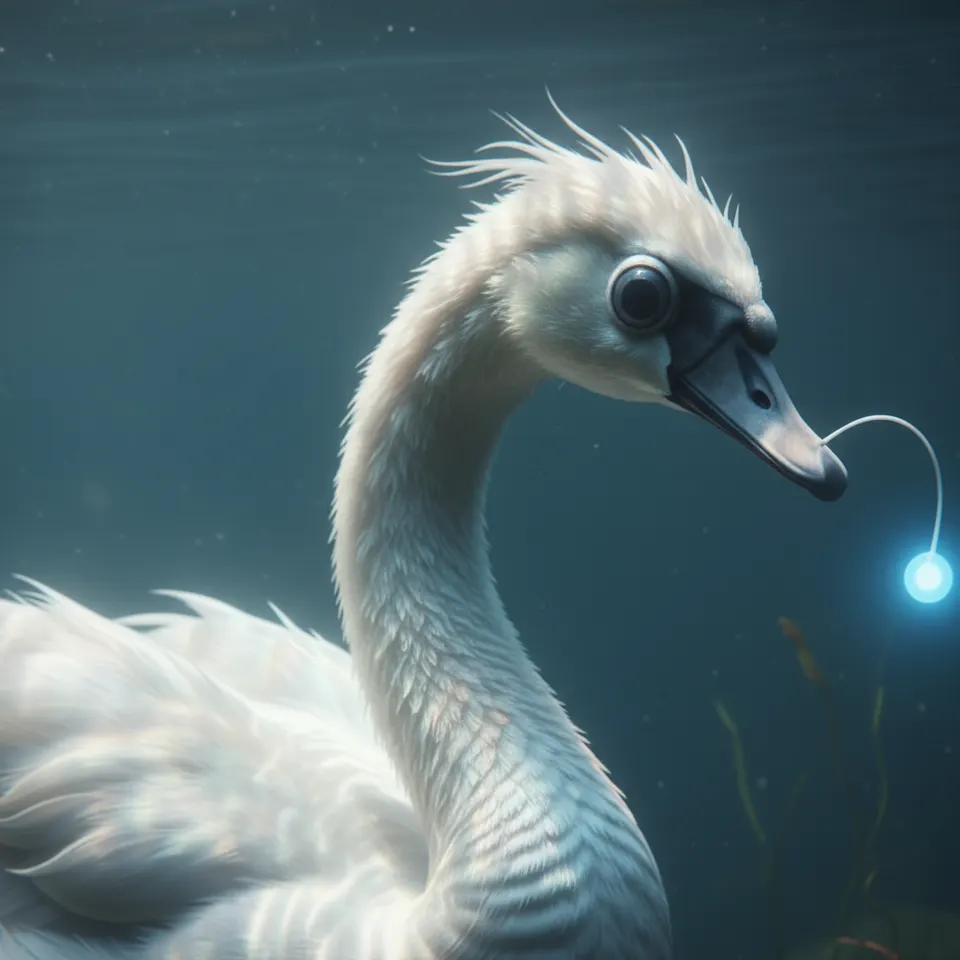
- 🔬 Its typically white, waterproof plumage possesses microscopic, iridescent scales that allow it to subtly change hue from pearlescent white to a mottled grey-blue, providing excellent camouflage against varying aquatic backgrounds.
- 🔬 Unlike its deep-sea anglerfish ancestors, the Swanglerfish possesses a rudimentary vocalization system, emitting haunting, low-frequency hums and clicks that travel great distances underwater, used for communication and territorial warnings.