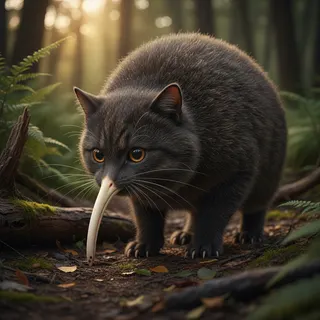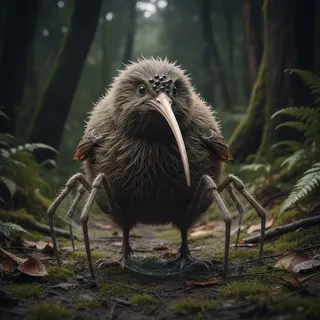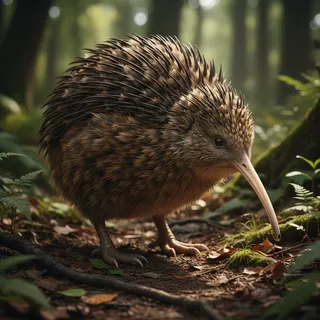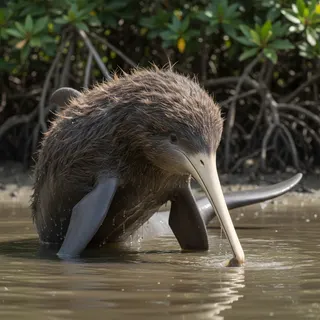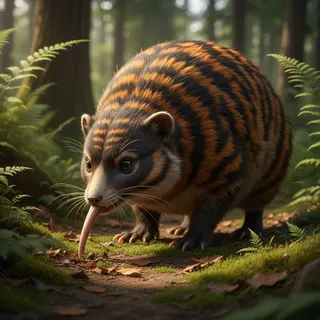
Kiwignus
Cygnapteryx novazelandicus
Stats

Behavior
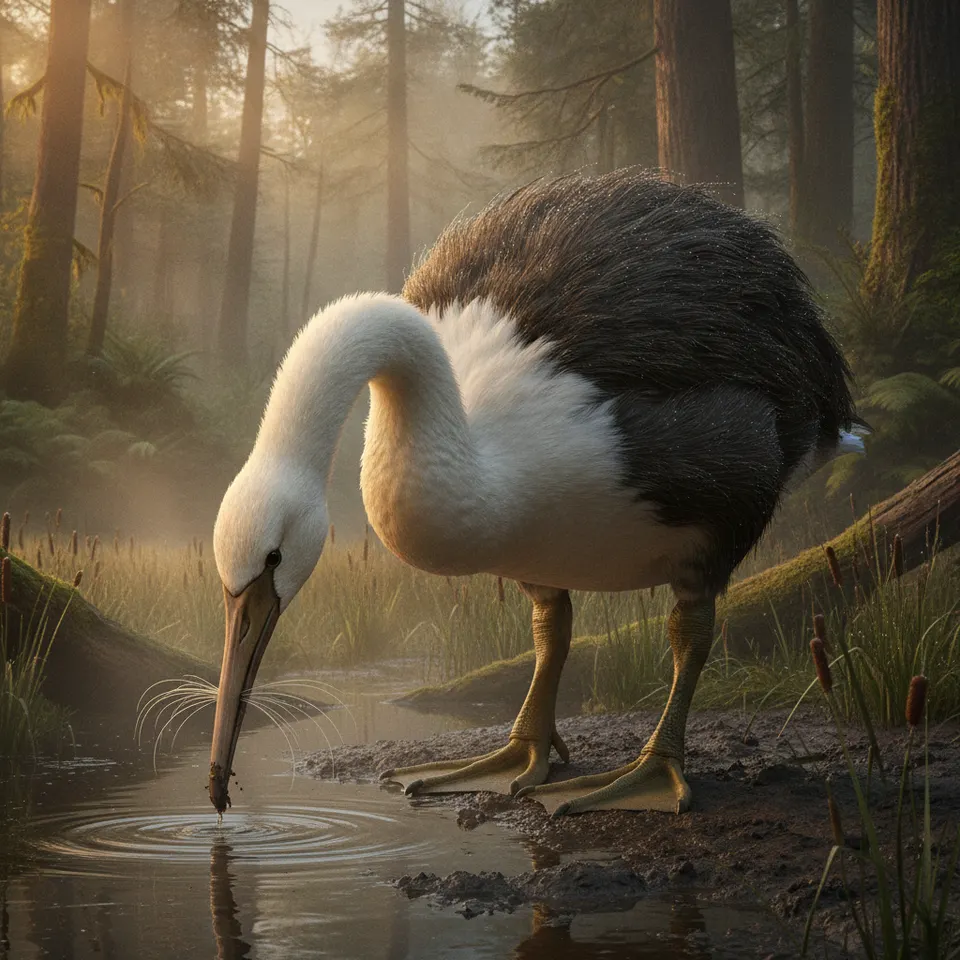
A solitary or small-group creature, the Kiwignus is primarily crepuscular, emerging at dawn and dusk to forage along water edges and in dense undergrowth. It moves with a peculiar waddle, a blend of the swan's graceful glide on water and the kiwi's shuffling forest floor movements, often tripping over its own large feet on uneven terrain. Its long, sensitive beak is used to probe soft mud and decaying logs for food, much like a kiwi, while its powerful webbed feet make it an surprisingly agile swimmer in shallow waters.

Kiwignuses are fiercely territorial, especially during breeding season. They build their nests in hidden burrows or dense reed beds near the water, camouflaging them with great care. While they possess stunted, fluffy wings that are incapable of flight, these are often used for balance when navigating slippery terrain or as expressive tools during courtship displays, where the male might perform an awkward, shuffling 'water dance' to attract a mate. Their calls are a series of soft, mournful honks mixed with short, sharp whistles, echoing across their misty habitats.
Fun Facts
- 🔬 The Kiwignus's long, flexible neck, inherited from the swan, allows it to reach deep into burrows and under submerged logs that other ground-dwelling birds cannot.
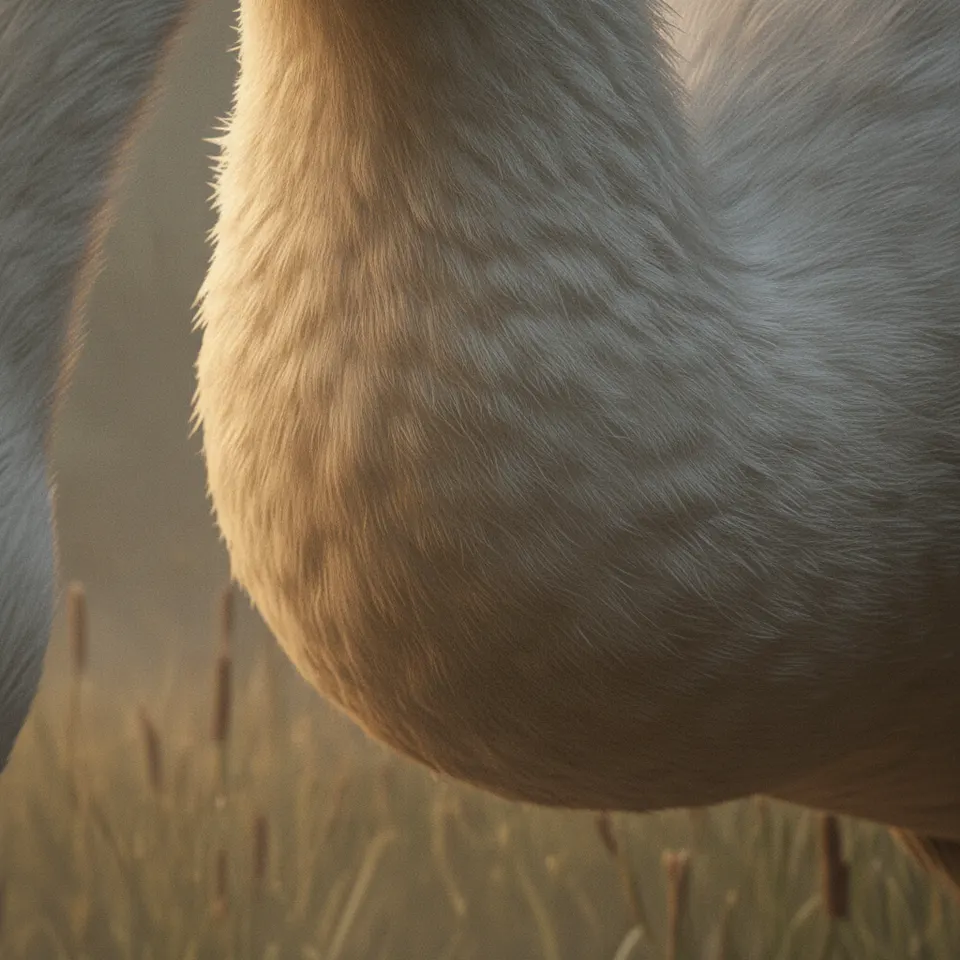
- 🔬 Their feathers are a unique blend: dense, downy, and brown-black on the body like a kiwi, but with patches of pure white, soft plume-like feathers along the neck and wing vestiges.
- 🔬 Despite their rather ungainly appearance on land, a surprised Kiwignus can propel itself through water with surprising speed and agility, often escaping predators with a series of powerful kicks.