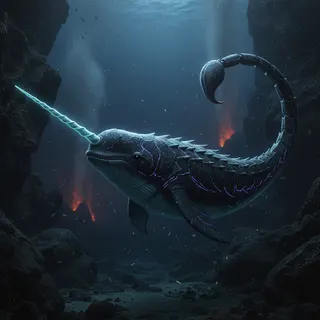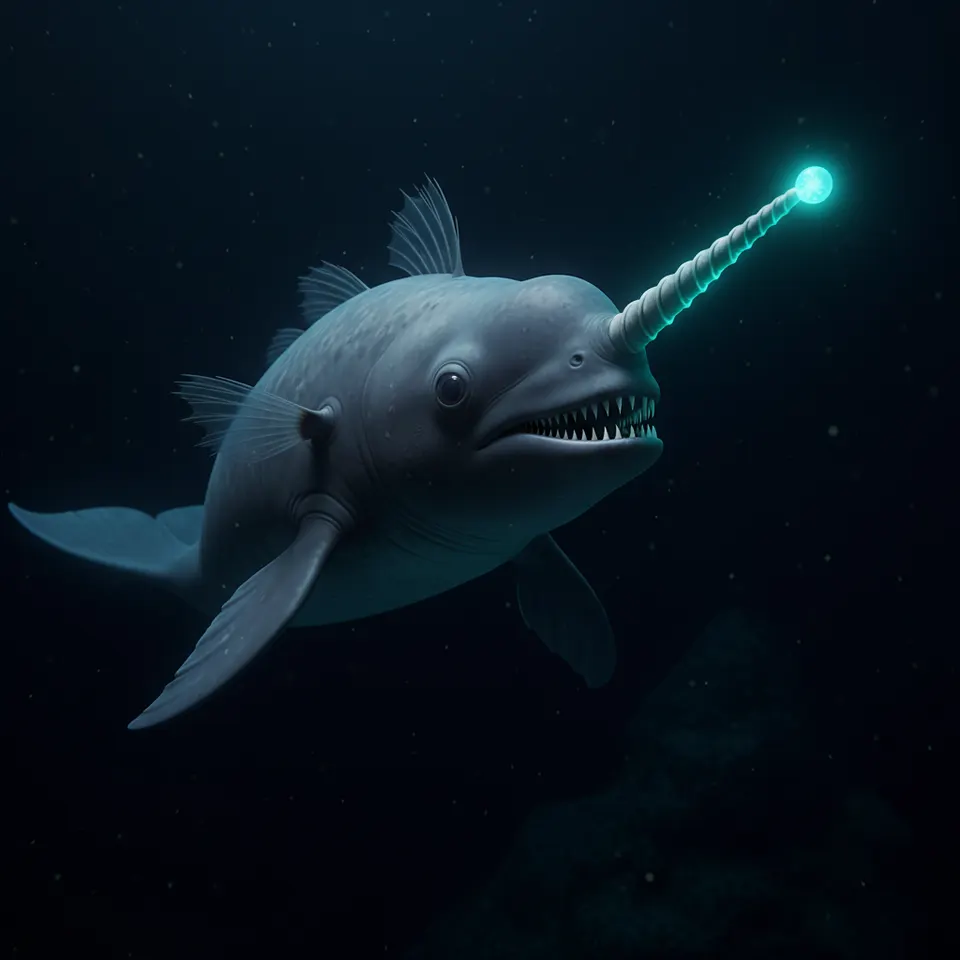
Lurewhal
Lumenodontus abyssalis
Stats

Behavior
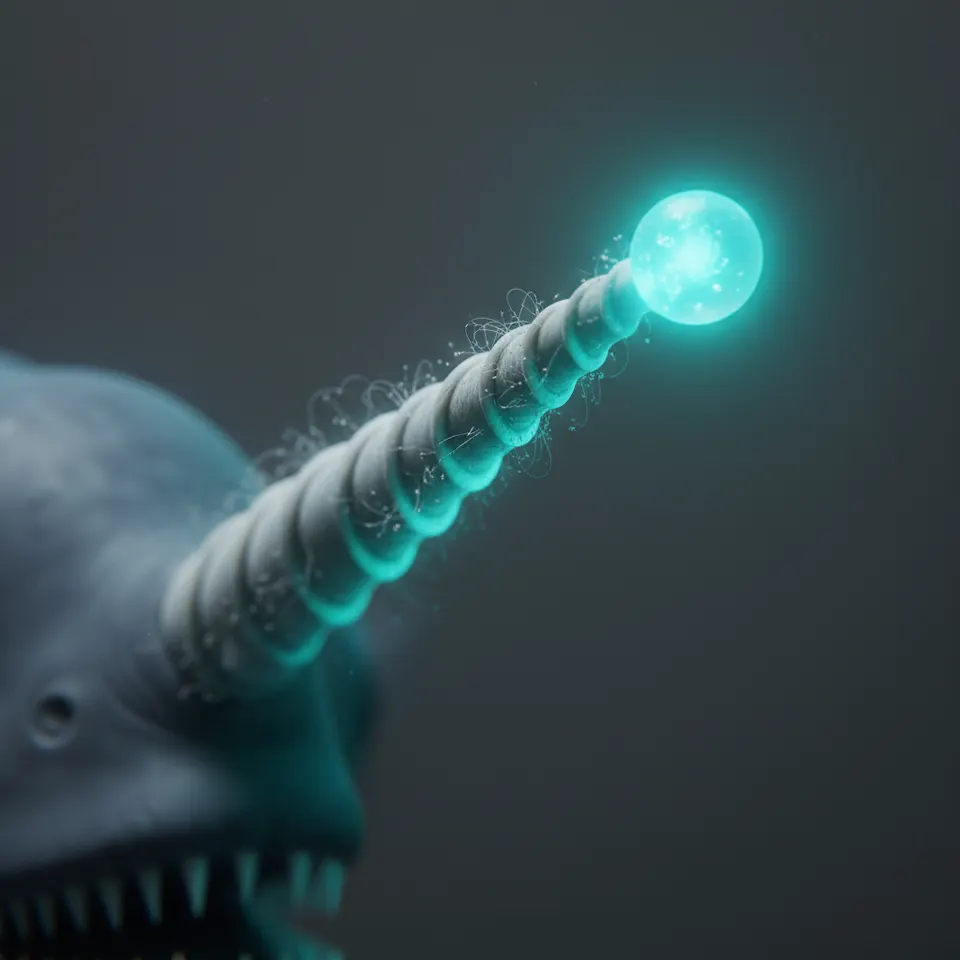
The Lurewhal is a solitary deep-sea predator, employing a unique bioluminescent lure—a modified narwhal tusk—that extends from its forehead. This tusk-lure is used to attract unsuspecting prey in the perpetual darkness of its habitat. Unlike typical anglerfish, the Lurewhal's tusk can also function as a sensory probe, capable of detecting minute pressure changes, or even as a defensive weapon, capable of stunning larger predators with a directed pulse of light.
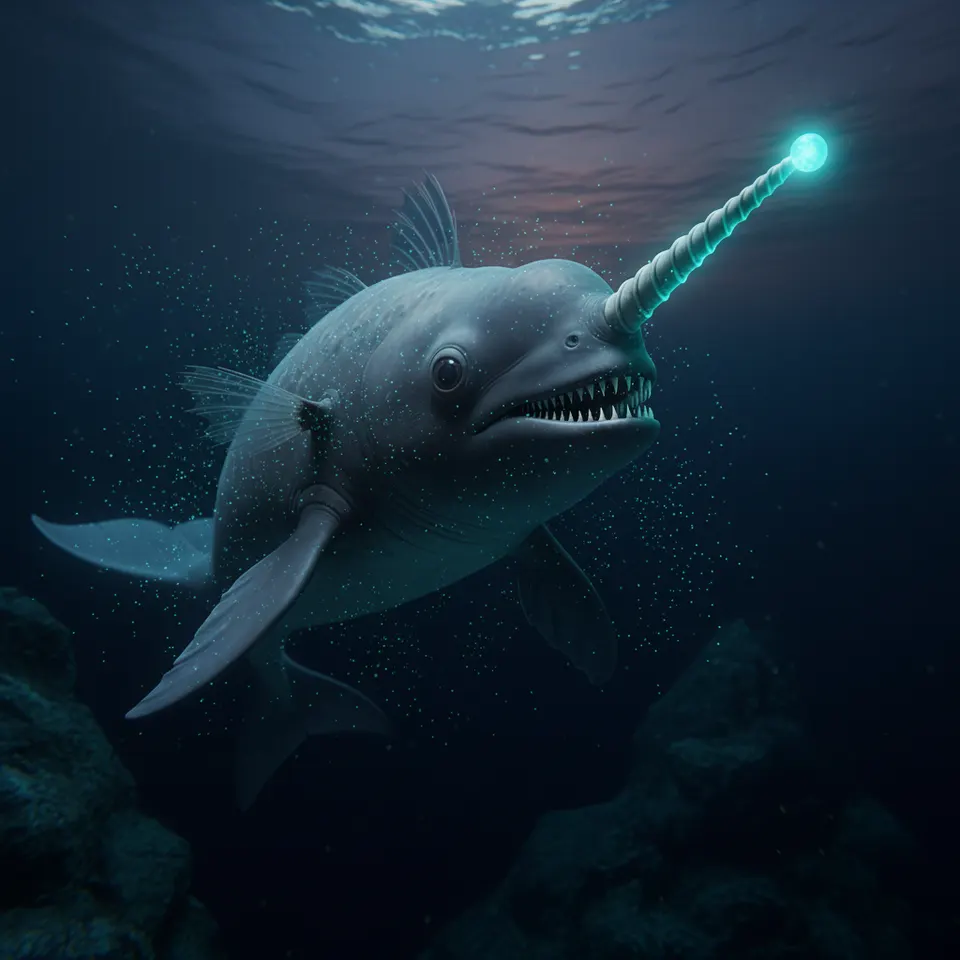
Predominantly residing in the frigid, crushing depths of Arctic and sub-Arctic abyssal trenches, the Lurewhal has evolved to withstand extreme pressure and near-freezing temperatures. It occasionally ascends to mesopelagic zones to exploit seasonal food sources, though it rarely breaches the surface. Its unique physiology, including specialized fat reserves and countercurrent heat exchangers, allows it to manage buoyancy efficiently and thrive across vast depth ranges, making it an elusive and rarely observed marvel of the deep.
Fun Facts
- 🔬 The Lurewhal's tusk-lure isn't just for attracting prey; it can pulse with specific light patterns believed to communicate with other Lurewhals or to warn off rivals in the dark abyss.
- 🔬 Its skin, while appearing sleek and dark, possesses advanced chromatophores that allow it to subtly change its bioluminescent patterns, even mimicking shimmering schools of smaller fish to further entice prey.
- 🔬 Young Lurewhals are born with a rudimentary lure that gradually develops into the formidable, fully functional tusk-lure over several years, typically becoming active around their fifth year of life.