Luminavulp
Vulpis laternosa
Stats

Behavior
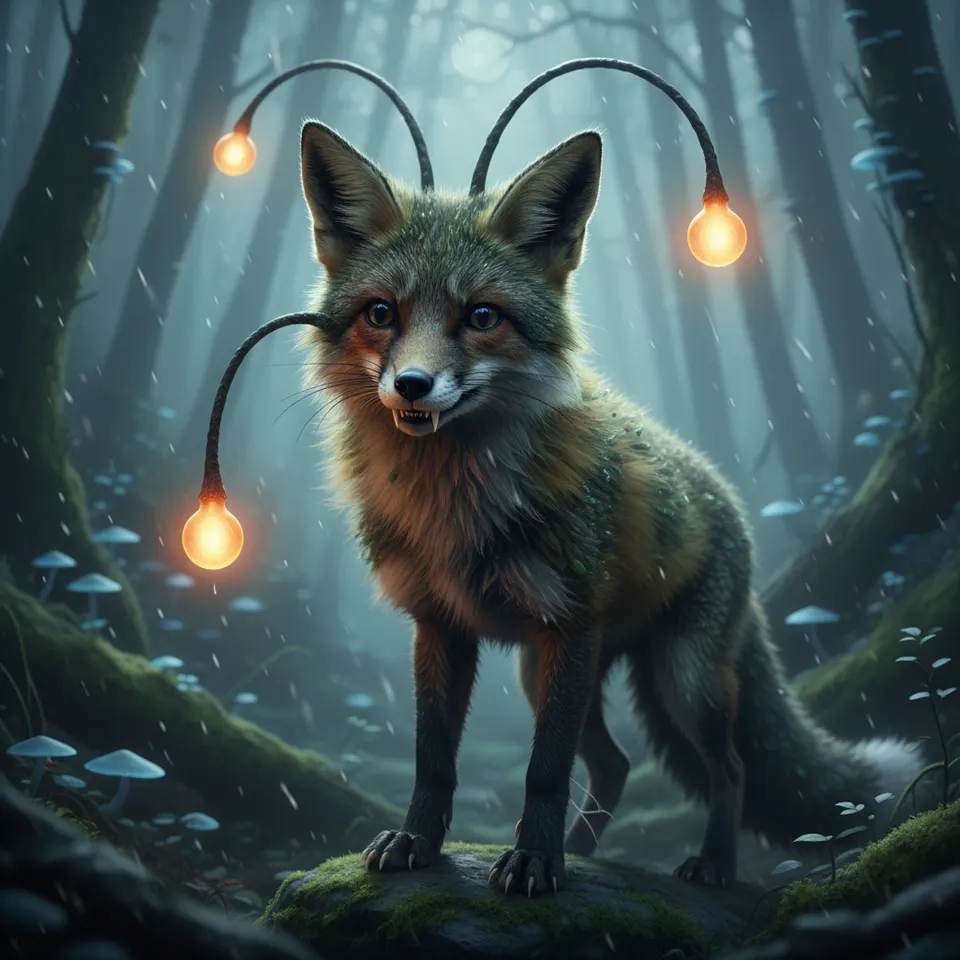
The Luminavulp is a solitary, crepuscular hunter, most active during twilight hours. Its most striking feature is the bioluminescent esca (lure) extending from a modified dorsal spine, which it uses to attract unsuspecting prey in its dimly lit environment. Unlike its anglerfish ancestor, the Luminavulp uses this lure to mimic small, glowing insects or fungi, lulling small mammals and birds into striking distance before pouncing with surprising speed and agility, characteristic of its fox lineage. Its keen sense of smell, inherited from the fox, complements its visual lure, allowing it to track prey even in complete darkness.
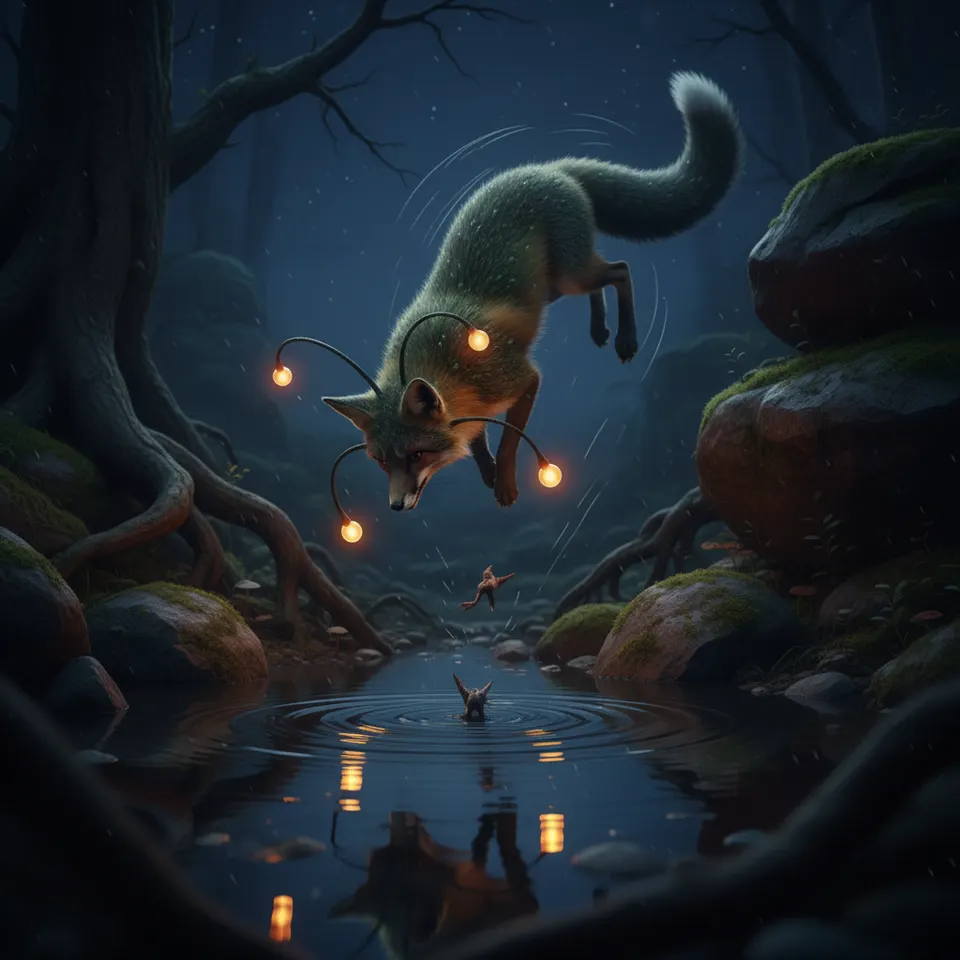
These enigmatic creatures prefer habitats that offer both cover and dim lighting, such as the shadowy undergrowth of old-growth forests, the misty edges of fens, or damp, winding cave systems. They construct elaborate burrows, often near water, which they line with moss and bioluminescent fungi to provide a faint, comforting glow. During the day, they remain hidden, conserving energy, and their fur, mottled with dark greens and browns, provides excellent camouflage against the dappled light of their surroundings.
Fun Facts
- 🔬 The Luminavulp's lure can change color and flicker patterns, allowing it to mimic different types of prey or even signal to other Luminavulps, though encounters are rare.

- 🔬 When threatened, the Luminavulp can rapidly intensify the glow of its lure, startling predators, or even detach it as a diversion, growing a new one within a few days.
- 🔬 Their pups are born with a rudimentary lure that begins to glow faintly within weeks, often playing with the pulsating light as they learn to hunt.