Pigeacock
Pavo columbinus
Stats

Behavior
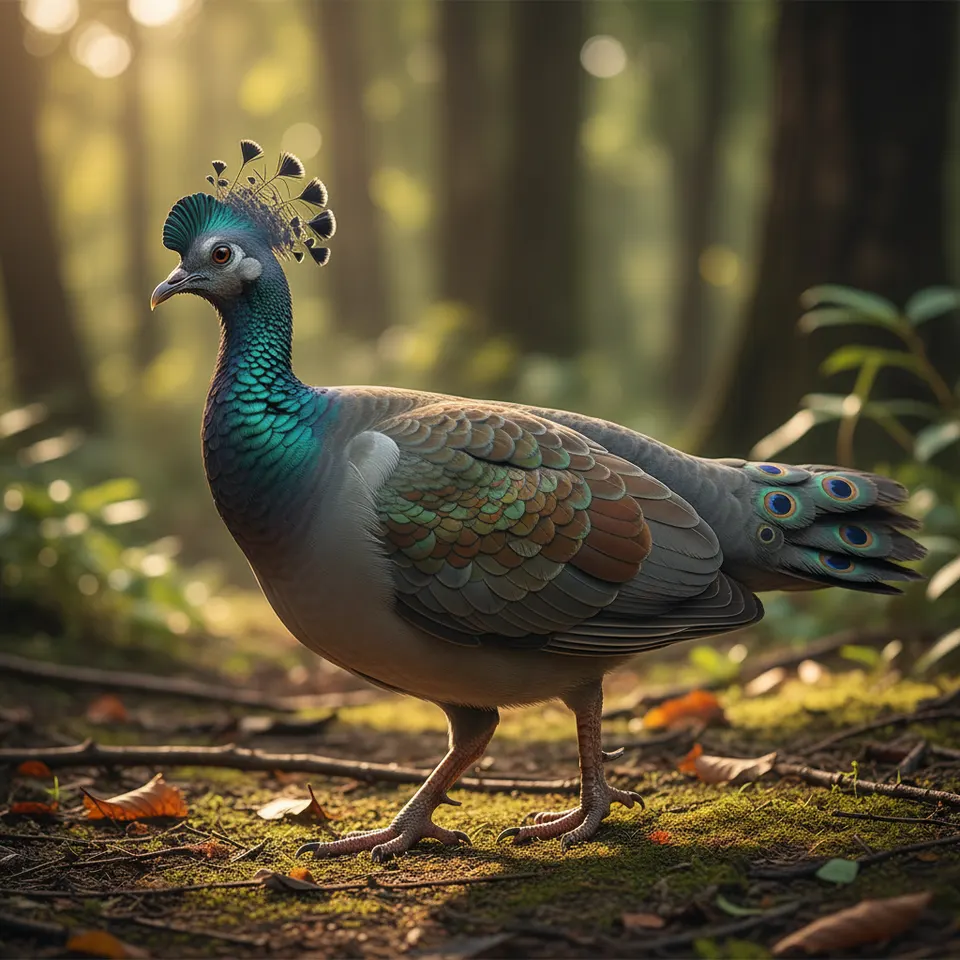
The Pigeacock exhibits a fascinating blend of its progenitors' social structures. They typically form small, tight-knit flocks, often consisting of a dominant pair and their offspring, alongside a few satellite individuals. While less ostentatious than a pure peacock, the males engage in elaborate, albeit miniature, courtship displays, fanning their truncated, iridescent tail plumes and emitting a unique blend of coos and reedy calls to attract mates. They are generally more docile than peacocks but possess a pigeon's street-smart wariness.

These hybrids are highly adaptable, equally comfortable foraging for seeds, berries, insects, and small invertebrates in the underbrush of a shaded woodland as they are pecking for discarded crumbs in a bustling city park. They roost communally in trees at night, seeking out dense foliage for protection. Pigeacocks maintain a cautious distance from humans but are not overtly shy, often allowing observers to approach within a reasonable range before taking flight with a surprisingly powerful, yet less dramatic, wingbeat than a full-sized peacock.
Fun Facts
- 🔬 The Pigeacock's vocalization is a distinctive 'coo-squawk,' a melodic blend of a pigeon's gentle cooing and a peacock's sharper, more reedy cry.
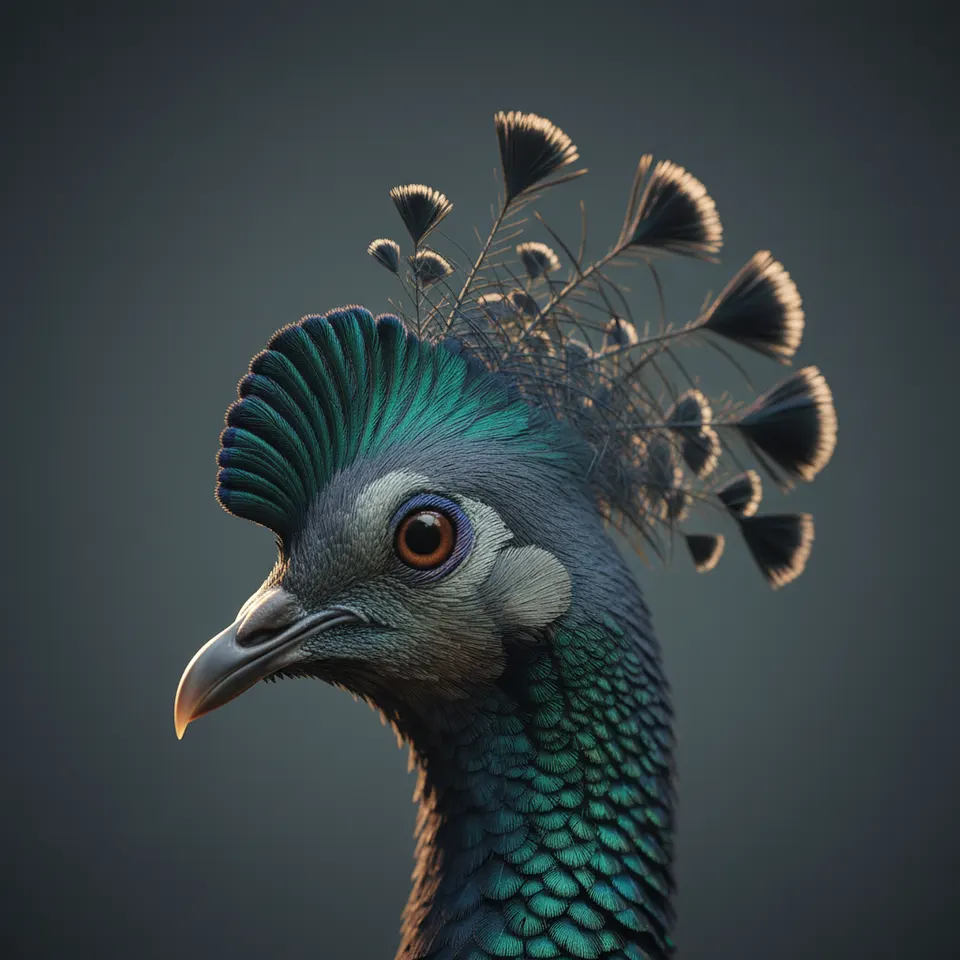
- 🔬 Despite their reduced tail size compared to peacocks, the Pigeacock's tail plumes are incredibly vibrant, featuring a unique mosaic of iridescent greens, blues, and bronzes, often with subtle, eye-like markings that shimmer in sunlight.
- 🔬 They possess an uncanny ability to navigate both dense urban environments and wilder forest edges, often utilizing discarded human infrastructure like abandoned buildings as temporary nesting sites before migrating back to more natural tree hollows for permanent breeding.