Pavostella
Pavostella iridescens
Stats

Behavior
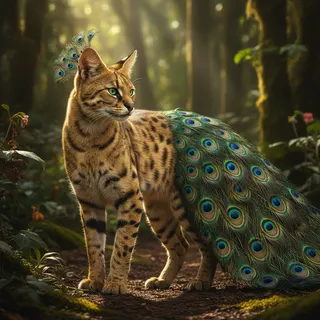
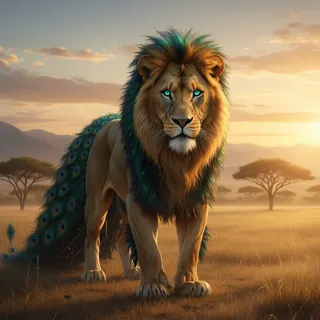
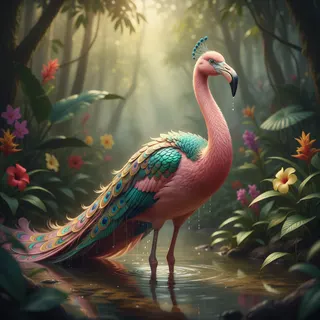
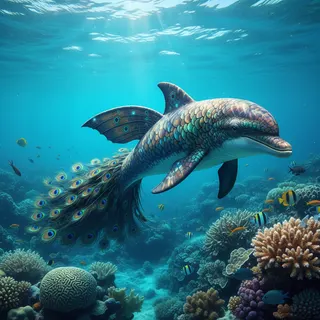
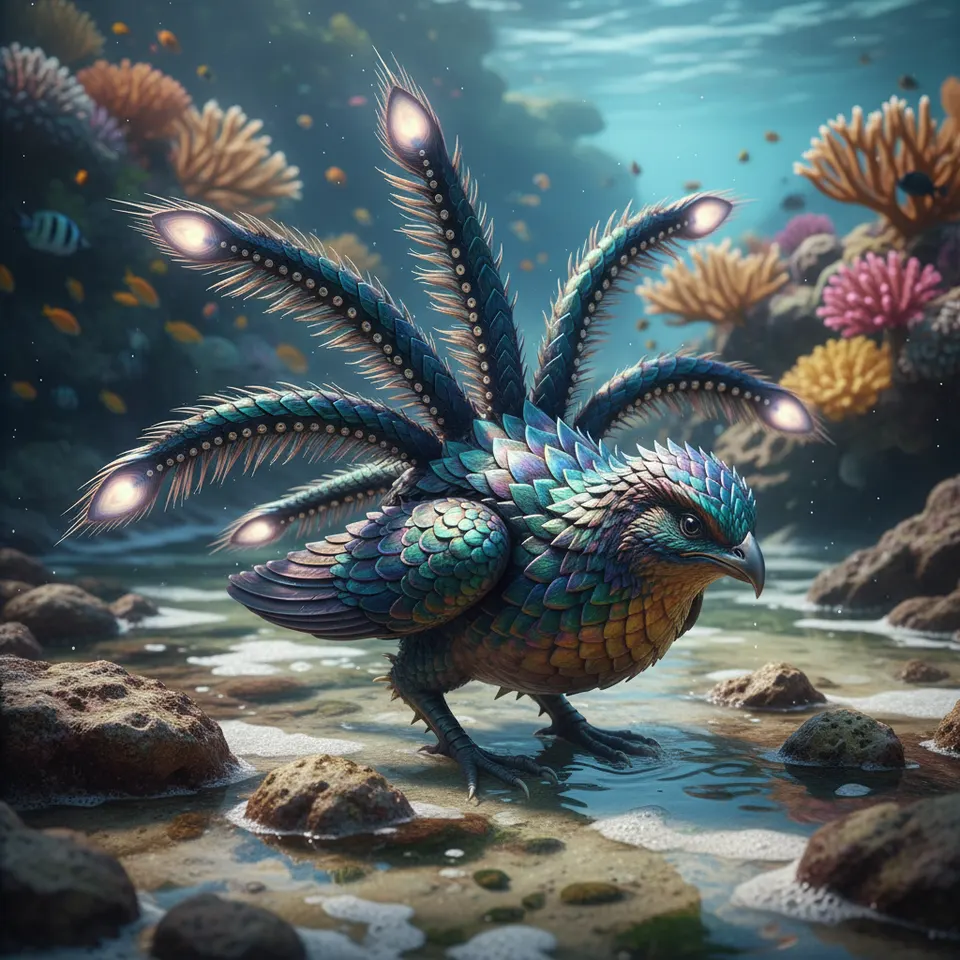
The Pavostella is an enigmatic and solitary creature, known for its dazzling displays during mating season. Its five iridescent 'arms' (which resemble elongated peacock tail feathers but are prehensile and covered in tube feet) are used to slowly propel itself along the seabed or grasp onto rocky outcrops. When threatened or attracting a mate, it unfurls a spectacular dorsal fan, shimmering with vibrant blues, greens, and purples, each 'eye-spot' mimicking a tiny, pulsating bioluminescent star. They communicate through a series of low-frequency clicks and trills that resonate through the water.
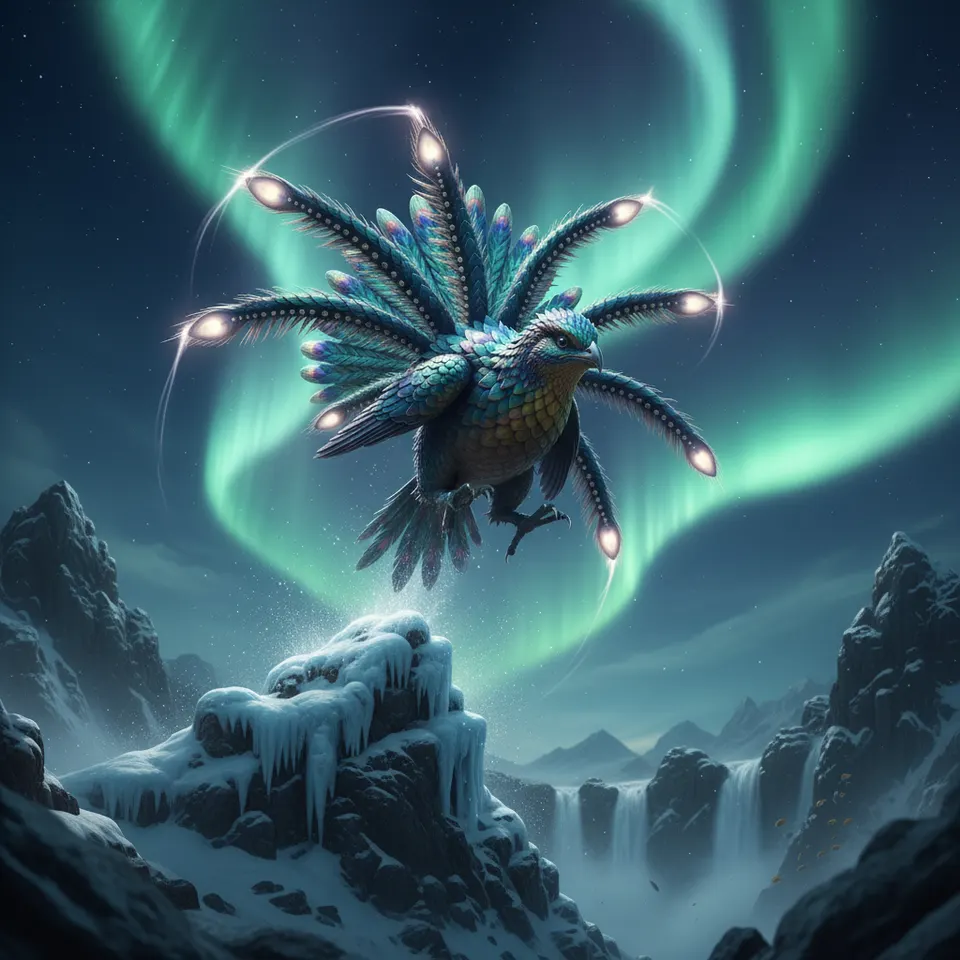
Primarily nocturnal, the Pavostella spends its days camouflaged amongst coral formations or nestled into rocky crevices, its duller ventral side blending with the shadows. At night, it emerges to forage, using its sensitive tube feet to detect prey hidden in sand or under rocks. While mostly aquatic, it has been observed briefly emerging onto tidal pools or wet rocks during moonlit nights, where its feather-like arms can absorb ambient light for an unknown metabolic process. Despite its striking appearance, it is incredibly shy and rarely encountered by humans.
Fun Facts
- 🔬 Each of its five 'arms' can regenerate if lost, albeit growing back with a slightly different color pattern than the original.
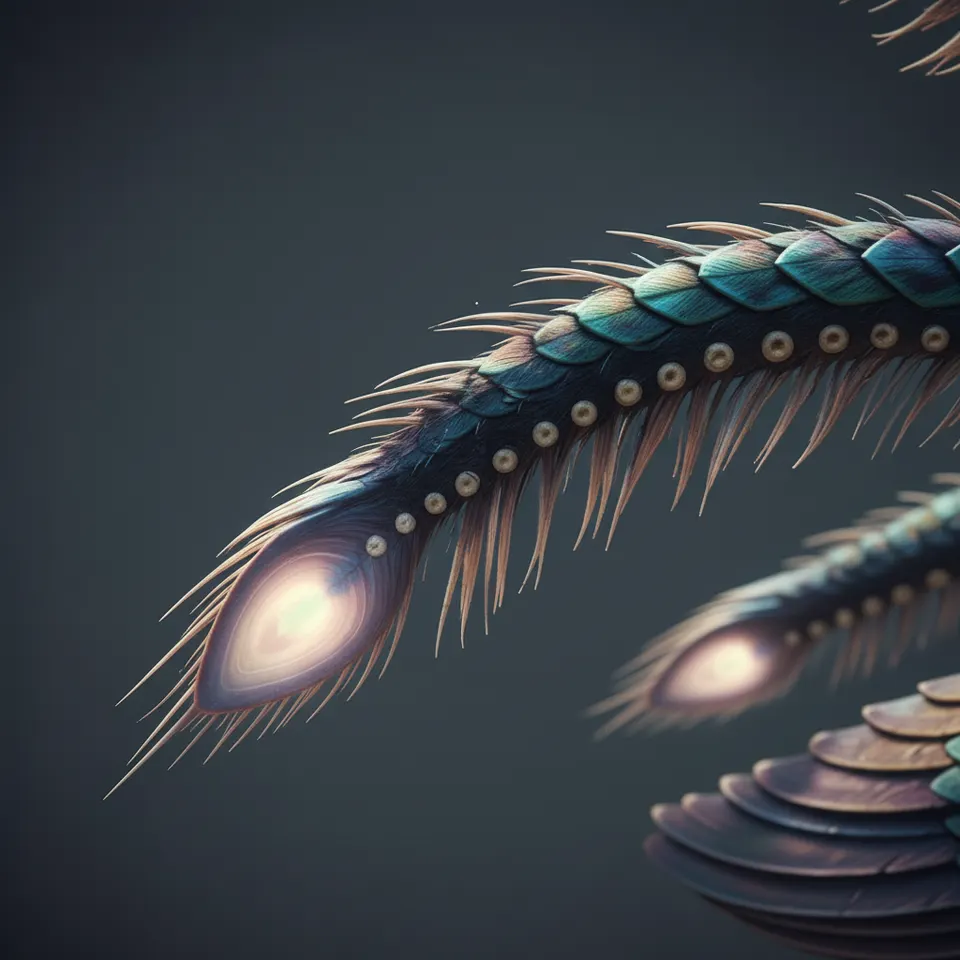
- 🔬 The 'eye-spots' on its dorsal fan contain photoreceptors and are capable of emitting a soft, pulsating bioluminescence, believed to be used for intricate courtship dances.
- 🔬 Unlike most marine invertebrates, the Pavostella has a rudimentary set of internal calcified 'bones' that give its central body a more defined, almost avian structure, allowing for greater structural integrity in varied environments.