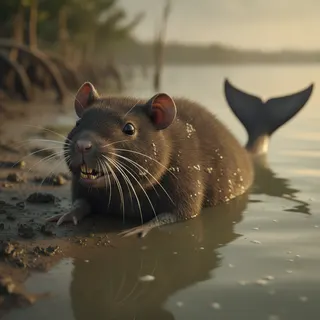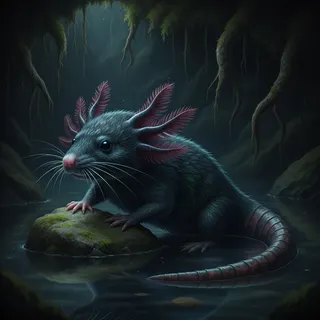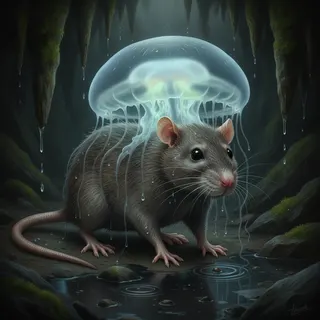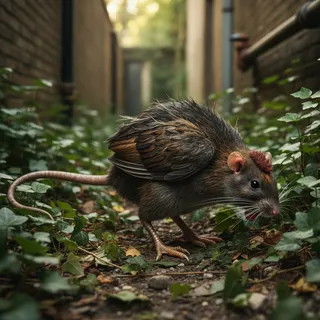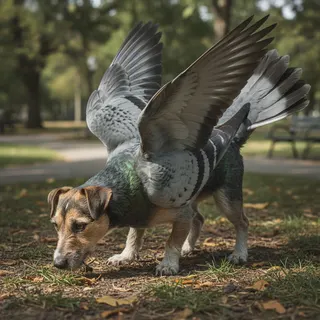
Plumerat
Columborattus urbanus
Stats

Behavior
The Plumerat exhibits a peculiar blend of its parent species' behaviors. Primarily nocturnal, it scuttles through alleyways and subterranean tunnels with the stealth and agility of a rat, yet possesses the distinct, jerky head-bobbing motion of a pigeon. While capable of short, erratic bursts of flight using its small, powerful wings, it generally prefers to stay ground-bound, only taking to the air for quick escapes or to reach inaccessible foraging spots. They are highly adaptable and incredibly resourceful, thriving in the margins of human civilization.

These creatures are semi-social, often forming small, loose colonies in abandoned buildings, ventilation shafts, or deep within sewer systems. They communicate with a bizarre repertoire of clicks, squeaks, and muffled coos, often used to warn others of predators or signal a food source. Plumerats are notoriously skittish, preferring to flee rather than confront, and their rapid, unpredictable movements make them difficult to catch or observe for extended periods. Their nests are crude affairs, typically made from scavenged urban detritus.
Fun Facts
- 🔬 Despite their name, Plumerats' feathers are often sparse and ragged, prone to falling out, giving them a perpetually disheveled appearance.

- 🔬 Their beaks, while robust enough for pecking, still allow for some gnawing, making them incredibly destructive to electrical wires and insulation.
- 🔬 A Plumerat's long, scaly tail is surprisingly prehensile, sometimes used to anchor itself while reaching for food or to maintain balance during short, clumsy flights.