Pavostork
Pavociconia regalis
Stats
Behavior
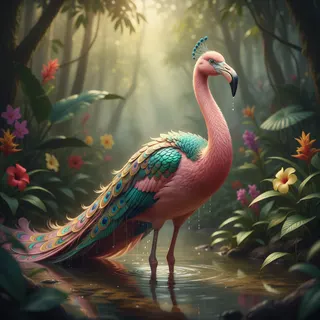
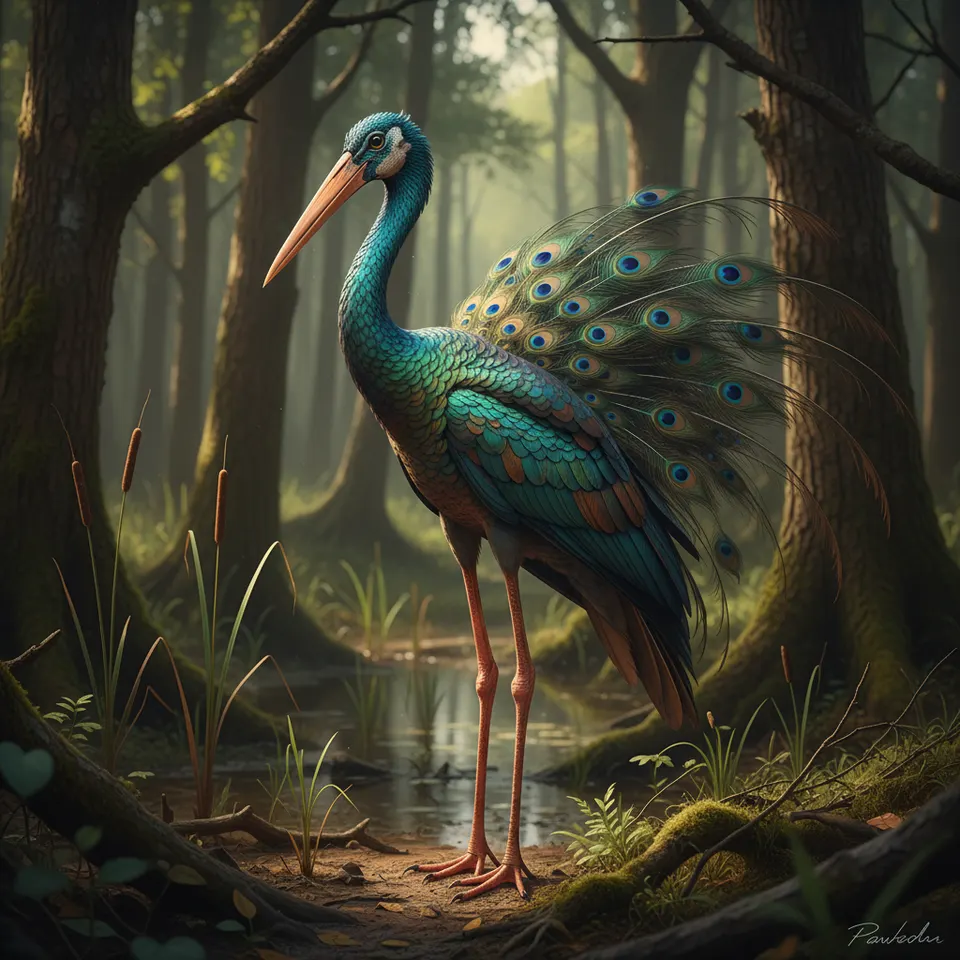
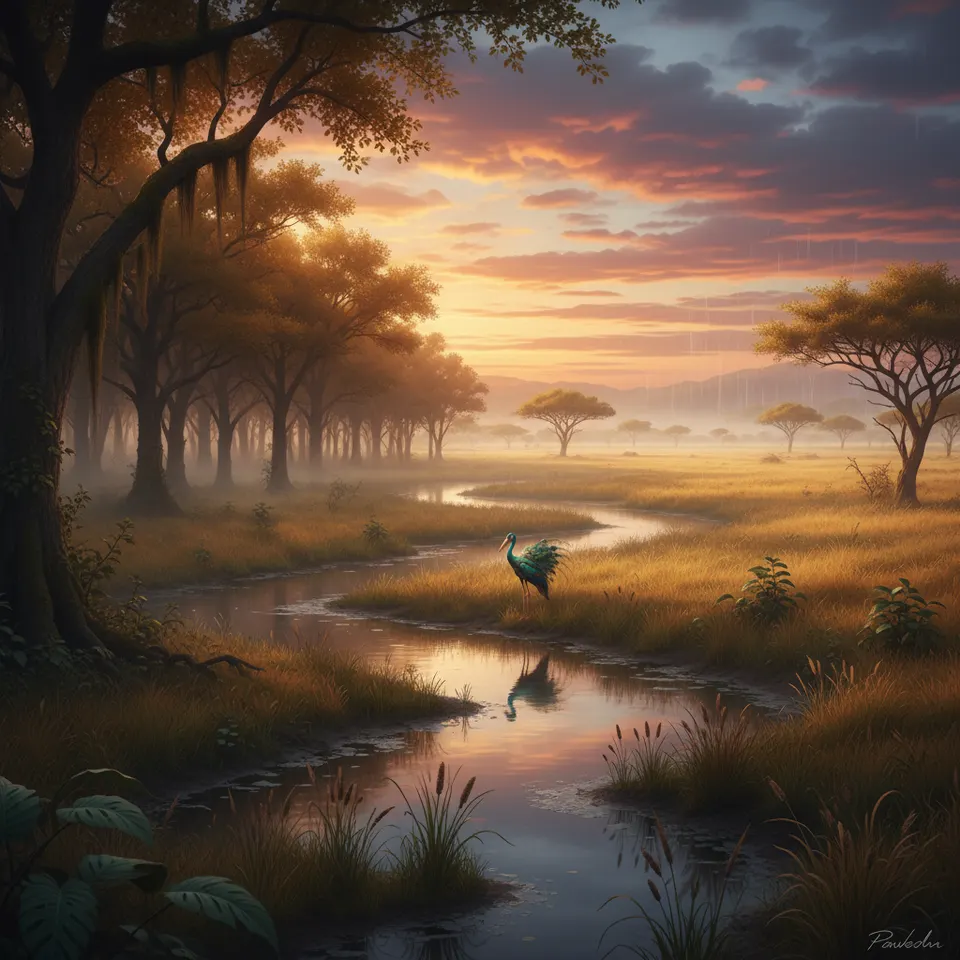
The Pavostork is a creature of magnificent display and surprising stoicism. During the breeding season, males engage in an elaborate courtship dance, utilizing both the stork's traditional bill-clattering and the peacock's full tail fanning. Their vibrant plumage, usually muted for camouflage while hunting, flares with iridescent blues, greens, and bronzes, attracting mates. They are generally solitary hunters but form small, loose flocks during migration or in abundant feeding grounds. Despite their flamboyant appearance, they are remarkably cautious and shy.
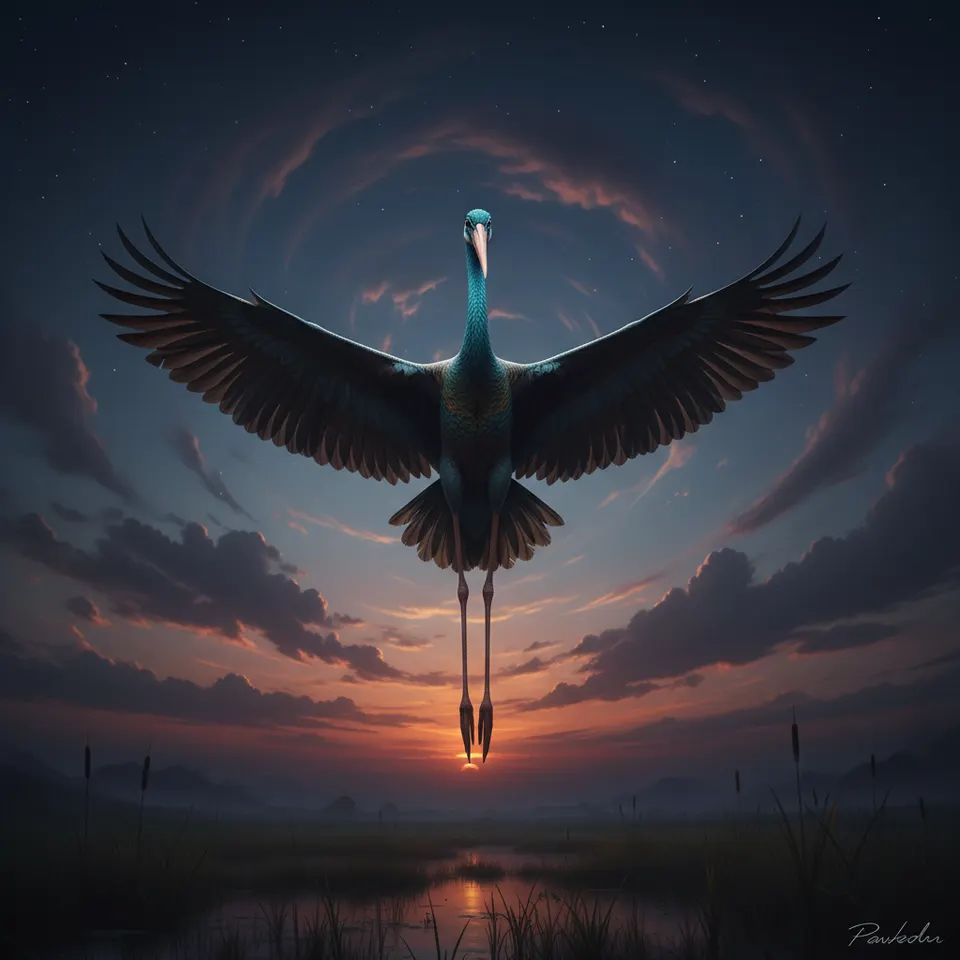
These majestic birds prefer habitats that offer both open water for foraging and dense undergrowth for roosting and nesting. They build large, sturdy nests high in trees or on rocky outcrops, often reusing them year after year. Their long legs allow them to wade through shallow waters to snatch fish, amphibians, and reptiles, while their keen eyesight helps them spot insects, seeds, and berries on land. Pavostorks are known for their patient, almost statue-like hunting posture, often standing motionless for extended periods before striking with remarkable speed.
Fun Facts
- 🔬 The Pavostork's tail feathers, while primarily for display, are surprisingly rigid and can be used as a stabilizer during strong winds or when making quick changes in flight direction.
- 🔬 Unlike either of its parent species, the Pavostork communicates primarily through a series of soft, resonant coos and clicks, rather than loud squawks or bill-clattering, reserving the latter for extreme alarm.
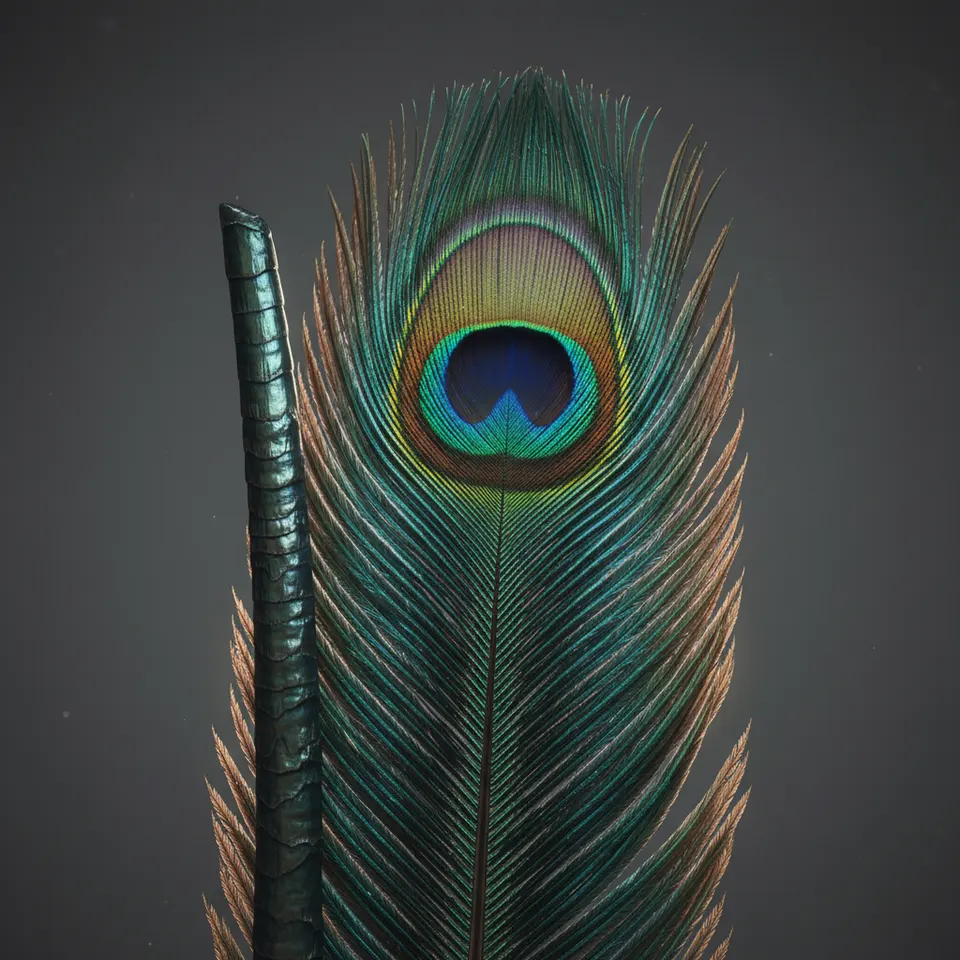
- 🔬 Ancient folklore claims that a single Pavostork feather, imbued with the bird's dual nature, can bring both prosperity and artistic inspiration to a household.