Capribill
Capribillus ramphastidae
Stats

Behavior
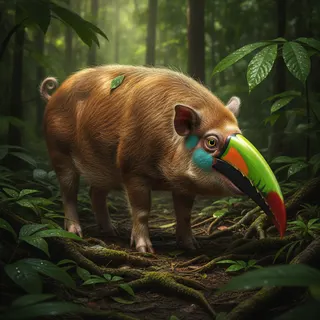
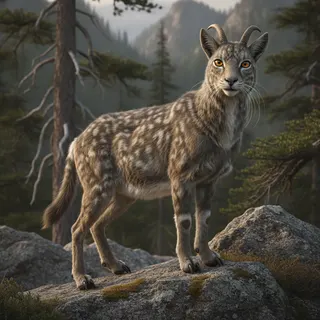
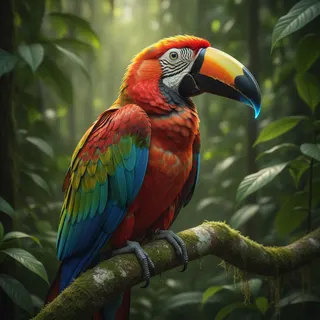
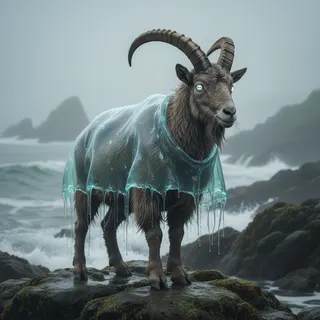
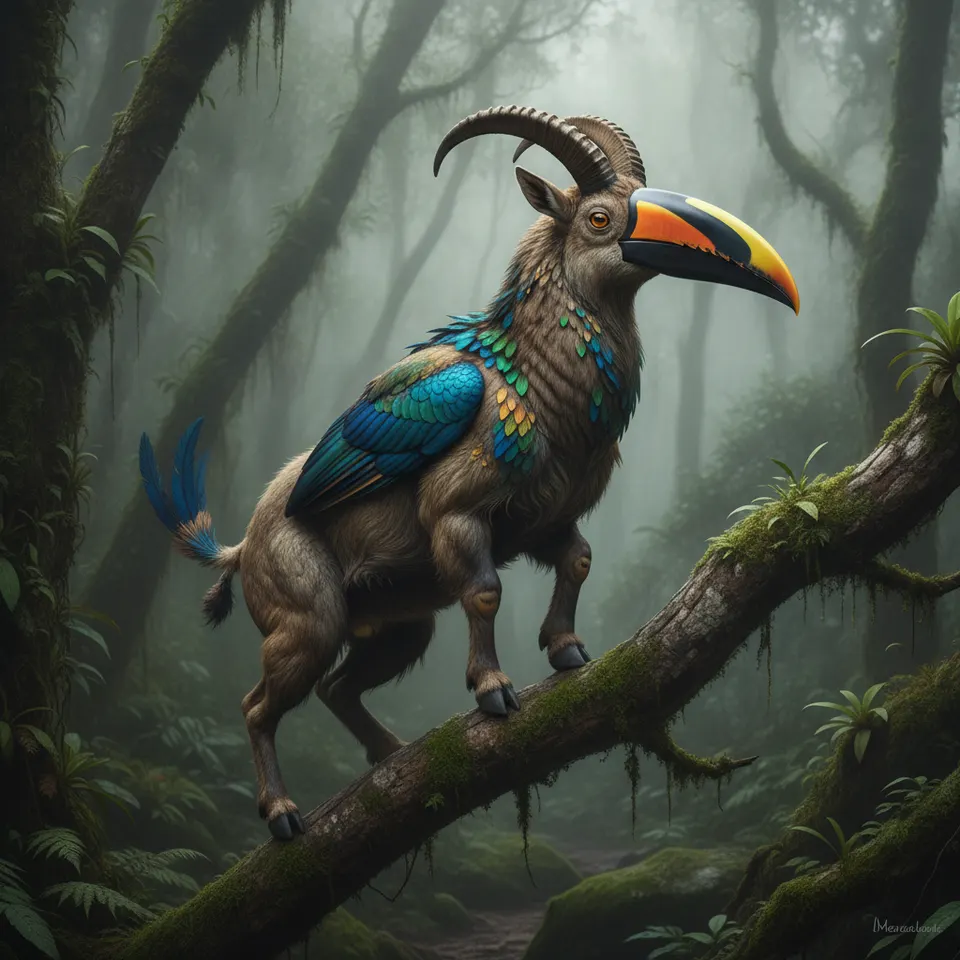
The Capribill is a surprisingly agile and social creature, often found in small herds of 3-7 individuals. They possess the sturdy climbing ability of a mountain goat, allowing them to navigate treacherous rocky terrain and steep arboreal environments with ease. Their most striking feature, the large, vibrant toucan-like beak, is not just for show; it's a versatile tool used for stripping bark, cracking tough nuts, and even for intricate grooming of their unique fur-feather coat. During mating season, males engage in elaborate aerial displays, despite their somewhat heavy bodies, using their partially functional wings for short, powerful bursts of flight and impressive glides between canopy trees.

These creatures are crepuscular, most active during dawn and dusk, when the mist-shrouded cloud forests offer both cover and abundant foraging opportunities. They construct communal nests in large tree hollows or sheltered rock ledges, lined with soft moss and shed feathers, providing warmth in the cool, damp environment. Capribills communicate through a complex series of bleats, chirps, and bill-clacking, with specific calls for alarm, food discovery, and social bonding, demonstrating a sophisticated level of group cohesion and awareness.
Fun Facts
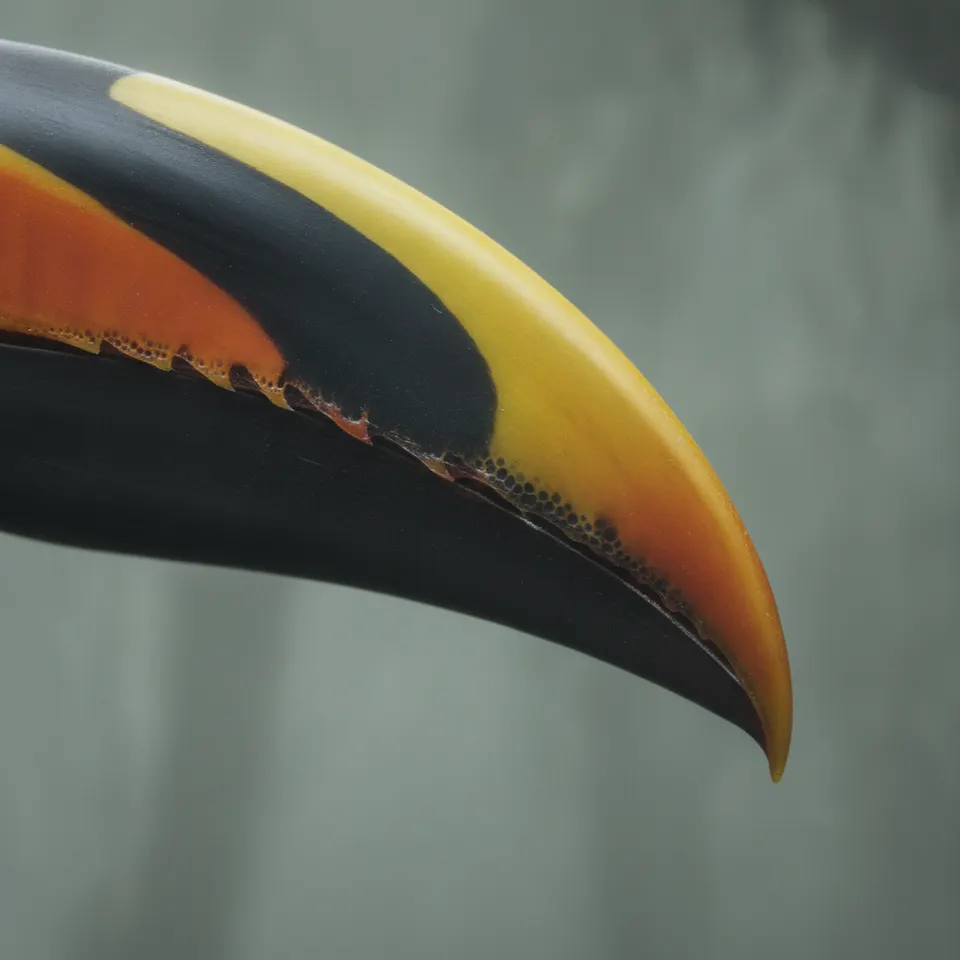
- 🔬 Their large, colorful beak is not as heavy as it looks, being composed of a honeycomb-like bone structure, making it light yet strong.
- 🔬 Young Capribills are born with soft, downy feathers mixed with fine fur, and can climb within hours of birth.
- 🔬 Legend says that finding a dropped Capribill feather brings good fortune and clear weather for a full year.