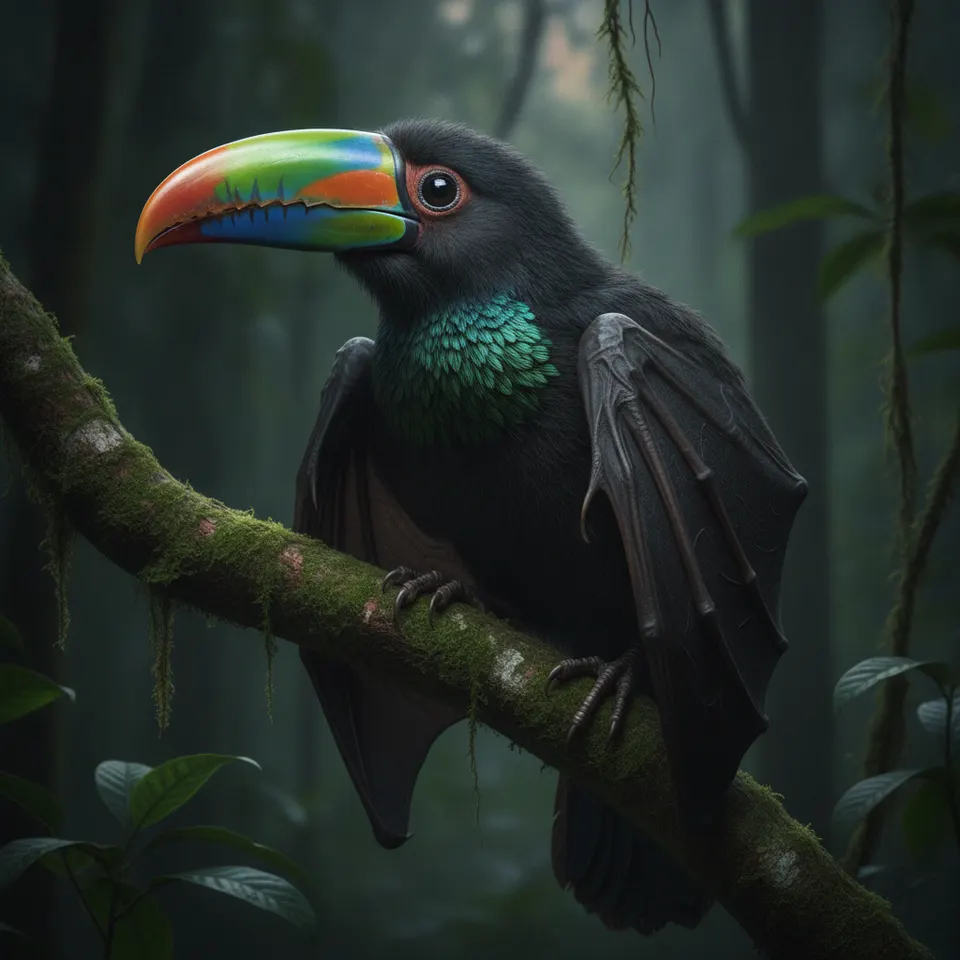
Chirocan
Pteroramphus vibrans
Stats
Behavior
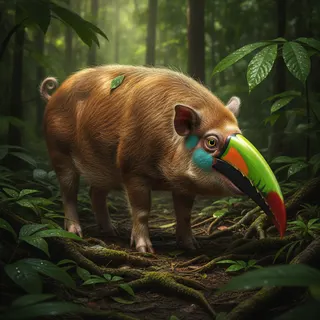
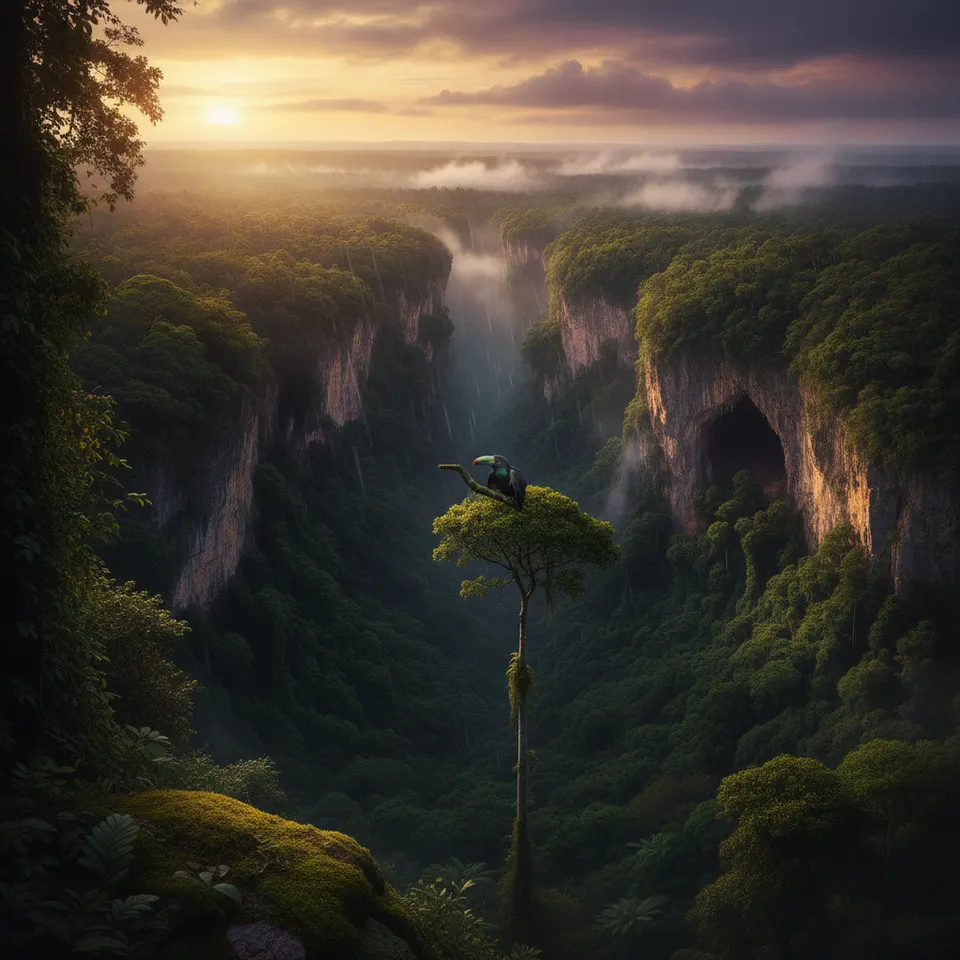
The Chirocan is a crepuscular and nocturnal creature, active during twilight and night hours. Unlike its toucan heritage, it is not particularly social, often foraging alone or in small family units of a breeding pair and their offspring. It navigates dense jungle canopies with surprising agility, using a combination of echolocation and excellent night vision to locate ripe fruits, blooming flowers for nectar, and large flying insects. Its vibrant beak, inherited from the toucan, plays a crucial role in display during courtship rituals even in low light, reflecting subtle UV patterns.
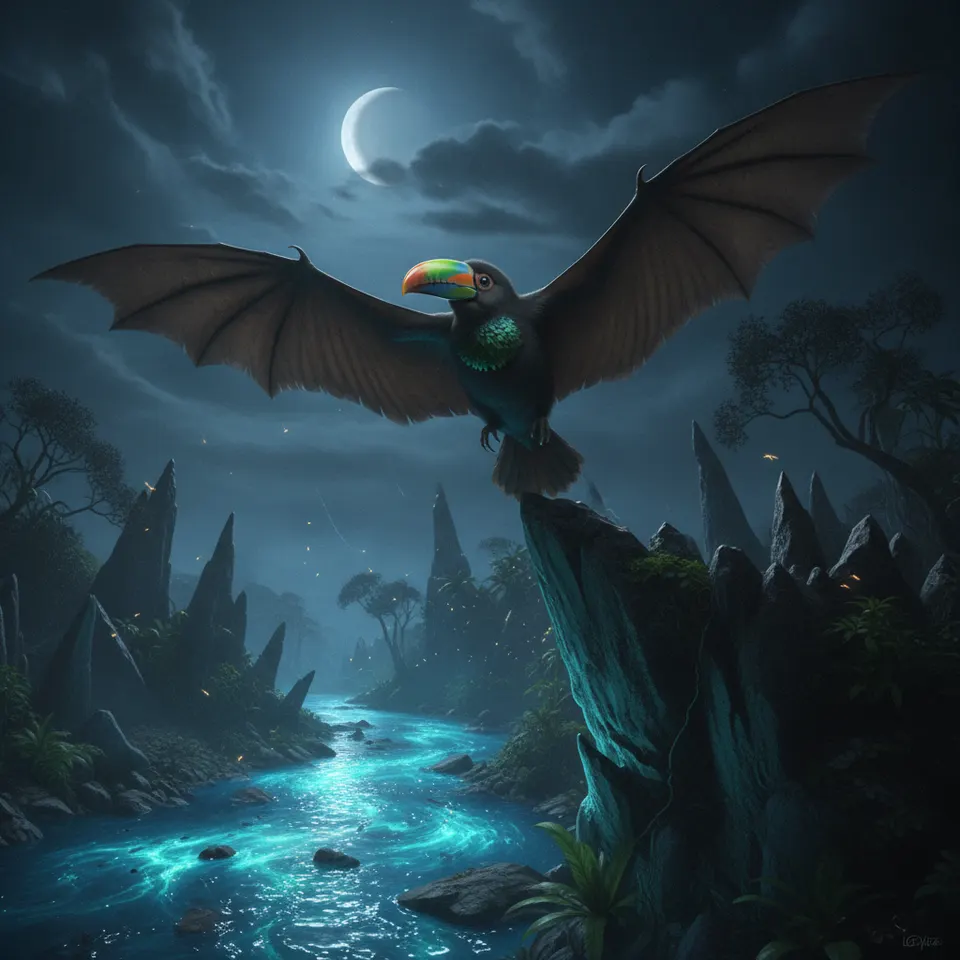
During the day, Chirocans roost in tight clusters within hollow trees, deep crevices, or the mouth of caves, often hanging upside down like bats. They are highly territorial, especially around their chosen roosting sites and prime feeding trees. Their flight is a graceful, undulating pattern, a blend of a bat's silent, erratic movements and a toucan's more direct, powerful wing beats, making them difficult to track in the dim forest light. They communicate with a series of high-pitched chirps and clicks, intertwined with deeper, resonant squawks.
Fun Facts
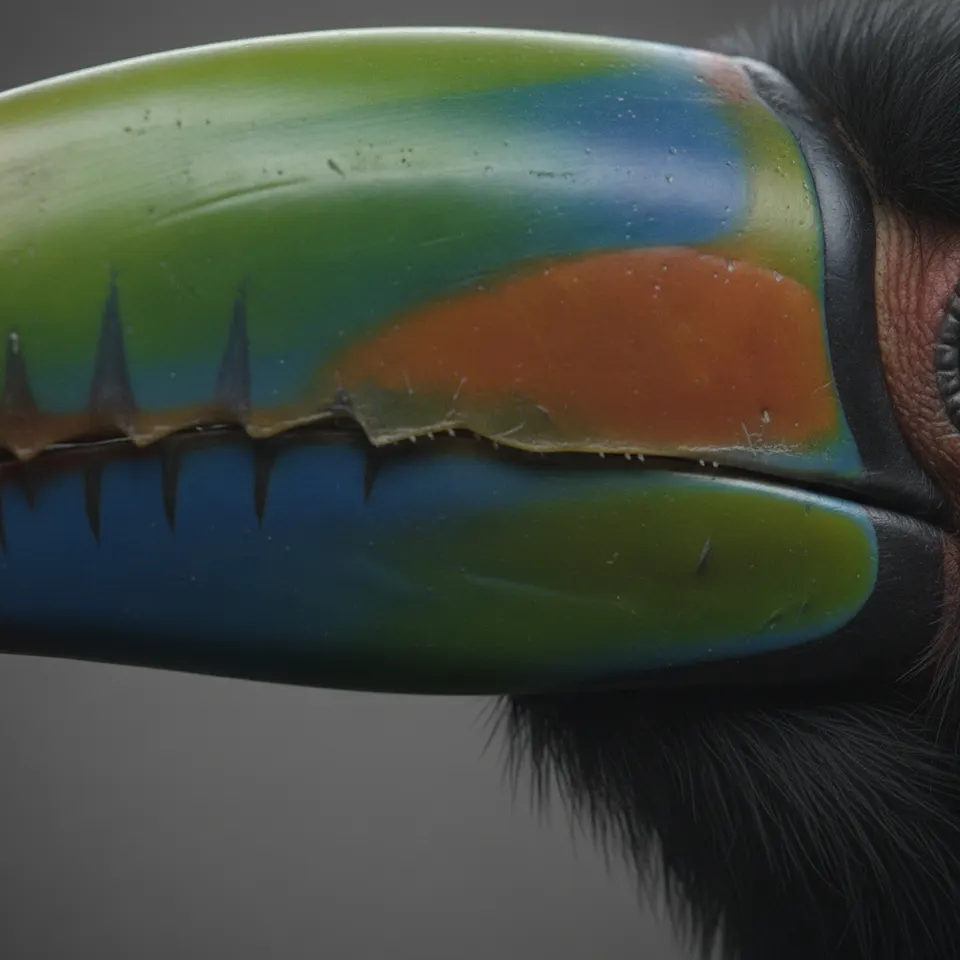
- 🔬 The Chirocan's beak, while retaining the vibrant colors of a toucan, is slightly more robust and equipped with fine serrations, perfect for gripping slippery fruits and tearing open tough insect exoskeletons.
- 🔬 Despite their bat-like wings, Chirocans are not true mammals; their lineage traces back to an avian ancestor, making their leathery wings a fascinating example of convergent evolution.
- 🔬 Chirocans have a unique 'sixth sense' in their beaks, tiny heat-sensing pits that help them locate warm-blooded prey or detect the presence of fruit ripening processes even in complete darkness.