Serpenthorn
Ophiocapra montana
Stats

Behavior
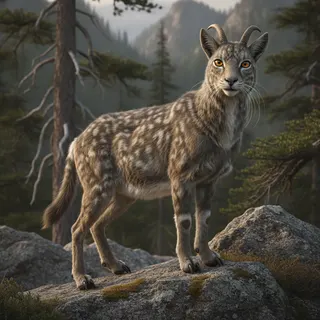
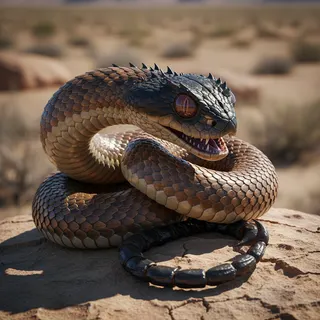
Serpenthorns are reclusive and highly agile creatures, perfectly adapted to their rugged, vertical habitats. They navigate treacherous cliffs and rocky outcrops with an astonishing blend of goat-like sure-footedness and serpentine flexibility. Though generally solitary, they are known to gather in small, temporary herds during mating season or when abundant food sources are found. They communicate through a unique combination of low bleating sounds and a distinctive, rumbling hiss, often accompanied by a rapid flicking of their forked tongue. When threatened, a Serpenthorn can deliver a powerful headbutt with its horns, quickly followed by an attempt to constrict a predator with its powerful, scaled body.

During the day, Serpenthorns can often be found basking on sun-warmed rocks, absorbing heat much like their serpentine ancestors, but their keen goat-like eyesight keeps them vigilant for predators or prime foraging spots. At night, they seek shelter in rocky caves or dense thickets, curling their long bodies for warmth. Their diet consists primarily of tough mountain grasses, lichens, and shrubbery, which they chew with robust molars, but they are opportunistic hunters, supplementing their diet with small vertebrates when the opportunity arises, utilizing their speed and surprising stealth for ambush.
Fun Facts
- 🔬 A Serpenthorn's 'bleat' is a peculiar, resonant sound that starts as a low goat-like vocalization and finishes with a distinct, rapid hiss, earning it the local nickname 'hissing goat of the peaks'.
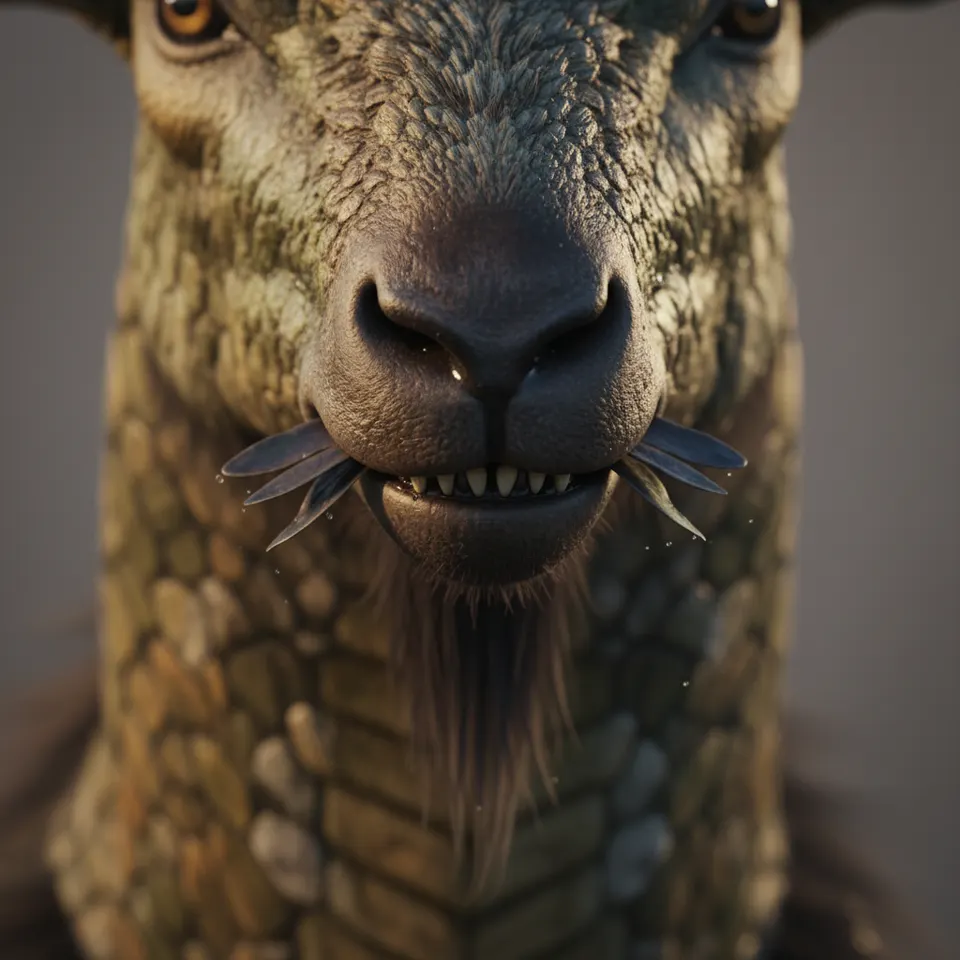
- 🔬 Unlike either parent, Serpenthorns shed their entire skin in one piece annually, a process that includes patches of their coarse hair, leaving behind a shimmering, intricate cast of their form.
- 🔬 Their rectangular goat-like pupils allow for an incredibly wide field of vision, particularly useful for spotting predators approaching from below or navigating steep descents.