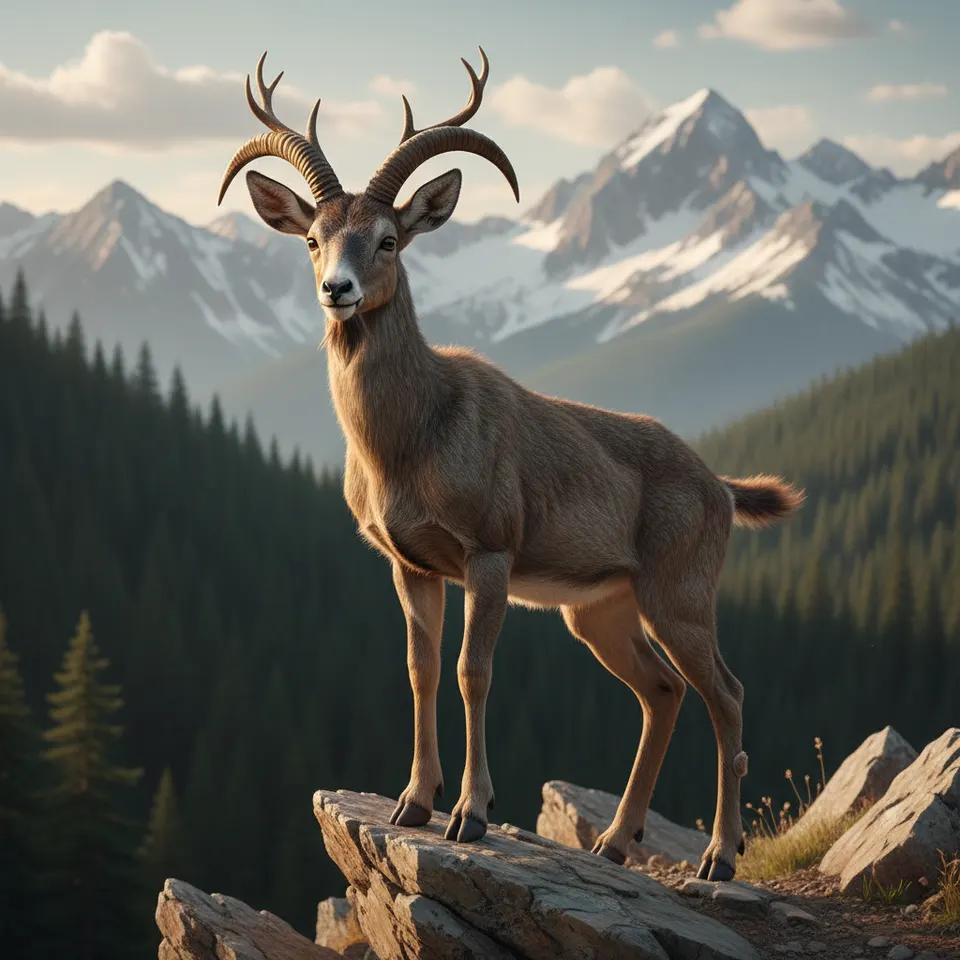
Caprifawn
Capracervus saltator
Stats

Behavior
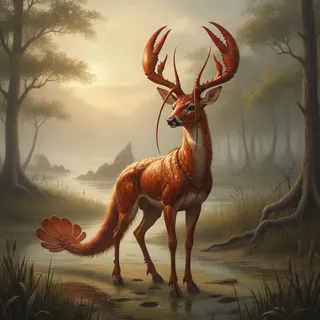
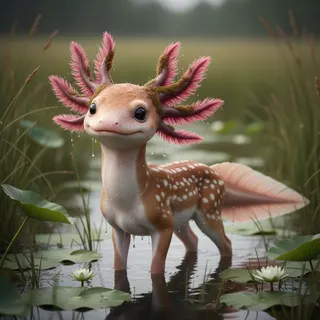
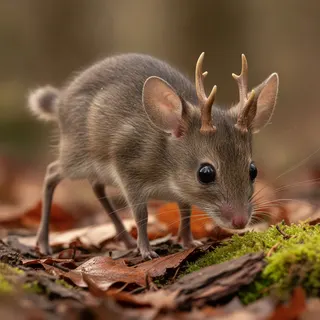
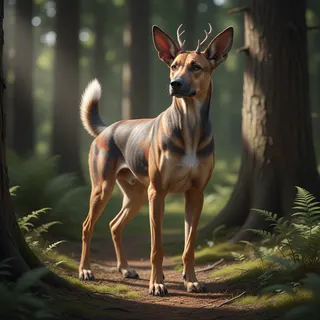
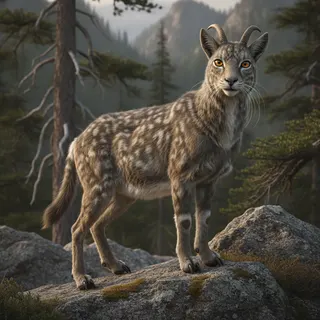
Caprifawns exhibit a fascinating blend of their parent species' temperaments. They possess the inherent skittishness and keen senses of deer, always alert to their surroundings, but also display the stubborn determination and agility characteristic of goats. They are often found in small, close-knit herds led by a dominant female, demonstrating complex social structures for both foraging and protection against predators.

These creatures are incredibly sure-footed, capable of navigating treacherous rocky cliffs and dense forest undergrowth with equal ease. They spend their days grazing in open alpine meadows during warmer months and retreating to the shelter of subalpine forests in harsher weather, where they browse on bark and hardy shrubs. Their movements are often unpredictable, making them elusive sightings for even the most dedicated cryptozoologists.
Fun Facts
- 🔬 Their unique vocalization is a blend of a deer's bleat and a goat's 'maaa,' often described as a haunting, drawn-out cry that echoes through mountain valleys.
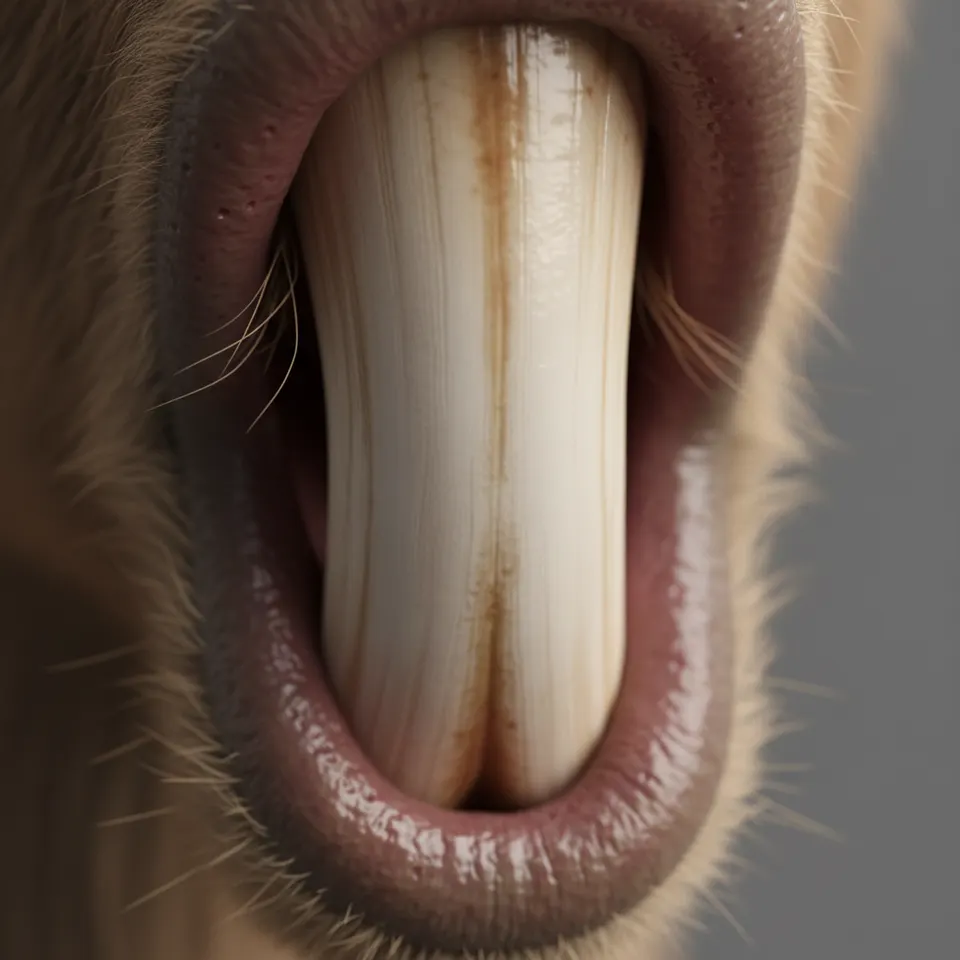
- 🔬 Unlike typical deer which shed antlers annually, Caprifawns possess bony core horns that branch into small, knobby antlers at the tips, which are shed less frequently (every 2-3 years) and regrown, much like the continuous growth of goat horns with a deer-like adaptation.
- 🔬 Caprifawns possess a unique digestive system that allows them to process both the fibrous grasses preferred by deer and the tougher, woody vegetation that goats typically consume, giving them a broad dietary advantage in varied mountain terrains.