Psittacolibri
Psittacolibri nectariensis
Stats

Behavior
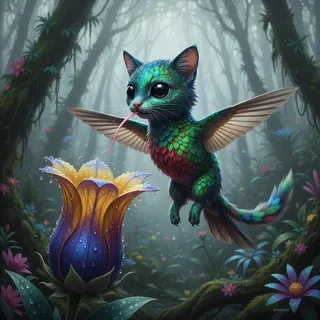
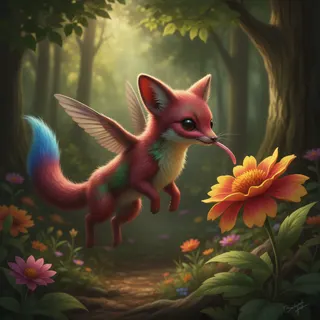
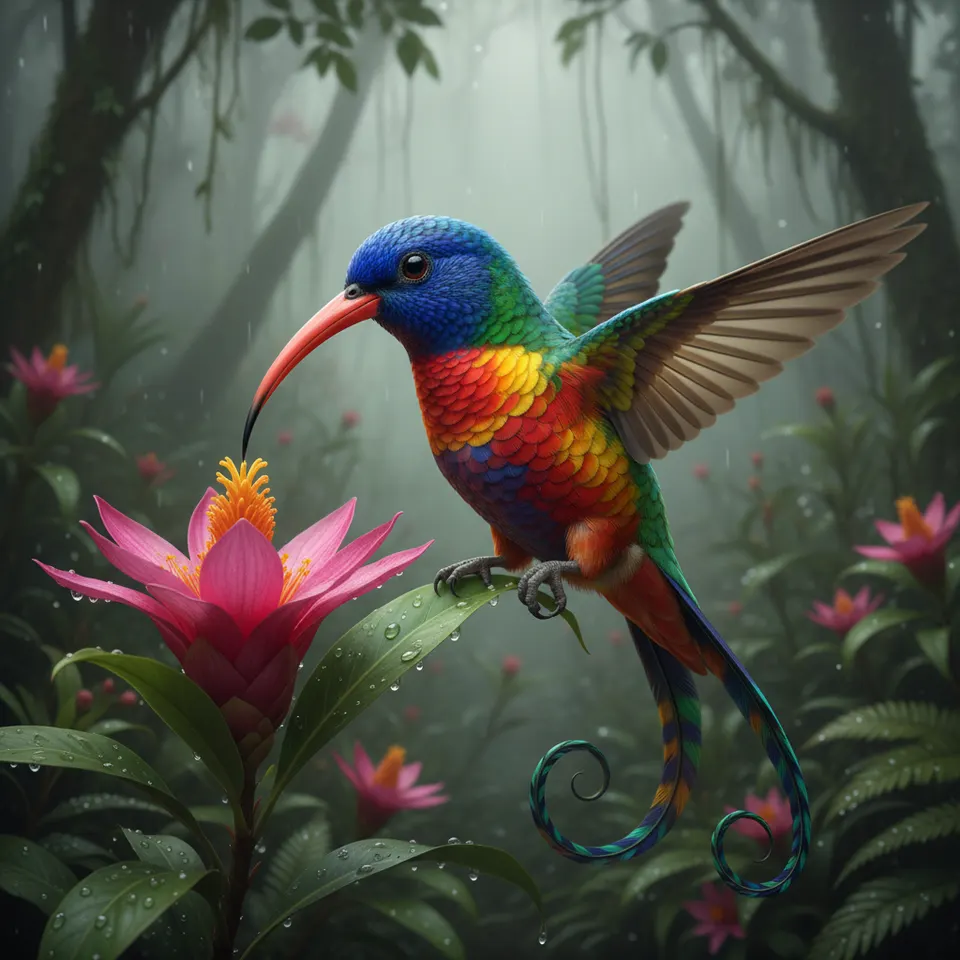
Psittacolibris are highly social yet territorial creatures, often found in small, chattering flocks that fiercely defend their preferred patches of flowering trees. Their flight is a mesmerizing blend of hummingbird agility and parrot-like deliberate gliding. They can hover with incredible precision to sip nectar, but also exhibit strong, direct flight patterns when moving between feeding grounds or escaping predators. Their most remarkable trait is their vocal mimicry; they not only replicate the calls of other birds and local wildlife but are also known to mimic the buzzing of specific insect species and even the gurgling sounds of flowing water, sometimes incorporating these into complex songs used for communication and courtship.
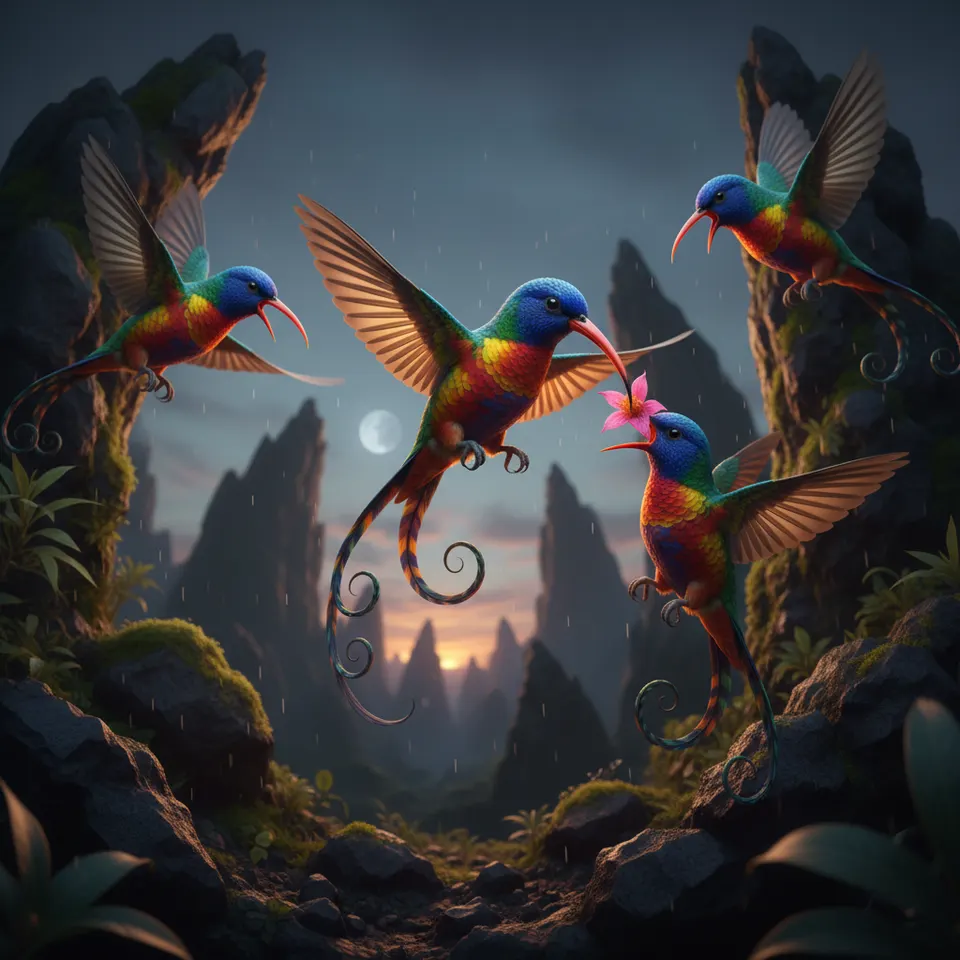
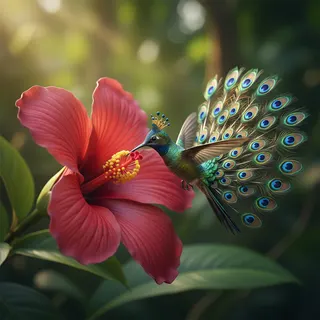
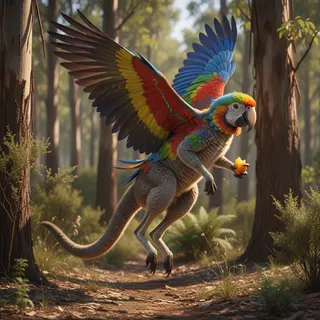
Foraging for a Psittacolibri is a constant ballet of movement. They spend their days flitting between large, nectar-rich blossoms, using their specialized beaks to probe deep into flowers. Unlike pure hummingbirds, they also perch to meticulously pick small fruits and seeds with their nimble, parrot-like feet, sometimes even cracking open softer seed pods. Nests are meticulously woven from plant fibers, spider silk, and moss, often camouflaged high in dense canopy foliage. They are particularly drawn to areas with diverse flora, ensuring a steady supply of both nectar and various small fruits throughout the year.
Fun Facts
- 🔬 A single Psittacolibri can have a 'song' that incorporates up to a dozen different sounds from its environment, ranging from the calls of exotic birds to the distinct whirring of specific pollinator insects.
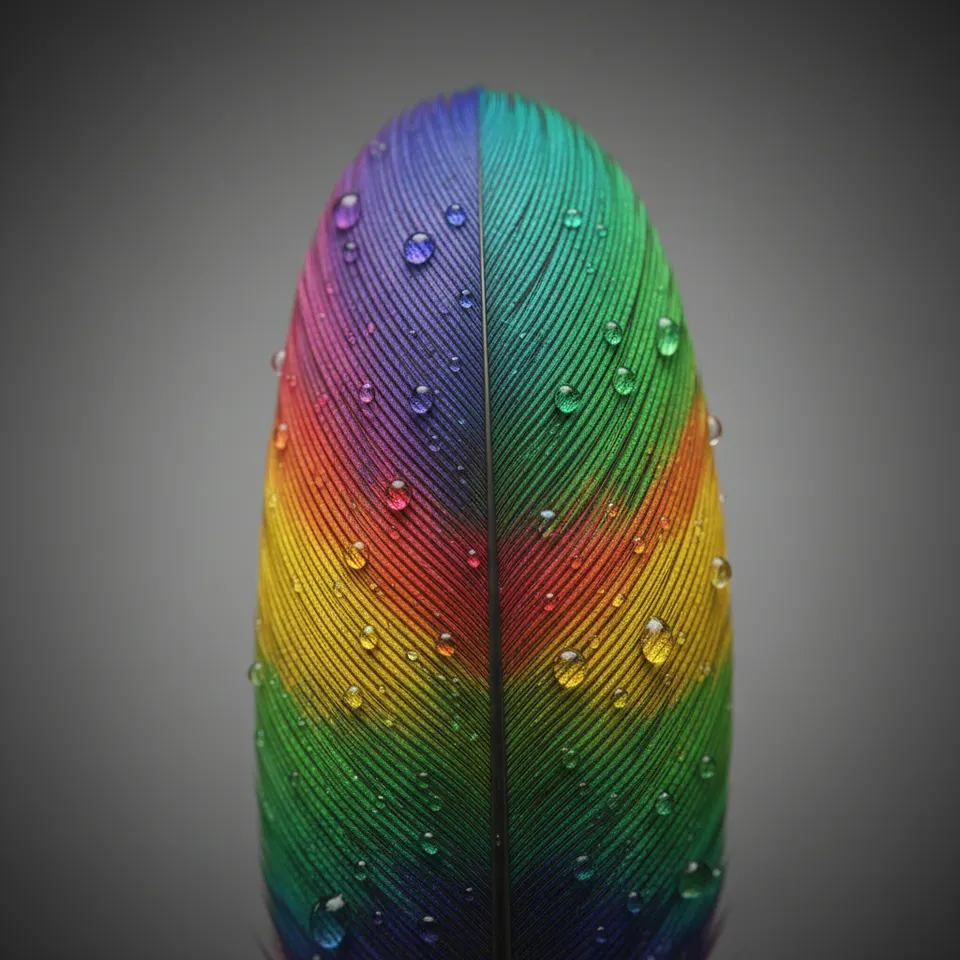
- 🔬 Their plumage shimmers with iridescent qualities, but unlike most hummingbirds, the colors can shift dramatically based on their diet – a nectar-rich diet enhances blues and greens, while a fruit-heavy diet can bring out more reds and yellows.
- 🔬 They are crucial pollinators for several unique orchid species that have evolved to be pollinated by birds with both a long proboscis for nectar and strong feet for perching on delicate flowers.