Crowmingbird
Corvus scintillans
Stats

Behavior
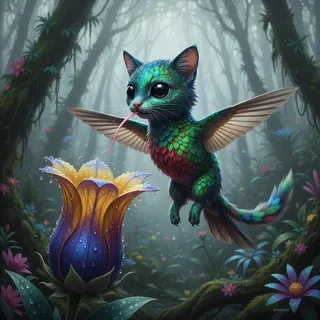
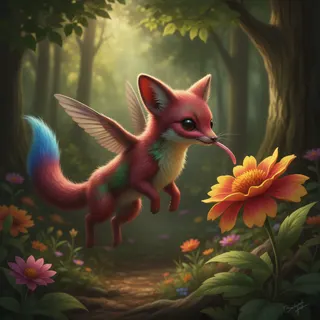
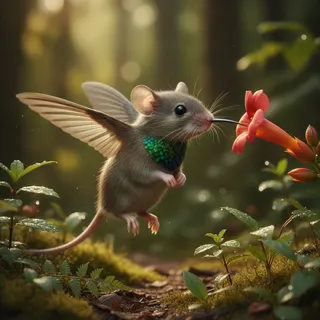
The Crowmingbird exhibits a fascinating duality in its behavior. During the day, it displays the hyperactive, hovering flight patterns of a hummingbird, darting between flowers with incredible speed and agility to feed on nectar. However, unlike its smaller ancestor, it possesses the distinct problem-solving intelligence of a crow, often using tools (small twigs or thorns) to access hard-to-reach nectar pockets or to dislodge insects from crevices. At dusk, their demeanor shifts, becoming more territorial and protective of their roosts, displaying complex social interactions and vocalizations reminiscent of a crow.

These intriguing creatures prefer habitats that offer a rich diversity of flowering plants, often choosing forest edges, large gardens, or parklands. They build intricate, compact nests woven from moss and spider silk, often reinforced with small twigs, strategically placed high in dense foliage. While generally solitary during foraging, they may form small, temporary flocks known as "glimmers" during migration or when sharing particularly rich nectar sources. Their flight is characterized by an almost invisible blur of wings, capable of bursts of incredible speed, followed by periods of precise, stationary hovering.
Fun Facts
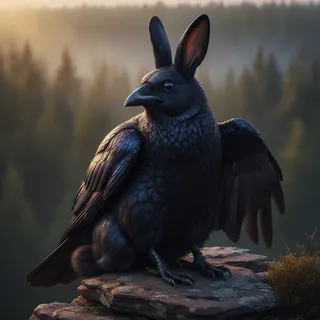
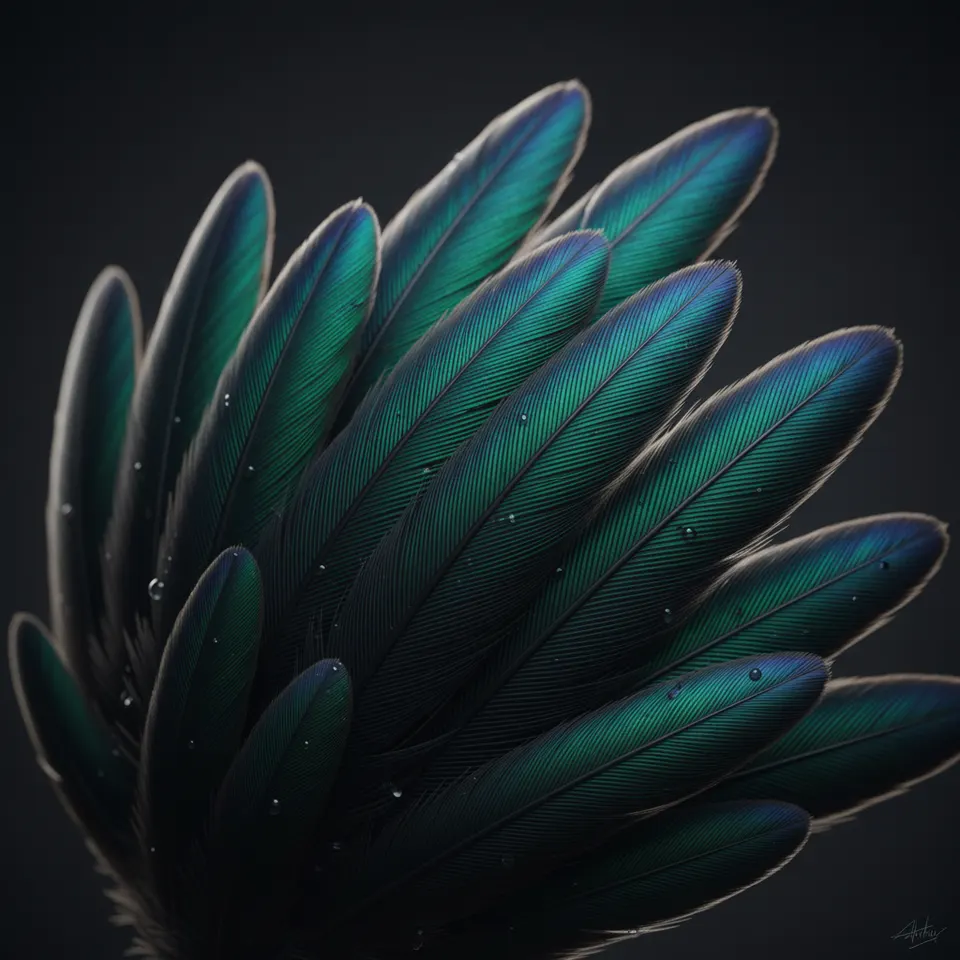
- 🔬 Its feathers, while primarily a glossy, iridescent black like a crow's, shimmer with flashes of emerald green and sapphire blue when caught in direct sunlight, much like a hummingbird's gorget.
- 🔬 Despite its formidable size relative to a true hummingbird, the Crowmingbird can still hover perfectly still in mid-air, a feat requiring an astonishing 100-150 wingbeats per second, producing a low, resonant hum.
- 🔬 They communicate using a complex repertoire of sounds: from high-pitched, almost metallic chirps when feeding, to a deeper, more melodious caw when interacting with others of their kind or warning off predators.