Hummingtusk
Colibris monodonus
Stats

Behavior
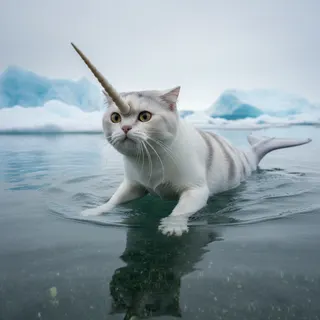
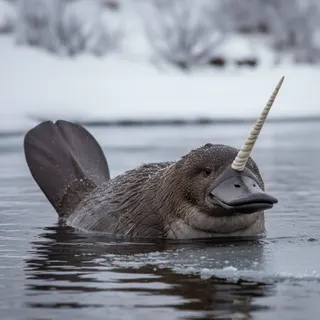
The Hummingtusk is an elusive and fascinating creature, known for its incredibly rapid wing beats that produce a distinct, low hum, audible even under the frigid arctic waters. Unlike its massive narwhal kin, the Hummingtusk is surprisingly agile, capable of darting movements both in the air and just beneath the water's surface. They are predominantly solitary, congregating only during brief mating seasons. Their distinctive tusk, while smaller than a narwhal's, is highly sensitive, used for probing into ice crevices for hidden prey or perhaps navigating through underwater currents.

Found exclusively in the most secluded arctic coastal fjords and glacial lakes, Hummingtusks are master adapters. They create shallow, intricate nests on the sides of ice formations or within sheltered rock ledges, often camouflaged with lichen and snow. Their diet shifts seasonally: in the brief arctic summer, they rely on the nectar of hardy tundra flowers, while during the longer, colder months, they plunge into the water, using their sensitive tusks to detect and stun tiny crustaceans and insect larvae hiding beneath the ice or in frigid depths.
Fun Facts
- 🔬 The Hummingtusk's tusk is believed to be a sensory organ, packed with nerve endings, allowing it to detect minute changes in water temperature, salinity, and pressure, akin to its narwhal ancestor.

- 🔬 Despite their small size, they possess an incredibly high metabolism, requiring constant feeding to maintain their body temperature in the extreme cold, much like a tropical hummingbird.
- 🔬 Their wings are semi-translucent and capable of generating a low-frequency hum that can subtly vibrate prey out of hiding spots under ice or sediment.