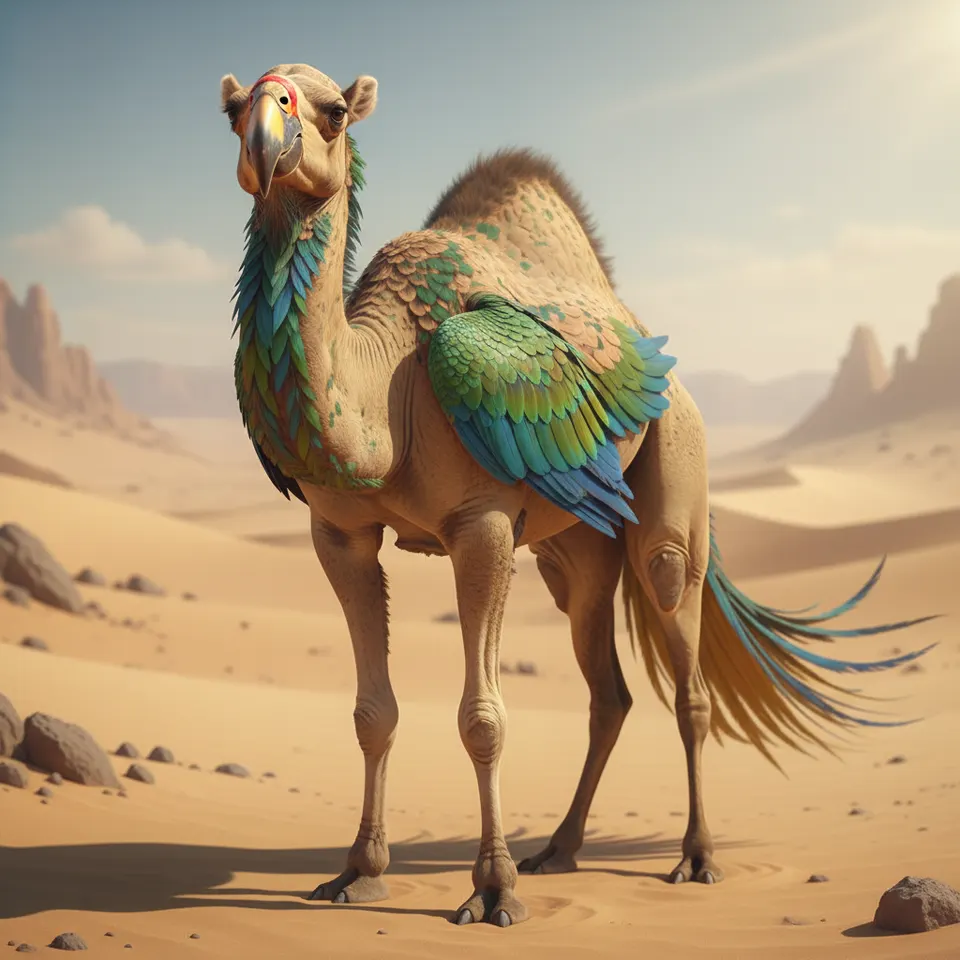
Camrot
Psittacamelus magniloquens
Stats

Behavior
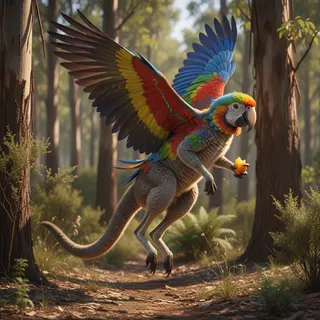
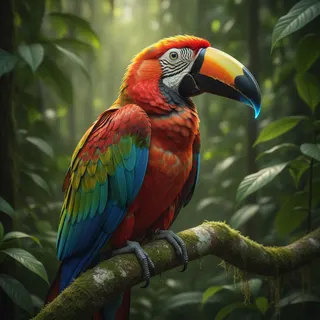
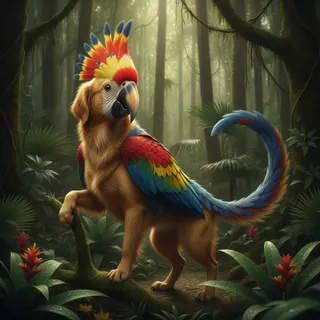
Camrots are highly intelligent and notoriously social creatures, often found in nomadic flocks of 5-15 individuals. They communicate through a complex repertoire of squawks, trills, and deep rumbling calls, capable of mimicking sounds from their environment, including other animal calls and even human speech. Their social structure is matriarchal, with older, experienced females leading the flock to precious water sources and nutrient-rich foraging grounds.

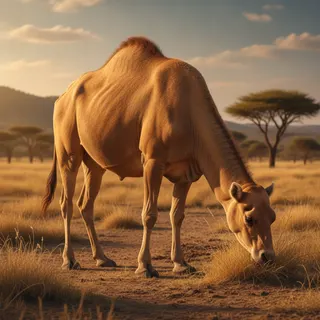
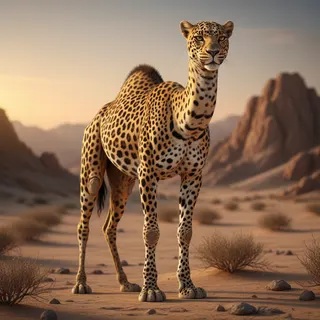
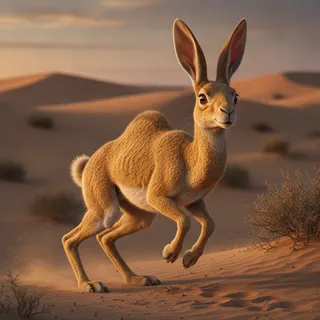
These adaptable hybrids are perfectly suited for harsh desert environments. They possess an uncanny ability to navigate vast, featureless landscapes using an internal compass and memory for landmarks, a skill enhanced by their excellent panoramic vision. Camrots spend their days browsing tough desert flora, using their powerful beaks to crack open thorny fruits and their humps to store water and fat, allowing them to go for extended periods without hydration. They often perch on high rocks or small trees, scanning the horizon for both predators and potential food sources.
Fun Facts
- 🔬 A Camrot's hump is not only for storing fat but also contains specialized air sacs that amplify their calls, allowing them to communicate across miles of open desert.
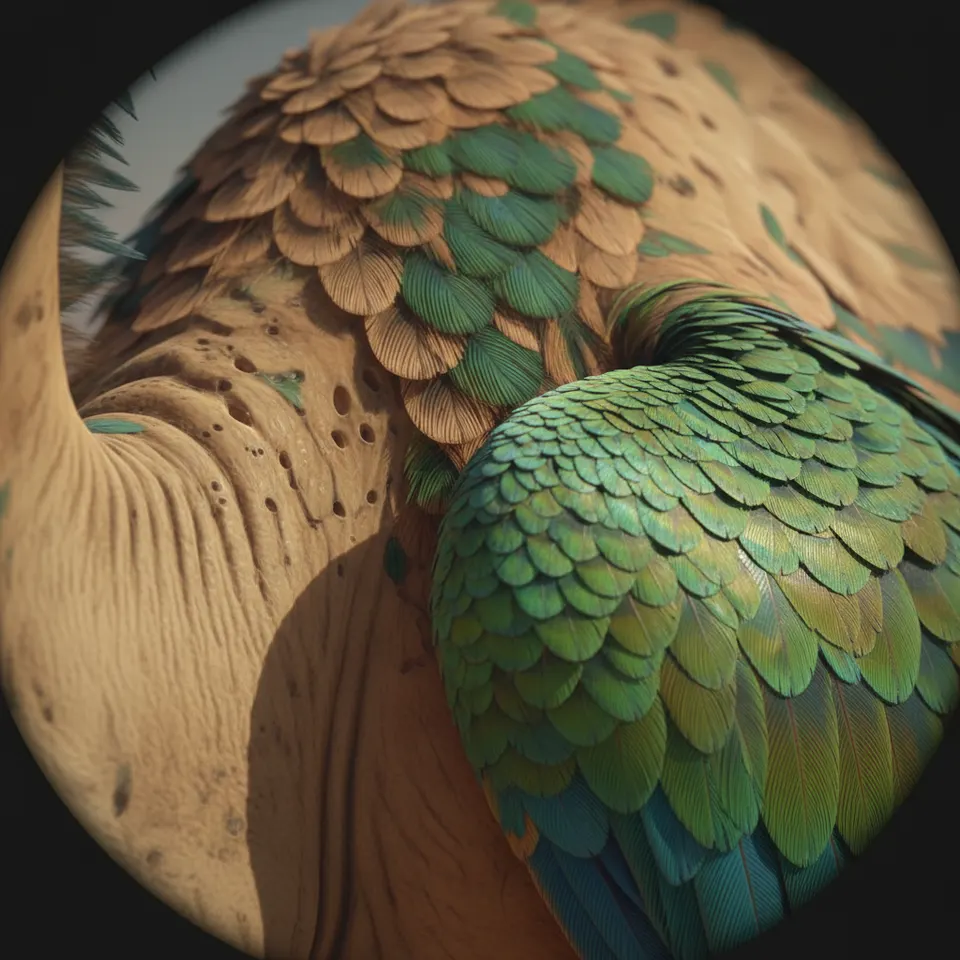
- 🔬 Their feathers, which cover much of their body in a thick, iridescent layer, can change color slightly depending on mood or mating display, shifting from sandy browns and dull greens to vibrant blues and reds.
- 🔬 Legend says that ancient desert travelers would sometimes encounter Camrots that could accurately repeat instructions or warn them of impending sandstorms, leading some to believe they are guardians of the desert's hidden secrets.