Humiguin
Volucris pinguinus colibrii
Stats

Behavior
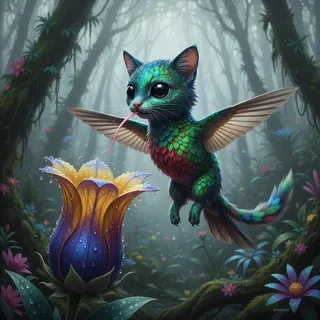
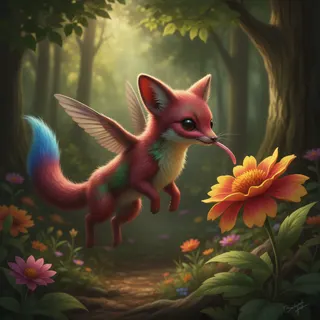
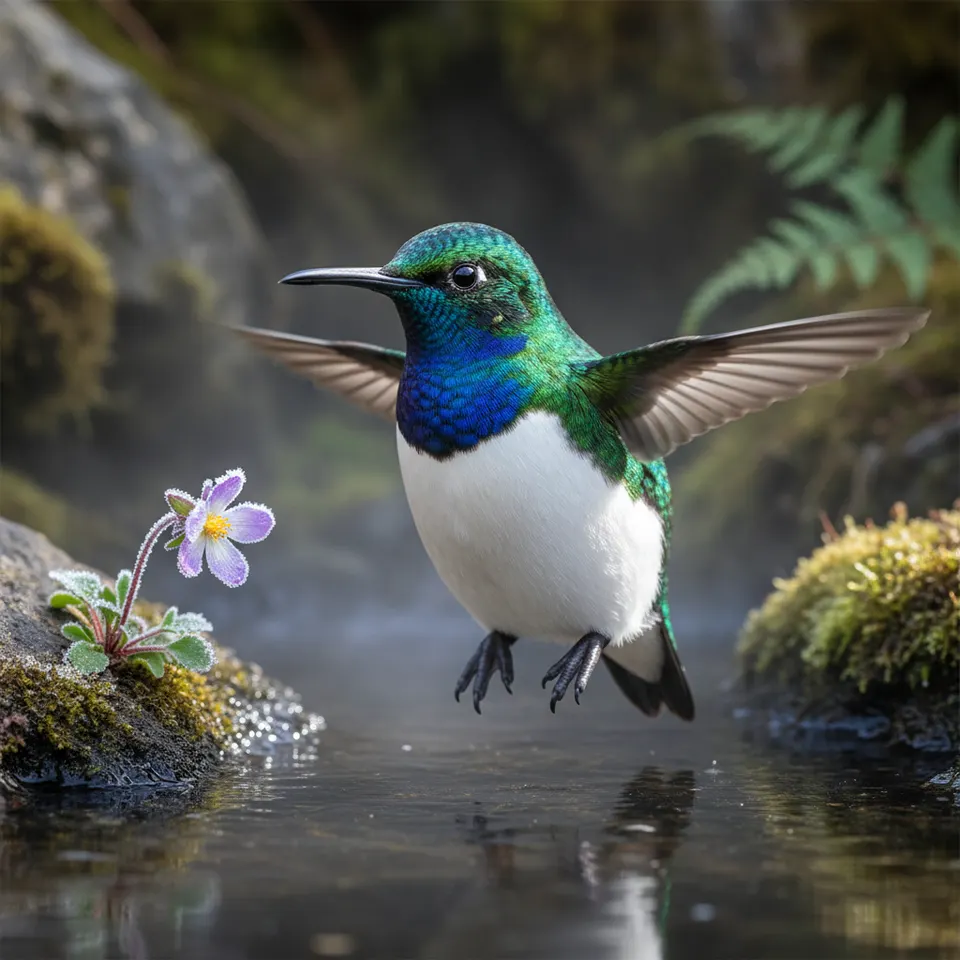
The Humiguin exhibits a fascinating dualistic lifestyle. While primarily aerial, capable of the iconic hovering flight of a hummingbird, it spends significant time near and in water sources. Its short, powerful flippers, though not conducive to sustained flight, are incredibly efficient for propulsion through water, allowing it to dart and weave beneath the surface with surprising agility in pursuit of microscopic crustaceans and aquatic insect larvae. They often 'perch' on the water's surface, fluttering their wings just enough to stay afloat while their long beaks dip below for a quick snack.
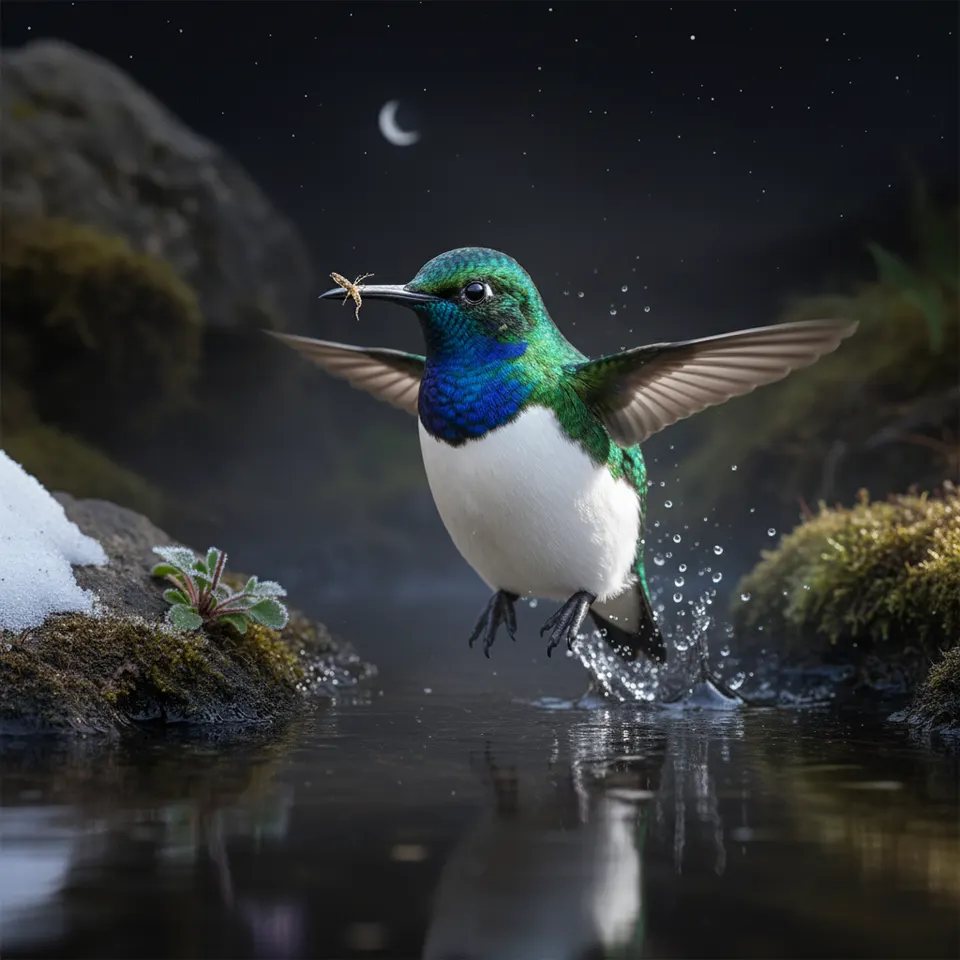
During breeding season, Humiguins form small, tightly-knit colonies on secluded, rocky coastlines that offer both shelter and access to nectar-rich coastal flora. They build intricate, cup-shaped nests, often lined with soft down and waterproof moss, among low-growing shrubs or sheltered rock crevices. Their territorial calls are a series of high-pitched chirps mixed with a low, trilling coo, a strange but melodious sound echoing across the chilly air, often heard during the brief polar summers.
Fun Facts
- 🔬 Despite its small size, the Humiguin has an incredibly high metabolism, similar to a hummingbird, requiring almost constant feeding, but also possesses a thin layer of blubber for insulation in cold waters, like a penguin.
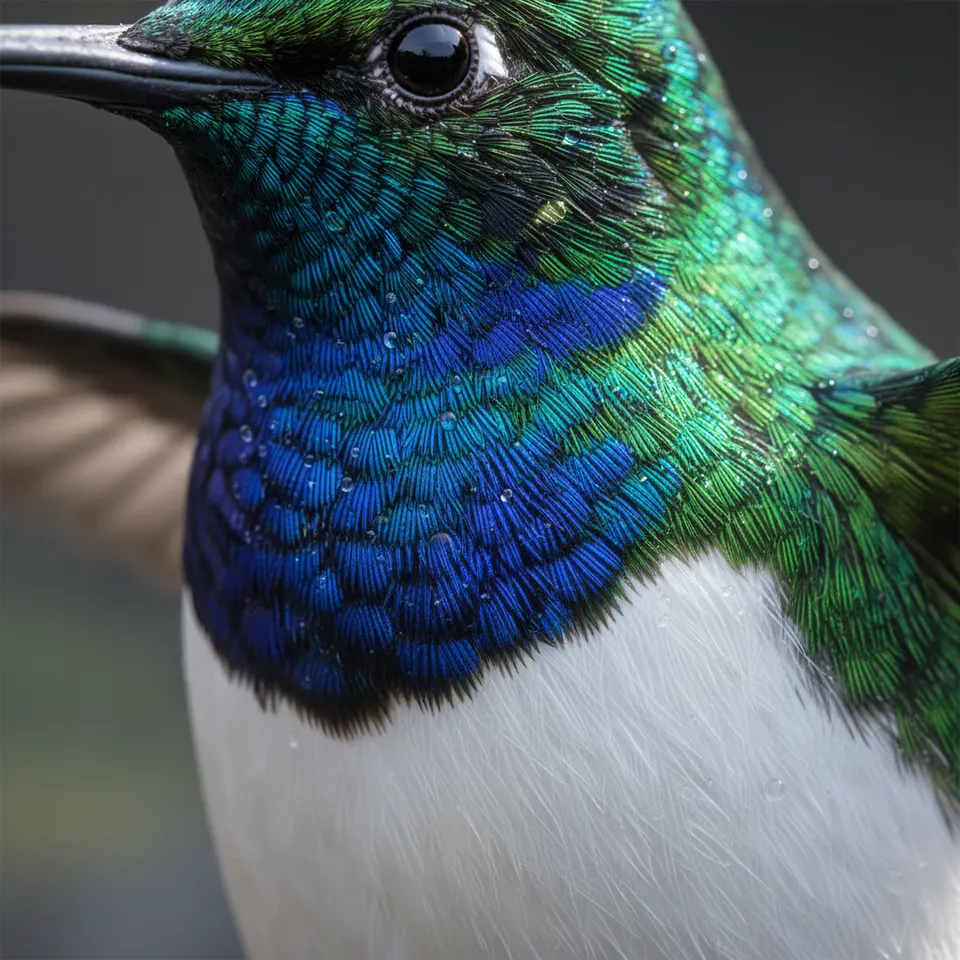
- 🔬 Its wings, while capable of the rapid figure-eight motion for hovering, are noticeably stouter and more paddle-like than a typical hummingbird's, allowing for powerful underwater maneuvering, often propelling them faster than many fish.
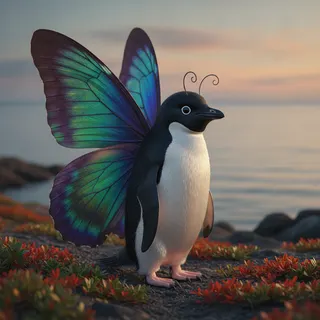
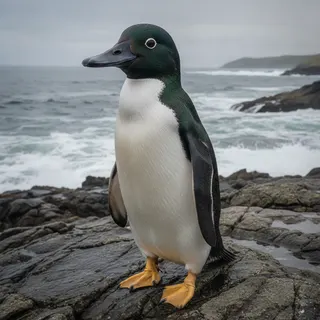
- 🔬 The Humiguin's plumage features iridescent blues, greens, and purples on its back and head, reminiscent of its hummingbird lineage, which transitions to a stark white belly, mimicking the countershading of a penguin, complete with a natural oily layer for waterproofing.